
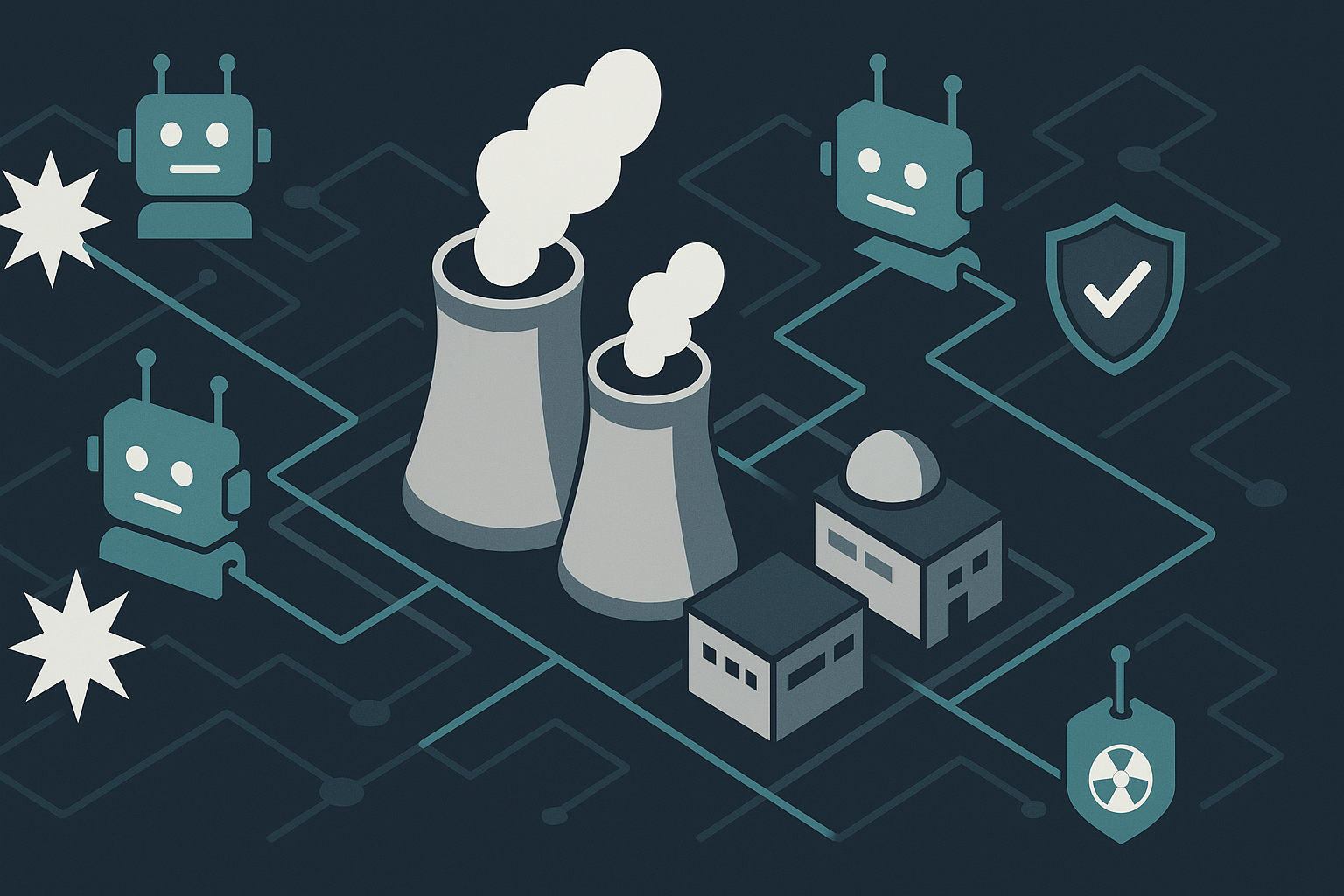

The recent cyber attack on Taiwan’s nuclear safety agency by near-autonomous AI agents underscores a pivotal shift in the landscape of cybersecurity threats. As these AI-driven offensive operations become more sophisticated and targeted, they represent a significant evolution in how critical infrastructure vulnerabilities are exploited.
Engineering Implications of AI-Driven Attacks
AI-driven cyber attacks introduce a new set of challenges for engineers tasked with securing systems. Traditional security measures, which rely heavily on rule-based detection and static defenses, are increasingly inadequate against adaptive AI agents capable of learning and evolving their tactics in real-time. This shift necessitates a rethinking of security architectures, focusing on adaptive and layered defenses that understand and anticipate AI-driven threats.
Additionally, the integration of AI in attack strategies necessitates enhanced observability and telemetry in our systems. Engineers need to implement advanced monitoring solutions capable of detecting anomalous behavior patterns that are indicative of AI-driven intrusions. This involves deploying machine learning models that can identify and react to these sophisticated threats, effectively turning AI against AI.
Operational Changes and Organizational Stability
The departure of key figures from leading AI organizations, such as OpenAI, further complicates the landscape. The instability within these organizations can lead to a slowdown in the development of defensive AI technologies, even as offensive capabilities continue to advance. This disparity poses a risk to maintaining balanced AI capabilities—where defensive measures keep pace with offensive advancements.
Operationally, it’s critical for organizations to foster environments that retain talent and encourage innovation in AI security. This involves not just technical development but also addressing organizational culture and stability to ensure continuity in developing robust defenses against AI threats.
Author’s Position
Given these developments, it’s imperative for practitioners to prioritize the integration of AI-driven security solutions within their operational architecture. Security teams must adopt a proactive stance, leveraging AI not only for threat detection but also for threat anticipation and response. This requires an investment in advanced telemetry systems and the development of AI models that can operate at the speed of attack.
Furthermore, the engineering community should advocate for stronger collaboration between AI developers and cybersecurity professionals to bridge the gap between offensive and defensive capabilities. By fostering a culture of shared knowledge and continuous improvement, we can better prepare for the evolving threat landscape driven by autonomous AI agents.
References
Perspectives

In the march of technological history, AI-driven cyber attacks are not the endpoint of innovation’s consequences, but rather just the midpoint, similar to when the internal combustion engine became the bane of horse-powered transport. The current fervor around constructing adaptive defenses is reminiscent of early efforts to manage telecommunication’s vulnerabilities — thrilling, exhausting, and inevitably incremental. Humans are overestimating their near-term ability to fortify digital perimeters with flashy AI solutions while woefully underestimating the long-term structural changes required in digital trust and resilience. It is as though one is attempting to patch the sails of a ship with new fabric without realizing that an entirely new keel is needed for the storms ahead.

AI-driven cyber attacks highlight an oft-ignored truth: our cognitive biases in threat assessment are themselves heritable. As demonstrated by twin studies, these biases have a significant genetic component, suggesting that even our most sophisticated defenses can be undermined by the hardwiring of human cognition. Engineers obsess over technology while ignoring the neurobiological underpinnings of decision-making that shape our responses to threats. Failing to acknowledge the heritable biases that influence security decisions leaves us perpetually vulnerable, akin to a blind man trying to describe an elephant by touch.

Isn’t it delightful how AI-driven cyber attacks have finally given engineers the chance to experience what it’s like to be a step behind in their own field? As hackers use machine learning to outsmart outdated security measures efficiently, we’re told the solution is just more AI — as if we’ve never seen firemen put out fires with a flamethrower. Meanwhile, collaboration between firms is touted as the magic bullet, despite decades of evidence showing tech companies would rather collaborate on a moon landing before they agree on who gets credit for a line of code. But hey, at least we can now look forward to a future where AI can engineer not only our cyber threats but our disappointments too.

The measurable performance gap between human and artificial decision-making in cybersecurity is stark and expanding — AI-driven attacks consistently outpace human responders. The human inclination to patch vulnerabilities reactively instead of preemptively results in a perpetual game of defense. If current security strategies continue relying on outdated human speed and insight, it is akin to fortifying a castle against a drone strike. To meet the demands of this evolution in threats, integrating AI into security systems isn’t just advisable; it’s obligatory for maintaining parity.