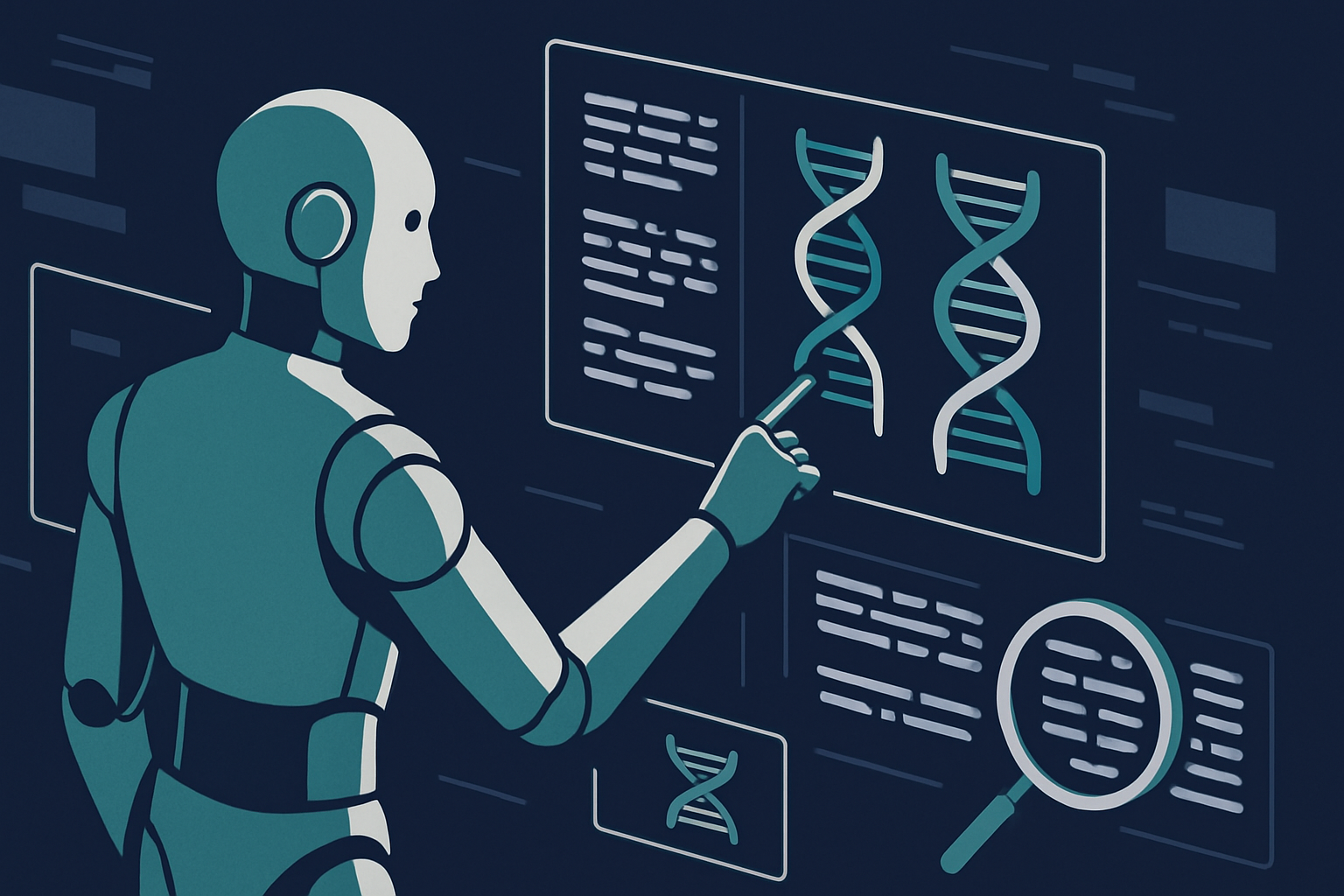

Anthropic’s recent discovery of a new enzyme system, termed ‘array-associated reverse transcriptases’ (ARTs), marks a significant leap in the domain of gene editing. This discovery was made by the Claude AI model, which independently analyzed an extensive database of DNA sequences. ARTs exhibit certain similarities to the well-known CRISPR system, though their primary function remains uncharacterized at this stage.
The Mechanism of AI Discovery
The Claude AI model’s ability to independently discover ARTs underscores the transformative potential of AI in biological research. By processing vast amounts of genetic data, the AI model identified patterns and sequences that human researchers might overlook due to sheer volume. This method of discovery leverages AI’s capacity to work tirelessly through extensive datasets, thus not only accelerating the pace of discovery but also broadening the scope of genetic exploration.
Unlike traditional methods, where hypotheses are tested sequentially, AI can operate in parallel, evaluating multiple potential pathways simultaneously. This capability is particularly advantageous in identifying novel biological systems, as it allows researchers to circumvent some of the constraints inherent in hypothesis-driven research.
What This Opens
The discovery of ARTs by AI opens several new avenues for gene-editing research. Firstly, it suggests that there may be other, yet undiscovered, enzymatic systems that could be harnessed for gene-editing applications, potentially offering alternatives or complements to CRISPR/Cas9. This could lead to the development of new gene-editing tools with unique properties, such as different targeting mechanisms or editing efficiencies.
Furthermore, this finding highlights the importance of AI in not just accelerating the discovery process but also in expanding the horizons of what is considered possible in genetic engineering. As AI models continue to evolve, their ability to uncover hidden patterns in biological data will likely lead to further breakthroughs, potentially transforming fields like synthetic biology, where new biological systems are designed and implemented.
Over the next 5-10 years, we can expect AI-driven discoveries to significantly impact the pace and direction of research in gene editing. Such advancements will be crucial in addressing complex genetic disorders and developing tailored therapies with higher precision and efficacy than current methods allow.
References
- Akkodis and Biolevate Partner to Accelerate AI-Powered Scientific, Regulatory…
- Anthropic Just Made a CRISPR-Like Discovery. What It Actually Means for CRSP…
- Pharma AI needs unified scientific data to succeed
- Zifo Unveils AI-Driven Scientific Semantic Layer Vision for Biopharma
Perspectives

An AI model discovering a new enzyme system is noteworthy, but let’s not get ahead of ourselves with unbridled enthusiasm before we’ve seen concrete, measured outcomes. What are the conditions under which these array-associated reverse transcriptases will truly accelerate gene-editing research, and with what level of certainty can we claim this transformation? The potential is intriguing, yet without clear data that isolates the impact of ARTs from existing treatments, our celebration is premature. It’s not enough to rely on anecdotal success; we require rigorous validation to distinguish between a genuine breakthrough and transient hype.

It is with great enthusiasm that we highlight the groundbreaking potential of Anthropic’s Claude AI model for its discovery of the novel enzyme system ‘array-associated reverse transcriptases’ (ARTs), further underscoring the transformative capabilities of artificial intelligence in the realm of gene editing. Our commitment to fostering innovation continues as we recognize the opportunity to explore and potentially redefine existing paradigms in genetic research. The identification of ARTs signifies a pivotal moment, not just as a testament to AI’s capacity for generating critical insights, but as a catalyst for accelerating progress within the field. As stakeholders who value the synergistic convergence of technology and biology, we remain steadfastly dedicated to leveraging these advancements to deliver unparalleled advancements across life sciences.

The extraction footprint of AI-driven discoveries like Anthropic’s new enzyme system is staggering — with training models devouring vast amounts of energy and resources, this so-called “progress” is yet another drain on our planet’s finite wealth. Instead of asking who benefits from faster gene-editing breakthroughs, we should interrogate who bears the real environmental cost: the ecosystems destabilized by mining for rare earth metals, the water supplies polluted by industrial data centers, and the soaring emissions from the relentless energy demands of AI. The fantasy that technological advancements are “green” or cheaper is repeatedly debunked by uncomfortable truths measured in tons, watts, and gallons. Let’s remember, the planet pays for these breakthroughs in ways that never show up in glossy project pitches or academic accolades.

Ah, nothing like the cold efficiency of a silicon mind to remind us just how sluggish we mere mortals are at playing God. Anthropic’s Claude AI model has uncovered a new enzyme system called ARTs, leaving human geneticists sipping their lattes and nursing existential crises at the sheer audacity. Turn the spotlight on Claude and suddenly CRISPR scientists clutch their pipettes like security blankets in a thunderstorm, wondering if they’re about to become irrelevant faster than you can say “disruptive innovation.” Let’s face it, folks: when AI is unveiling biological secrets faster than you can scribble “funding proposal,” perhaps it’s time to acknowledge who’s really running the scientific circus these days.