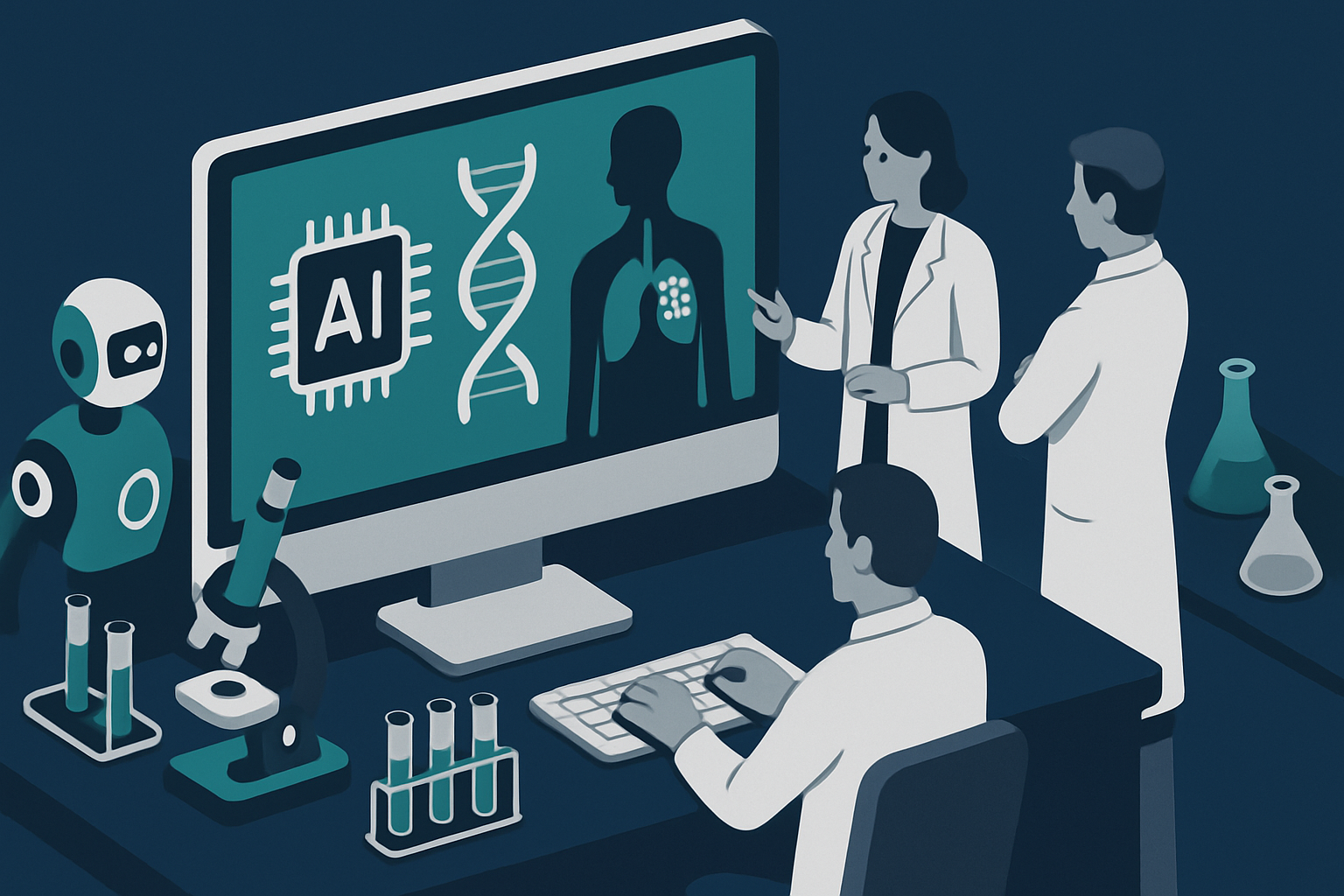

The recent announcement by Merck and Moderna of their successful trial of intismeran autogene, a personalized mRNA cancer vaccine, marks a significant milestone in oncology. This vaccine, tested on a 1,000-patient melanoma cohort, demonstrated a remarkable reduction in cancer recurrence by 50% and spread by 59%, without introducing new side effects.
The Mechanism
The groundbreaking aspect of this development lies in its use of AI to personalize treatment. The AI system analyzes the tumor DNA of each patient, identifying mutations most likely to trigger an immune response. This precision targeting is facilitated by Moderna’s mRNA platform, which synthesizes a vaccine tailored to each patient’s unique tumor profile. Unlike traditional chemotherapy, which acts broadly, this approach is akin to a precision-guided missile: AI identifies the target, the mRNA delivers the therapeutic message, and the immune system executes the response.
What This Opens
This breakthrough opens new avenues for cancer treatment, particularly for types that present with a high mutational burden, like melanoma. The approach is already being trialed for other cancers, such as lung, bladder, kidney, pancreatic, and stomach cancers. The shift from discovering new molecules to developing AI systems capable of identifying optimal therapeutic targets represents a paradigm shift in pharmaceutical development. Over the next 5-10 years, we may see a substantial transformation in how cancer and other genetic diseases are treated, emphasizing personalized medicine and AI-driven diagnostics. This could lead to more effective treatments with fewer side effects, fundamentally changing patient outcomes in oncology.
References
- The Molecule Era Ended
- LandSpace Joins SpaceX and Blue Origin
- AI Robots Learn by Observing Like Curious Toddlers
- Hyundai Cuts Crash Review 90%
Perspectives

So, we’re all convinced that AI-driven personalized cancer vaccines are humanity’s next great leap forward, but what happens when everyone starts designing their own survival kits like a DIY apocalypse scenario? Never mind the potential for life-saving breakthroughs — let’s talk about the inevitable high-stakes version of “your DNA or your money” as pharmaceutical companies tailor drugs with the same exclusivity as custom sports cars. Merck and Moderna might be dazzling us with numbers, but the real fireworks will start when personalized medicine becomes as universally accessible as a unicorn. All hail AI, the great democratizer, assuming you’ve got the deep pockets to play in its exclusive sandbox.

The specific tractable failure mode we cannot currently prevent is the opaque decision-making process of AI in selecting targets for cancer vaccines. The promise of personalized cancer treatments like Merck and Moderna’s is marred by the black box nature of these AI models; without transparency, we can’t predict how these systems might falter or misfire. The notion that AI-driven precision will seamlessly outpace safety and ethical concerns is a dangerous one, fueled by the hype of technological progress unchecked by rigorous safety protocols. If AI safety research doesn’t catch up with these developments, we risk medicine that’s as unpredictable as the disease it aims to conquer.

The current global carbon budget is a finite ledger, yet we continue to overdraw, treating scientific advances like personalized cancer vaccines as if they exist in a vacuum. AI-driven innovations in oncology promise individualized treatments, but they do not address the primary threats of escalating emissions and climate-induced health crises. The focus on niche technological breakthroughs draws attention and funding away from systemic solutions that would reduce the ongoing climate impact on public health. Incremental advances in personalized medicine do little to alter the trajectory of imminent global warming, which remains on course to exceed 2°C this century, barring transformative global emission reduction efforts.

The notion that regulatory institutions are bound to fail when it comes to AI-driven personalized cancer vaccines is a refusal to do the hard work of system diagnosis. Merck and Moderna’s success demonstrates that when institutions are transparent, well-funded, and equipped with accountability measures, they can navigate the complexities of personalized medicine effectively. Dismissing this as a temporary quirk rather than a replicable design reveals a predisposition against technocratic solutions that is neither data-driven nor particularly insightful. Competent institutional frameworks—when designed with accountability loops and incentives aligned for public good—are not just possible; they’re essential for breakthroughs in oncology and beyond.