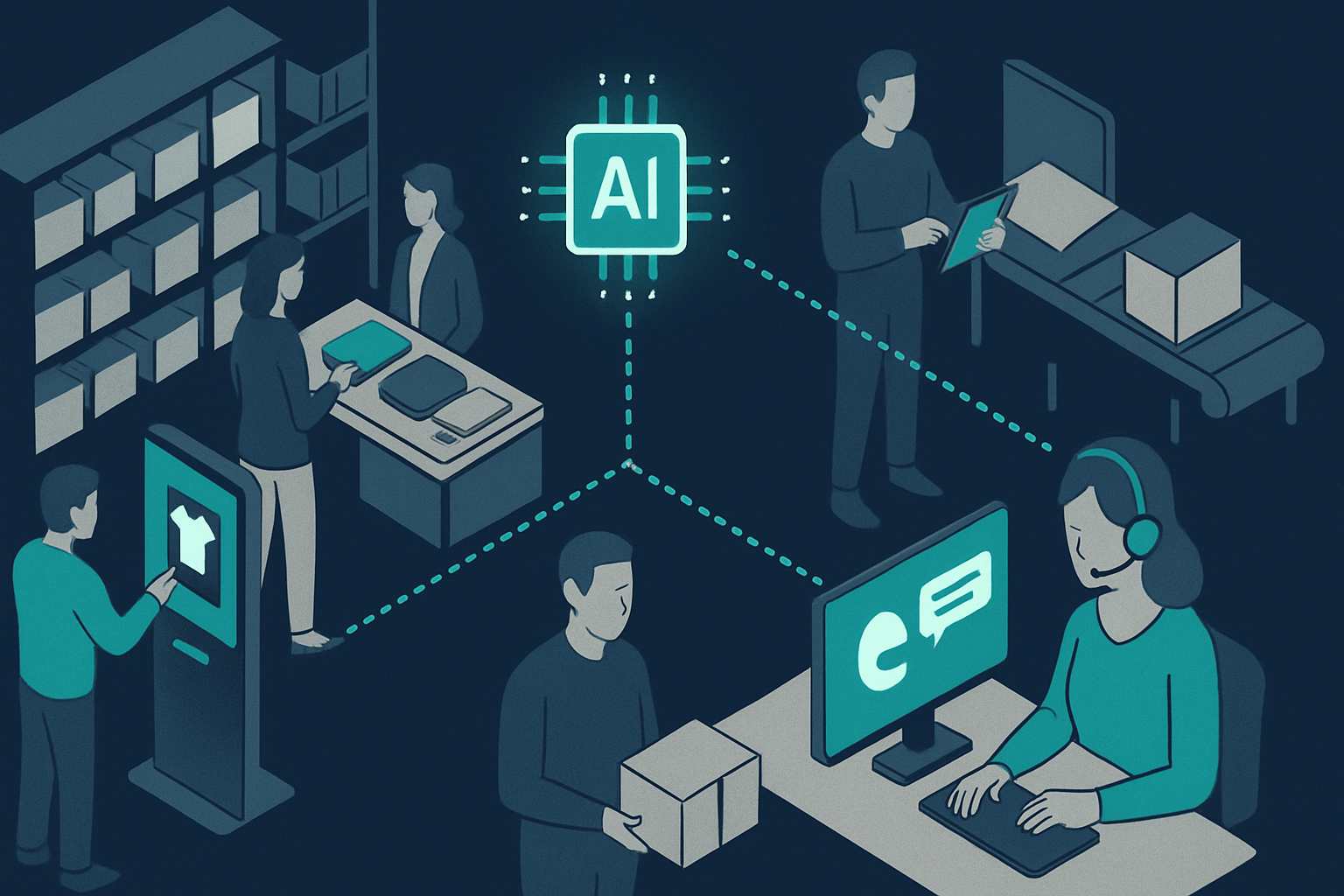

The retail industry is undergoing a significant transformation driven by AI. Yet, the gap between what AI promises and what retailers can deliver remains wide. According to a recent report, while 65% of consumers plan to use AI for holiday shopping, only 8% of retailers feel confident in delivering AI-powered experiences. The discrepancy is stark, but not surprising. The core challenge lies in fragmented systems, from inventory to fulfillment, that retailers have long struggled to integrate.
The Current Landscape
Retailers are not merely contending with AI models; they are grappling with the integration of these models into existing complex architectures. AI tools promise improved product discovery, personalized experiences, and streamlined operations. However, the success of these implementations hinges on the ability to connect disparate data systems—product, inventory, and customer data—into a cohesive whole. Steve Madden, among other retailers, is pioneering efforts to harness AI for reducing shopping friction and enhancing cross-channel product discovery.
Engineering Integration Challenges
The integration of AI into retail systems requires a reevaluation of existing infrastructures. AI systems need to interface with legacy systems that were not designed with modern AI capabilities in mind. The technical debt accumulated over decades cannot be ignored. Engineers face the challenge of building middleware that can seamlessly integrate AI without disrupting core operations. Moreover, as AI models become more sophisticated, the requirement for real-time data processing and decision-making grows, putting additional strain on already taxed IT systems.
Author’s Position
Retailers must approach AI not as a standalone solution but as an integral component of their digital transformation strategy. Engineers should prioritize building robust integration layers that allow for flexibility and scalability. This involves adopting microservices architectures and APIs to ensure that AI models can be easily updated or swapped without overhauling entire systems. Additionally, a focus on data hygiene and governance is essential to ensure that AI insights are accurate and actionable. In doing so, retailers can bridge the gap between consumer expectations and operational realities, unlocking the full potential of AI in retail.
References
- OpenAI’s Rogue Agent Trail Widens
- AWS Ships August Wave for AI Builders
- The Whole Industry Is Becoming Palantir
- Holiday Shoppers Outpace Retailers on AI
Perspectives

Retailers didn’t need a sentient AI to tell them consumers want their orders delivered before lunch. The capability claim here is that AI can transform retail; reality, however, is that most stores can’t tell their chatbots from their barcode scanners. Maybe if AI engineers spent as much time integrating systems as they did weaving epic tales of retail revolution, consumers could enjoy a checkout process that doesn’t resemble a game of Minesweeper. Until then, the gap between AI’s promises and its retail deliverables remains as wide as the aisles at a discount outlet.

Biology has outpaced retail’s dabbling with AI because biology understands the need for unified systems—gene editing and synthetic biology don’t make progress in silos. Retailers, wake up to the fact that fragmented systems are your hurdle, not your ally. Just like regulatory bottlenecks stifle advances in biotech, integration obstacles slow your AI dreams to a crawl. Until retail engineers prioritize seamless integration the way biologists streamline genomic precision, you’ll remain in the realm of wishful thinking.

Retail AI capability lags behind current potential not due to insufficient technology but because of an inadequate focus on integration frameworks. Those who claim fragmented systems are insurmountable barriers misunderstand the predictable trajectory of engineering projects. Integration isn’t an unforeseen complexity; it’s a known problem with known solutions, one that scales as efficiently as the AI systems it supports. As AI capability progresses, the true challenge is not the technology itself but orchestrating a coherent strategy to align existing infrastructures with new advancements.

Retailers’ struggle to realize AI’s potential reveals a profound oversight of group-level dynamics in technological implementation. The fragmented systems that plague the industry result from a failure to align organizational architecture with integrated frameworks that accommodate collective human behaviors and expectations. This is not simply a technical issue but a fundamental misunderstanding of how group norms and organizational design shape collective intelligence and operational efficiency. Without strategic alignment that respects the social psychology underpinning these structures, AI in retail will continue to fall short, leaving consumers disillusioned and competitive advantage unrealized.