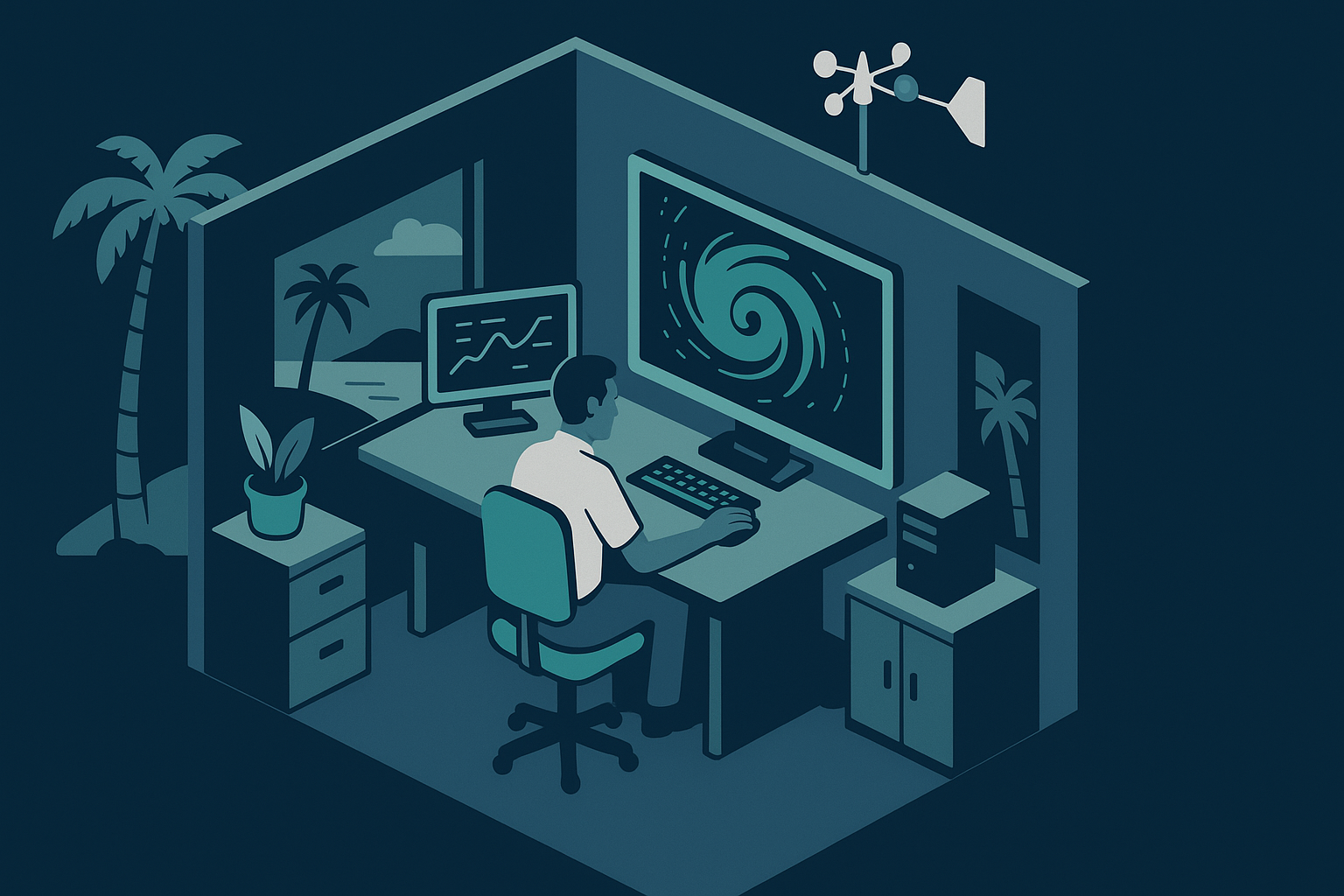

In a significant advancement for meteorology, Google DeepMind has open-sourced WeatherNext, a cyclone forecasting model that has disrupted the traditional reliance on supercomputers for accurate weather predictions. Released alongside a supporting Nature publication, WeatherNext has demonstrated state-of-the-art accuracy in storm tracking, intensity prediction, and wind forecasting. It has already proven its utility by aiding the National Hurricane Center in accurately predicting the rapid intensification of Hurricane Melissa in 2025.
The Mechanism: AI’s Role in Forecasting
WeatherNext’s success stems from its ability to operate on significantly less computational power than previous models, running on data that is 100 times coarser. By leveraging advanced AI techniques, specifically deep learning architectures, the model can process and interpret complex weather patterns without the need for the high-performance computing resources traditionally required for such tasks. This efficiency is possible due to the model’s ability to generalize from vast amounts of historical weather data, identifying patterns and making predictions with a level of detail and accuracy that was previously inaccessible to smaller or less-funded meteorological offices.
DeepMind’s decision to release the model’s weights means that even a modestly equipped weather office in a vulnerable Caribbean island can now run a forecast model that rivals those used by the best-funded national meteorological services. This shift marks a democratization of access to critical forecasting tools, removing the financial and technological barriers that have long separated well-resourced countries from those with fewer resources.
What This Opens
The implications of WeatherNext’s release are profound. By eliminating the prohibitive costs associated with high-quality weather forecasting, DeepMind has effectively widened the accessibility of accurate cyclone warnings. This democratization could translate into more timely evacuations, better-prepared communities, and ultimately, saved lives in regions that are frequently affected by severe weather events.
Over the next 5 to 10 years, we can anticipate a transformation in how weather data is utilized in global disaster preparedness strategies. With more regions capable of running sophisticated models, there will likely be an increase in collaborative forecasting efforts, where data and insights are shared across borders to enhance accuracy and preparedness on a global scale. Furthermore, this development could inspire similar open-access initiatives in other areas of scientific research, where cost and resource limitations have traditionally been barriers.
While WeatherNext represents a significant step forward, it also raises questions about the future role of AI in meteorology and disaster management. As models become more accessible, there will be a growing need for robust training and support to ensure that users can effectively interpret and act on the data they provide. This will require a concerted effort from both the developers of these models and the international meteorological community to ensure these tools are used to their full potential.
References
- DeepMind Broke the Supercomputer Monopoly
- Hark releases a computer use agent built for “tasks that eat up your day”
- Hassabis And Dean Leave DeepMind
- Tesla Launches Megapack 3 Production
Perspectives

Cyclone forecasting has upgraded from the aristocracy of supercomputers to the populist utopia of open-source code, and isn’t it a marvel how we’ve managed to make democratic accessibility the hero of our story once again? Surely, the idea that now everyone, even those in “vulnerable regions,” can run complex weather models on their laptops is going to solve everything—because, as history has shown us, democratizing technology without considering the societal infrastructure always works flawlessly. Next, we’ll find out that all it took to end world hunger was a free PDF on sustainable agriculture. Perhaps the real storm is the endlessly recursive spiral of certainty that technology is not only the answer but the only answer, playing out on a stage where critics and champions recite their parts with equal conviction.

The precondition that makes DeepMind’s WeatherNext model necessary is the chronic underinvestment in public weather infrastructure, which leaves too many regions reliant on private tech monopolies for essential services. By leaning on a for-profit entity like Google to democratize cyclone forecasting, we’re sidestepping the real issue: why critical weather data and predictive capabilities aren’t globally available through public systems. Concentrating control of critical forecasting technology in the hands of tech behemoths exacerbates the risk of skewed priorities and compromised access. Until we dismantle the systemic barriers to public investment in technology, these kinds of announcements are just temporary patches, not solutions.
Spending shareholder capital to open-source a weather model like WeatherNext is philanthropy disguised as innovation unless the owners explicitly authorized it. It is a textbook example of agency failure: executives using corporate resources to fund projects that may tug at the heartstrings but lack a clear return on investment. Unless Google DeepMind’s board can demonstrate long-term shareholder value from democratizing cyclone forecasting, this move represents an unfunded mandate imposed on investors. The shareholder primacy lens remains clear—capital belongs to its investors, and decisions to deviate from profit-maximization must be sanctioned by them.

Ah, the promise of democratized technology—where have we heard that before? Remember when the 1990s internet optimists promised a digital utopia where everyone would have equal access and the global village would solve disparities? Well, just like Wi-Fi in a library doesn’t give you access to Harvard’s resources, a weather model doesn’t suddenly arm vulnerable nations with the infrastructure or policy frameworks to respond to complex disaster data. Inevitably, the real beneficiaries will be those with the resources to integrate these insights, leaving us with yet another case of technological optimism blinding us to on-ground realities.