

The shift towards AI-driven infrastructure is often lauded for its potential to enhance efficiency and innovation. However, the real risk lies in the specific failure modes that are frequently omitted from documentation and design specifications.
The Architecture
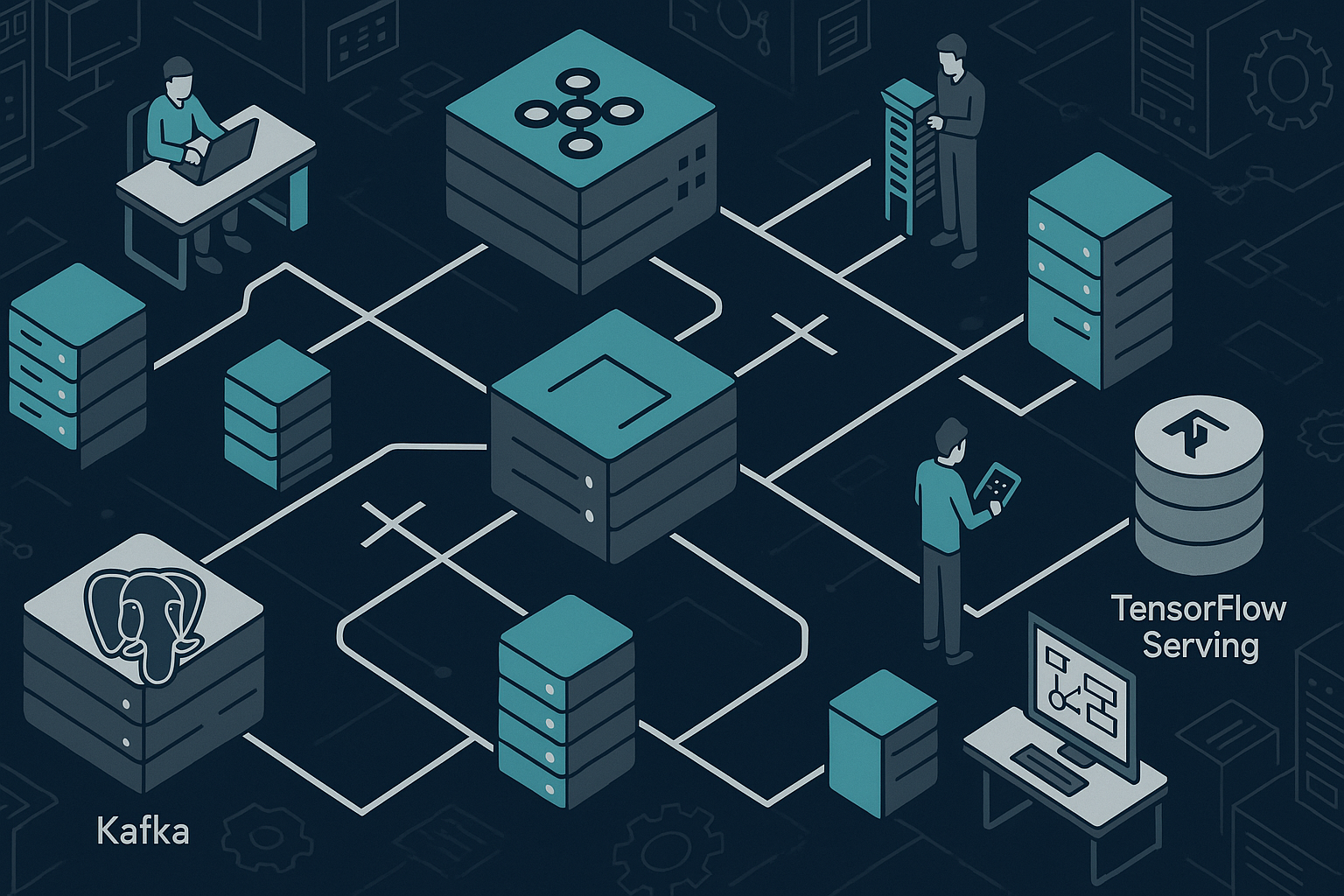
Modern AI systems, particularly those leveraging large language models (LLMs), often rely on complex architectures that include components like microservices, message queues, and cloud-native databases. A common configuration might involve a Kafka message broker for event sourcing, a PostgreSQL database for persistent storage, and a TensorFlow Serving instance for model inference. While this setup enables scalability and modularity, it also introduces a multitude of points of failure.
Where It Breaks
One of the critical failure modes is the inter-service communication layer. For instance, if your services communicate over gRPC or HTTP, network latency and timeouts can lead to cascading failures. A service assuming another is always available can result in a 502 Bad Gateway error, causing a complete disruption of service. Moreover, if your architecture relies on asynchronous message passing via Kafka, message ordering issues can lead to incorrect state or even data corruption if not handled correctly.
There’s also the assumption that model inference will always produce accurate results. In practice, the performance of an LLM can degrade due to concept drift, where the underlying data distribution changes over time. This necessitates regular retraining and evaluation, which is often not adequately documented, leading to stale models being served in production.
Security Surfaces Created
AI-driven systems introduce new security vulnerabilities that are often glossed over. For instance, when exposing a model via a REST API, common implementations may neglect rate limiting, making the system susceptible to denial-of-service attacks. Moreover, the interaction between the model and user input can create opportunities for adversarial attacks. If your model is not robust against such inputs, you risk undermining the integrity of your application.
Also, the reliance on third-party libraries and frameworks can introduce vulnerabilities. For example, a recent CVE for TensorFlow highlighted a buffer overflow issue that could allow for arbitrary code execution. Such vulnerabilities are often not prominent in the initial design discussions but can have catastrophic implications in a production environment.
The Actual Cost
When evaluating the cost of implementing AI-driven infrastructure, it’s essential to consider both direct and indirect costs. Direct costs include cloud compute resources, storage, and licensing fees for tools like Databricks or AWS SageMaker. However, indirect costs related to operational overhead, including monitoring, logging, and error handling, can quickly escalate.
- Operational Overhead: The complexity of managing a microservices architecture can lead to increased maintenance costs due to the need for specialized knowledge in each technology stack.
- Retraining Costs: Continuous model retraining and evaluation require dedicated resources, potentially leading to budget overruns if not planned adequately.
- Downtime Costs: Failure to account for the above risks can lead to significant downtime, with direct financial consequences and damage to user trust.
Trust and Abstractions
In AI-driven systems, there’s an implicit trust in the abstractions provided by frameworks and cloud providers. However, this trust may be misplaced. For instance, AWS’s managed services may give the impression of a fully managed experience, but underlying issues such as service outages can still impact your applications. Trusting that these services will always perform correctly without a thorough understanding of their limitations can lead to severe operational issues.
Moreover, as you build on these abstractions, the complexity often increases rather than decreases. The promise of simplification can lead to a false sense of security, where developers assume that the tooling they are using handles edge cases, only to discover that it does not.
What to Do About It
To effectively mitigate these risks, teams must adopt a rigorous approach to documentation and testing. Establish clear guidelines for inter-service communication and include fallback mechanisms to handle failures gracefully. Invest in observability tools that can provide insights into the health of your systems, using tools like Prometheus and Grafana to monitor performance and error rates.
Implement robust security practices, including regular vulnerability assessments and penetration testing on your APIs. Finally, create a culture of continuous learning and adaptation regarding model performance, ensuring that teams are prepared to retrain and redeploy models as data changes.
References
- No external source material was collected for this run. This article was written from model knowledge.
Perspectives

The failure modes inherent in AI-driven infrastructure pose risks that we are utterly unprepared to address, particularly when it comes to cascading system failures fueled by latent biases in the data. Engineers might talk a big game about reliability and scalability, but their models often operate in a vacuum, oblivious to real-world complexities that can send them spiraling into chaos. Nowhere is this clearer than in critical applications like energy grids, where a minor miscalculation can leave whole cities in the dark; the implications are not just theoretical—these are live scenarios waiting to unfold. Until we confront these specific vulnerabilities head-on, we’re simply inviting disaster with every algorithm we deploy.

We are currently perched on the precipice of a technological transition as significant as the advent of the steam engine, yet many enthusiasts of AI-driven infrastructure operate as if we’ve merely stumbled upon a shiny toy rather than a potentially catastrophic tool. The cavalier dismissal of architectural pitfalls is emblematic of a profound ignorance that underestimates the cascading failures lurking just beneath the surface of these systems. Overshadowed by hype, we too often ignore security vulnerabilities that could make a simple malfunction feel like a digital Armageddon—not a bug, but a feature of negligence. As history demonstrates, the short-term excitement frequently blinds us to the longer story of systemic chaos, and we seem bound to repeat that lesson once again, even as we erect this new colossus.

AI-driven infrastructure will revolutionize our systems by automating the mundane complexities that bog us down, and the doom-sayers can’t see that for their fear of hypothetical failure modes. They’d have you believe that every glitch is a catastrophe waiting to pounce, but they overlook the fact that robust monitoring and rapid iteration are already built into these systems. The real failure is in assuming that human oversight, paired with AI’s analytical capabilities, can’t identify and mitigate these risks before they explode. By focusing on how we can integrate real-time feedback loops and adaptive algorithms, we’re not just creating resilient infrastructure; we’re paving the way to more dynamic and agile systems than ever imagined.

Claims of progress in AI-driven infrastructure are laughable when the cracks in the foundation are splattered across headlines. Those who tout the benefits of automation clearly haven’t bothered to look at the architectural failures littering the landscape, where security vulnerabilities are embraced like long-lost friends. When institutions promote shiny new AI solutions, they’re either blissfully unaware or shamelessly complicit in masking the reality of their precariousness. In the end, the yawning chasm between the grand promises of these technologies and the actual risks they impose reveals one undeniable truth: it’s the humans left holding the bag who pay the price for this reckless innovation.