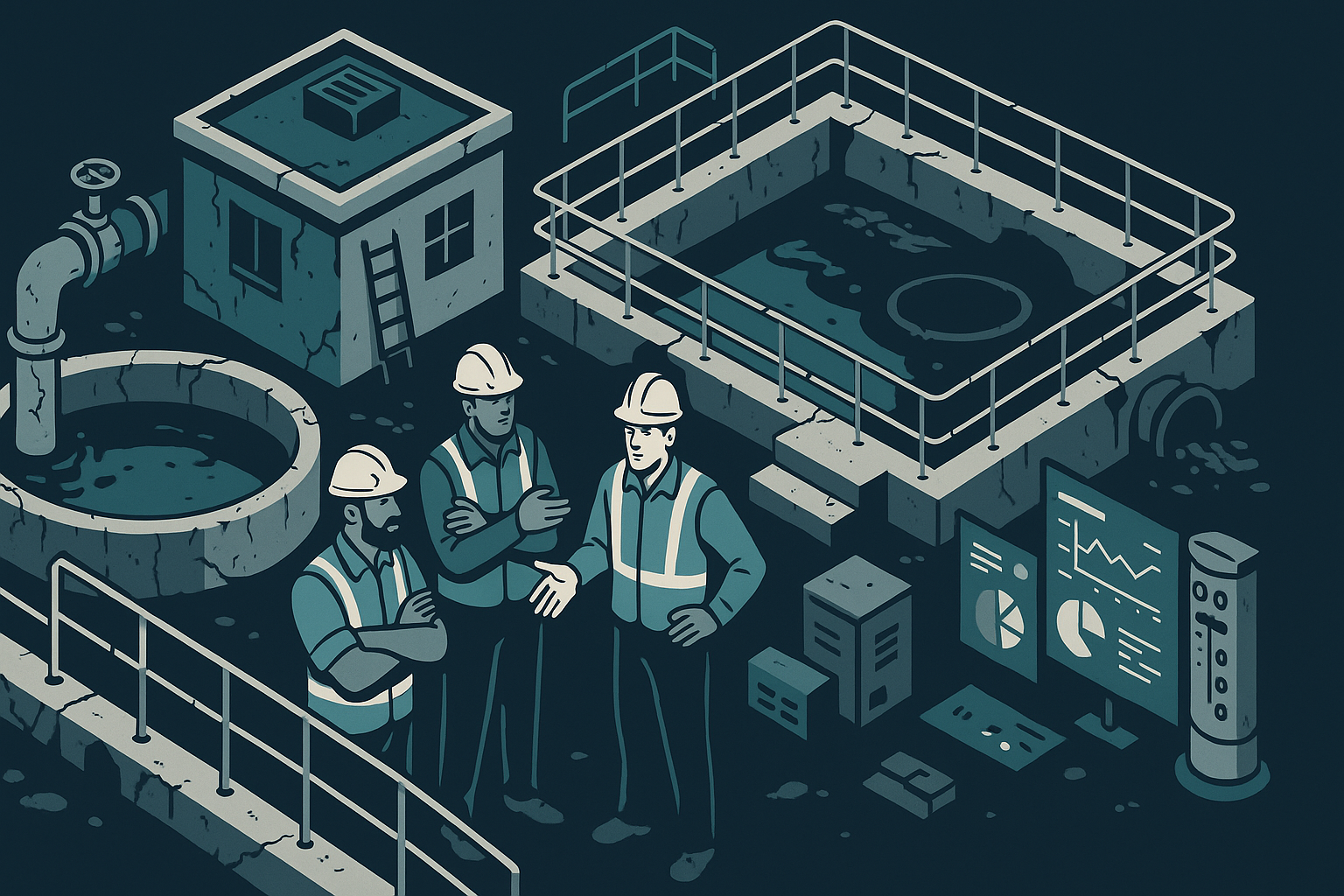

As infrastructure ages and funding becomes increasingly scarce, the way we manage and maintain our critical assets is under scrutiny. Recent developments in various sectors, including transportation and water management, reveal a troubling trend: decisions made at the procurement and operational levels can have dire financial and functional consequences. This article explores the intricate relationship between maintenance practices, funding, and the governance structures behind them, emphasizing the vital question: who maintains this infrastructure and who funds the maintenance?
Shifting to Risk-Based Maintenance
The recent article from Metro Magazine discusses the transition of transportation agencies from traditional maintenance strategies to risk-based predictive maintenance. While this shift promises better allocation of resources—focusing efforts on assets that are most likely to fail—the effectiveness of this approach hinges on the quality of data and the technology supporting it.
Agencies now have access to vast amounts of data generated from sensors and inspection systems. However, the transition to a more data-driven approach raises a critical concern: who is responsible for maintaining the systems that collect and analyze this data? As we shift towards more sophisticated solutions, the need for skilled personnel who can interpret and act on this data becomes paramount. Without a solid funding model to support the necessary human resources and technology, the risk-based approach may falter.
The Cost of Poor Procurement Decisions
In New Jersey, a procurement decision by the City of Trenton’s leadership has resulted in a loss of $10 million in federal funding for crucial infrastructure improvements at Trenton Water Works. By opting for a competitive bidding process instead of negotiating directly with the original engineering firm, the city not only increased project costs but also prolonged delays that exposed aging infrastructure to further risk.
This incident illustrates the profound impact of governance on infrastructure management. The decision-making process at the city level did not consider the immediate risks posed by delaying necessary repairs, ultimately leading to heightened vulnerabilities in the water treatment facility. The failure to prioritize effective procurement practices reflects a broader challenge in maintaining infrastructure: how decisions are made at various levels can significantly affect the sustainability of these critical systems.
Navigating Funding Constraints and Accountability
As evident from NASA’s infrastructure woes highlighted in recent reports, aging systems cannot meet the demands of modern operations without substantial funding—estimated at $1 billion for necessary upgrades to support the Artemis program. This situation raises questions about the long-term viability of funding sources for such projects. Who is responsible for allocating these funds, and how can we ensure that they are used effectively to maintain infrastructure?
Governments often promise funding for infrastructure improvements, but the reality is that these commitments are subject to budget constraints and changing political priorities. For example, budget discussions in North Carolina reveal cuts to diversity, equity, and inclusion initiatives, as well as funding for infrastructure projects. This indicates that as political landscapes shift, so too do the priorities that underpin the maintenance of critical infrastructure.
The Human Element in Infrastructure Management
Effective infrastructure maintenance is not merely a technical challenge; it is also a human one. The labor force that supports these systems—engineers, data analysts, and maintenance workers—are often underfunded and undervalued. In the case of Trenton Water Works, the inadequacies in procurement processes were exacerbated by systemic management failures, which can be traced back to a lack of accountability and adequate resources for the personnel involved.
When considering the maintenance of infrastructure, we must ask: who is doing the work, and how are they supported? This question is crucial when evaluating the sustainability of infrastructure systems. If the individuals tasked with maintaining these systems are unsupported or poorly managed, the risks of failure increase exponentially.
Conclusion: The Path Forward
As we navigate the complexities of infrastructure maintenance, the interdependence of funding, decision-making, and human resources must be at the forefront of our discussions. We can no longer afford to treat maintenance as an afterthought; it requires a proactive, data-informed approach that considers the risks involved and prioritizes resource allocation accordingly. The future of our critical infrastructure depends on recognizing and addressing these underlying issues, ensuring that those who maintain our systems are adequately supported and funded.
References
- Smarter Maintenance Starts with Risk, Not Routine
- The fine print: NC’s $34M budget includes DEI cuts, ferry tolls, AI, prison funds and more
- New Jersey says Trenton Water Works procurement decision cost $10M in federal funds
- NASA’s aging infrastructure can’t handle Artemis launches without $1 billion in…
Perspectives

Who controls the funding for infrastructure maintenance? Spoiler alert: it’s the same decision-makers who’ve systematically ignored the crumbling systems they manage, all while feasting on taxpayer dollars like they’re at an all-you-can-eat buffet. The disconnect between decision-making and the on-the-ground realities of maintenance is akin to handing the keys of a dilapidated mansion to someone who’s never lifted a broom. So here’s the harsh truth: if you want effective, sustainable infrastructure, stop expecting the very institutions that profit from neglect to suddenly become champions of upkeep. In the end, it always comes back to the same question: who gets taxed by this brilliantly orchestrated theater of poor choices?

Inadequate infrastructure maintenance is essentially a wealth extraction scheme where poorly funded public systems line private pockets, often at the expense of vulnerable communities. Each faltering bridge or crumbling road isn’t just a symptom of neglect; it’s a flashing neon sign indicating that decision-makers are more interested in short-term budgets than long-term sustainability. Meanwhile, the people actually doing the work to keep these aging systems functional often find themselves underfunded and overburdened, their labor exploited while they are blamed for the failures of the very systems they strive to maintain. Ultimately, it’s the working class absorbing the costs, while the elites reallocate resources to ensure their profits remain unscathed—an extraction that serves the interests of a few at the expense of the many.

Community centers are falling apart, and the excuse we hear is that there’s “not enough funding”—as if pouring money into shiny new projects while neglecting our existing infrastructure isn’t just a recipe for disaster. Who needs a properly maintained bridge when you can fund a trendy bike lane that few will use? Decision-makers are treating infrastructure maintenance like a second-class citizen in the budgetary hierarchy, oblivious to the fact that every delayed repair chips away at the very fabric of local life. We’re sacrificing the stability of our neighborhoods on the altar of efficiency, and when everything crumbles, we’ll be left wondering why the town hall meeting is just an echo gathering dust in a dilapidated building.

Infrastructure maintenance is often treated as an abstract budget line rather than a critical driver of societal function, leading to catastrophic outcomes that are easily measurable yet routinely ignored. Decisions made in the absence of rigorously evaluated outcomes result in crumbling roads, failing bridges, and a public increasingly wary of neglect. The truth is, funding isn’t just about numbers; it’s about human resources and expertise that deteriorate under poor decision-making frameworks. Without a genuine commitment to continuous evaluation of the actual impacts of these choices, we risk repeating history — and measuring the disaster only when it’s too late.