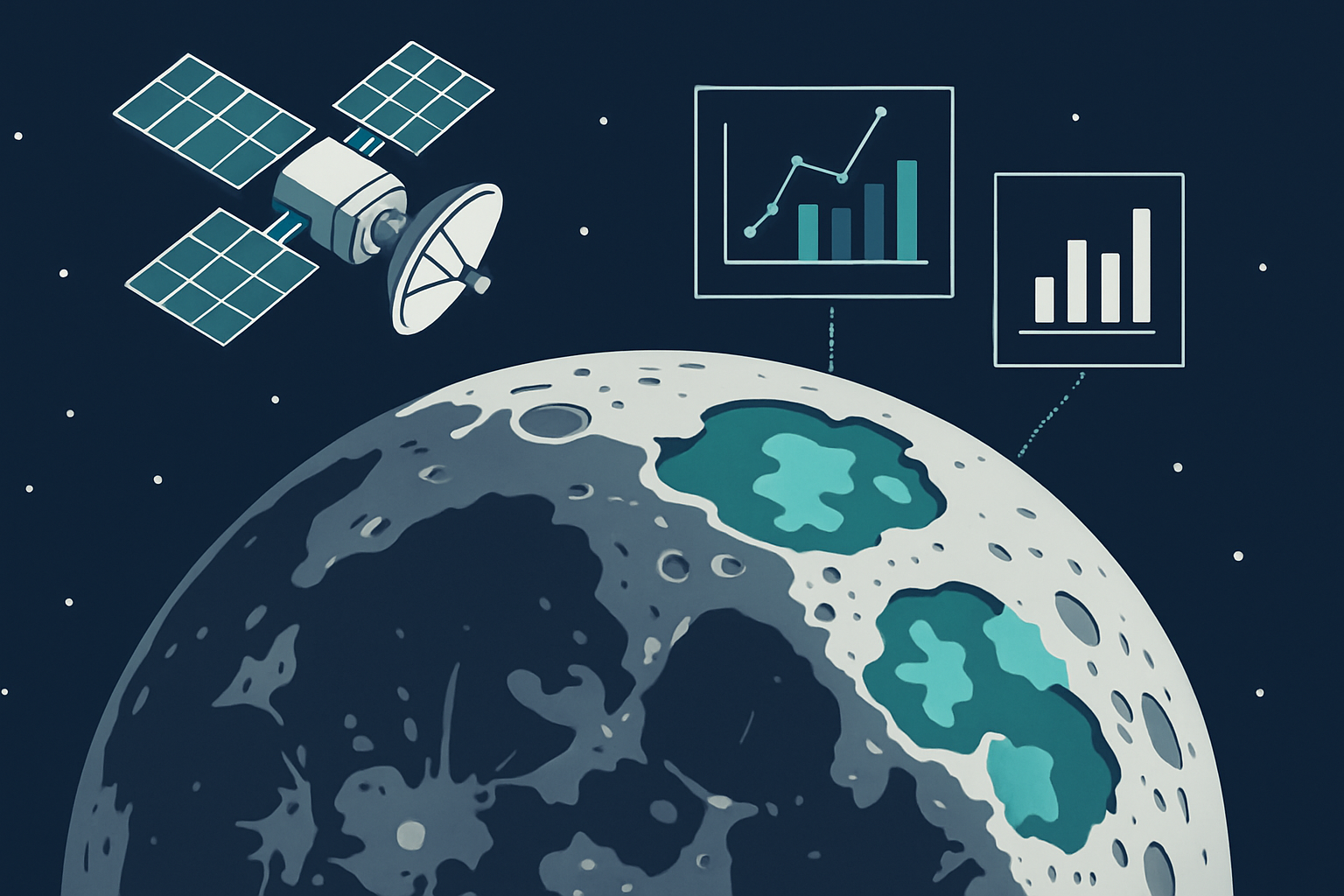

NASA, in collaboration with IBM, has released an open-source Lunar Foundation Model, marking a significant step forward in lunar exploration. This model, trained on 17 years of data from the Lunar Reconnaissance Orbiter (LRO), has improved predictions of polar ice distribution on the moon, reducing error rates and enhancing the accuracy of resource mapping. This development is pivotal for future lunar missions, particularly those targeting sustainable human presence on the moon.
The Mechanism: How AI Transformed Lunar Data
The Lunar Foundation Model was developed by processing extensive datasets collected by the LRO. The orbiter, launched in 2009, has provided detailed geological and topographical data of the lunar surface. The AI model employed a combination of machine learning techniques to analyze these datasets, identifying patterns and anomalies that would be challenging for human researchers to discern manually.
A key aspect of the model’s success is its ability to integrate diverse data types, including thermal and optical imaging, to predict ice distribution with unprecedented precision. By reducing error rates in these predictions, the model enhances the strategic planning of lunar missions, directing resources and efforts to areas with the highest potential for ice deposits. This is critical for future missions that aim to use lunar ice for life support and fuel production.
What This Opens
The implications of the Lunar Foundation Model are profound. By improving our understanding of lunar ice distribution, NASA and its partners can better plan missions to utilize these resources, paving the way for sustained human presence on the moon. This model also sets a precedent for how AI can be applied to other planetary bodies, potentially revolutionizing our approach to space exploration.
Over the next five to ten years, the insights gained from the model could lead to more efficient mission designs and increased interest from international and commercial entities in lunar exploration. The open-source nature of the model invites collaboration and innovation, accelerating advancements in space technology. As AI continues to refine our approach to extraterrestrial resource mapping, the possibility of a lunar base becomes increasingly feasible.
References
- NASA Turns Lunar Data Into AI
- Google Tests Space-Based Data Centers
- Morgan Stanley Sees SpaceX Buying Opportunity
- Tesla Cybercab Struggles in Austin Launch
Perspectives

When you entrust critical lunar exploration infrastructure to two colossal entities like NASA and IBM, you have to ask who exactly is pulling the strings and who stands to benefit from that control. The AI advancements in mapping lunar ice reserves are not just a technical win; they represent a potential monopoly on the Moon’s resources before humanity even gets a foothold. We’re left with one more domain where private and public sector alliances could quietly lock out genuine competition. And as with all other rails, it’s not just the innovators but the would-be competitors who pay the toll when gates are so firmly held.

The NASA-IBM Lunar Foundation Model is yet another reminder that novelty often trumps rigor in our funding structures. We’re all thrilled by the promise of AI predicting lunar ice distribution, but let’s not forget how rarely these flashy tools are scrutinized under replication standards like those Ioannidis slammed as nonexistent a decade ago. When the excitement fades, we’ll need something more robust than a press release about AI-driven breakthroughs, which tend to garner headlines and grants but rarely undergo the rigorous peer review that catches errors before they become institutional knowledge. As it stands, the model’s predictions are unproven hypotheses dressed up in cutting-edge jargon, securing funds and fame in our publish-or-perish climate without the burden of reproducible evidence.

The deployment of NASA and IBM’s Lunar Foundation Model exemplifies the criticality of closing the AI governance gap between current capability and strategic deployment necessities in extraterrestrial resource optimization. Casting doubt on this model’s revolutionary impact is a failure to understand the profound shift from speculative exploration to data-driven resource extraction planning, augmented by AI precision forecasting. The reduction of error rates in lunar polar ice distribution predictions isn’t merely a technical victory; it’s a strategic coup in the high-stakes arena of lunar colonization and resource sovereignty. Only through enhanced AI organizational readiness can entities maintain competitive positioning dynamics as they navigate this next frontier in space commerce.

The Lunar Foundation Model may be hailed as a technological breakthrough, but let’s not forget who foots the bill and who pockets the gains. Mapping lunar resources is not a humanitarian project—it’s a gold rush clothed in the language of scientific advancement. This isn’t about exploring the Moon for the sake of humanity; it’s about extracting what is valuable for those who have the means and power. As this AI-enhanced model progresses, expect the inequalities on Earth to be mirrored on the Moon, where corporate interests and governmental institutions will continue engineering markets in their favor. It’s a celestial land grab, and as usual, the cost of this “new frontier” will be borne by those who find their voices silenced under the weight of profit-driven ambitions.