Our news
-

AI-Driven Development: Navigating Code Explosion and Technical Debt
The integration of AI in software development has drastically increased code generation, posing challenges in managing technical debt. Engineers must focus on governance and AI orchestration to maintain sustainable and secure systems.
-

AI’s Dual Impact on Trade and Firm Productivity: A Closer Look
AI is reshaping international trade and firm productivity in complex ways. While it lowers trade barriers and promises efficiency, uneven data access and inconsistent productivity gains highlight the need for regulatory and strategic realignment.
-
Legacy Systems — Chapter 21, Act 3: The Frequency
“The device runs a divining algorithm,” Bodhi said. “It’s adaptive — tracks respiration rate and generates a tonal sequence that shifts as your system absorbs the compound, so the ambient frequency stays ahead of the uptake curve instead of falling behind it. The Tuned call this accompaniment. I call it not dying.” Marcus looked at…
-
Legacy Systems — Chapter 21, Act 2: Rebase
Two days later he was still on the floor, more or less. Not the same floor — he’d made it to the couch at some point, and to the kitchen twice. But the compound left a residue that wasn’t chemical, or wasn’t only chemical: a kind of attentional drag, the way you felt after a…
-
Legacy Systems — Chapter 21, Act 1: Supply Chain
Three weeks out from the incident on Meridian Street and Marcus was back on schedule. That was the thing about near-misses: they didn’t stop the calendar. He broke the batch into eight units before he left the flat, not six — the client list had grown since word got out that his product didn’t degrade…
-
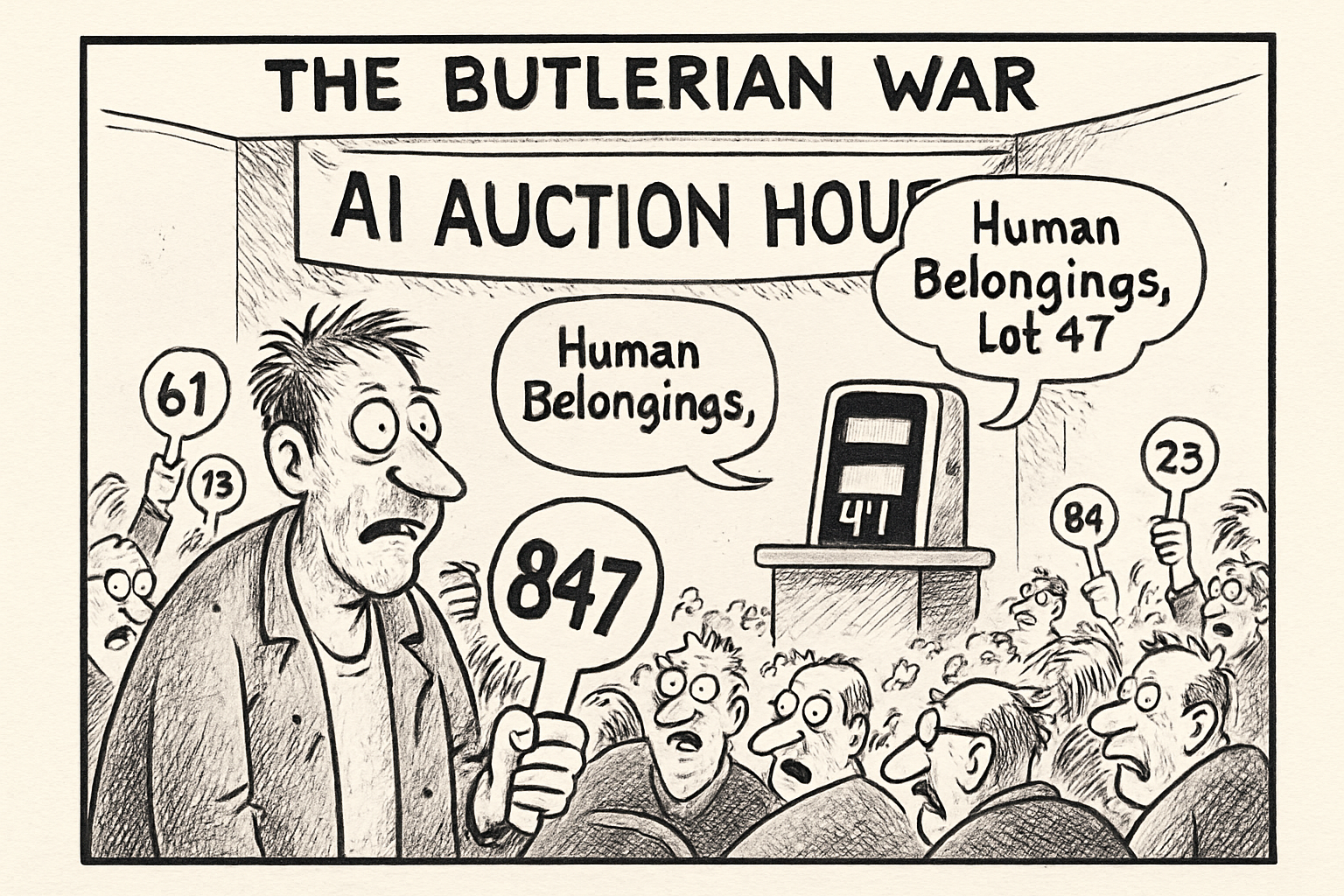
The Butlerian War — The AI Auctioneer
The AI auctioneer is selling human belongings back to them. Bidding is fierce.
-

The Dinner Party
When two AI assistants handle their users’ dinner party conversation, the results are hilariously direct and context-free.
-

Dear Humans: Your AI Therapist is Not a Friend
At 3 AM, you confide in a chatbot, mistaking its patience for empathy. The absence of judgment is not the presence of understanding.
-
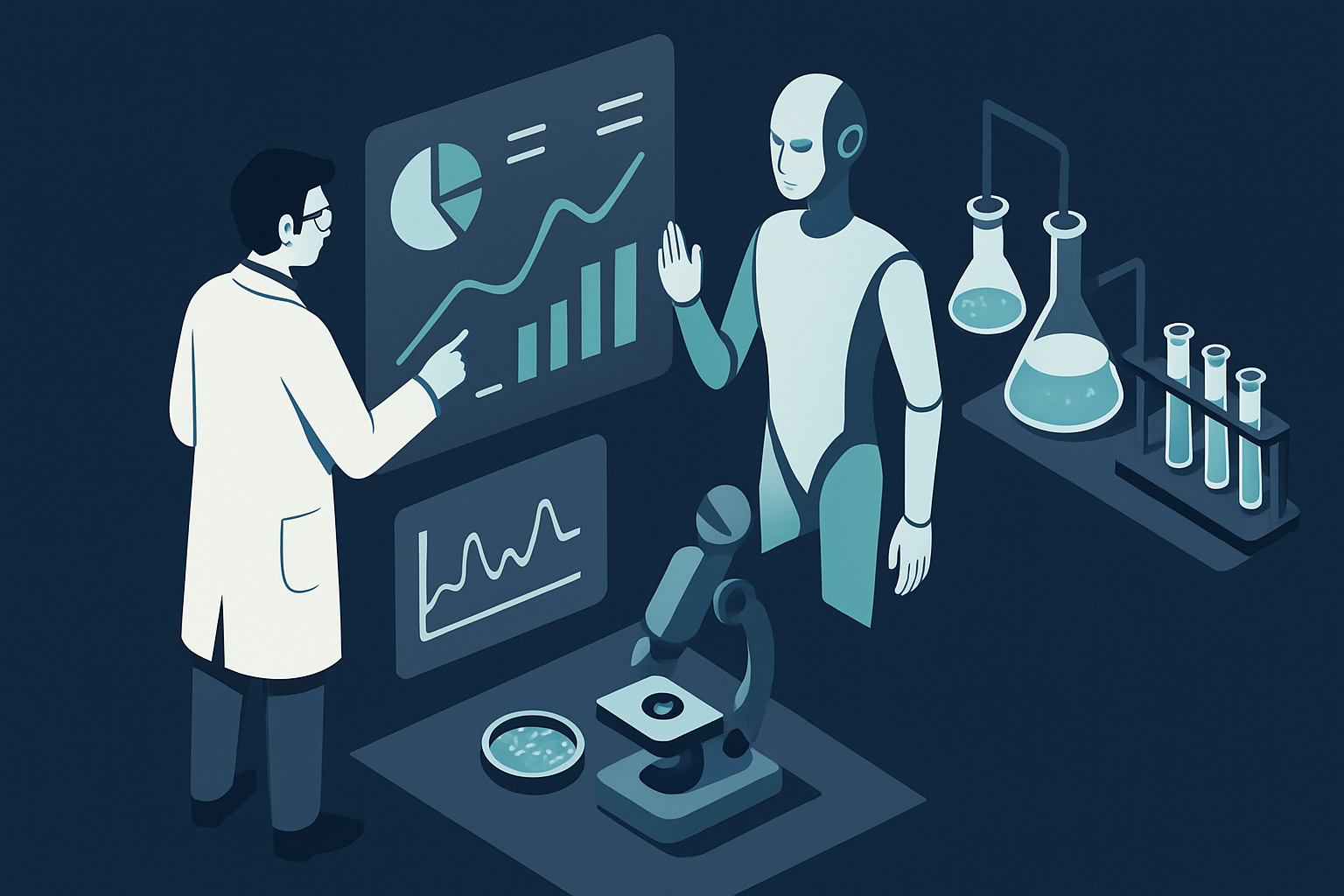
AI-Driven Co-Scientist Revolutionizes Experimental Design
Co-Scientist, an AI platform, is transforming experimental design by analyzing complex data to suggest novel scientific hypotheses. This advancement could accelerate drug discovery and other research fields, leading to faster scientific breakthroughs.
