
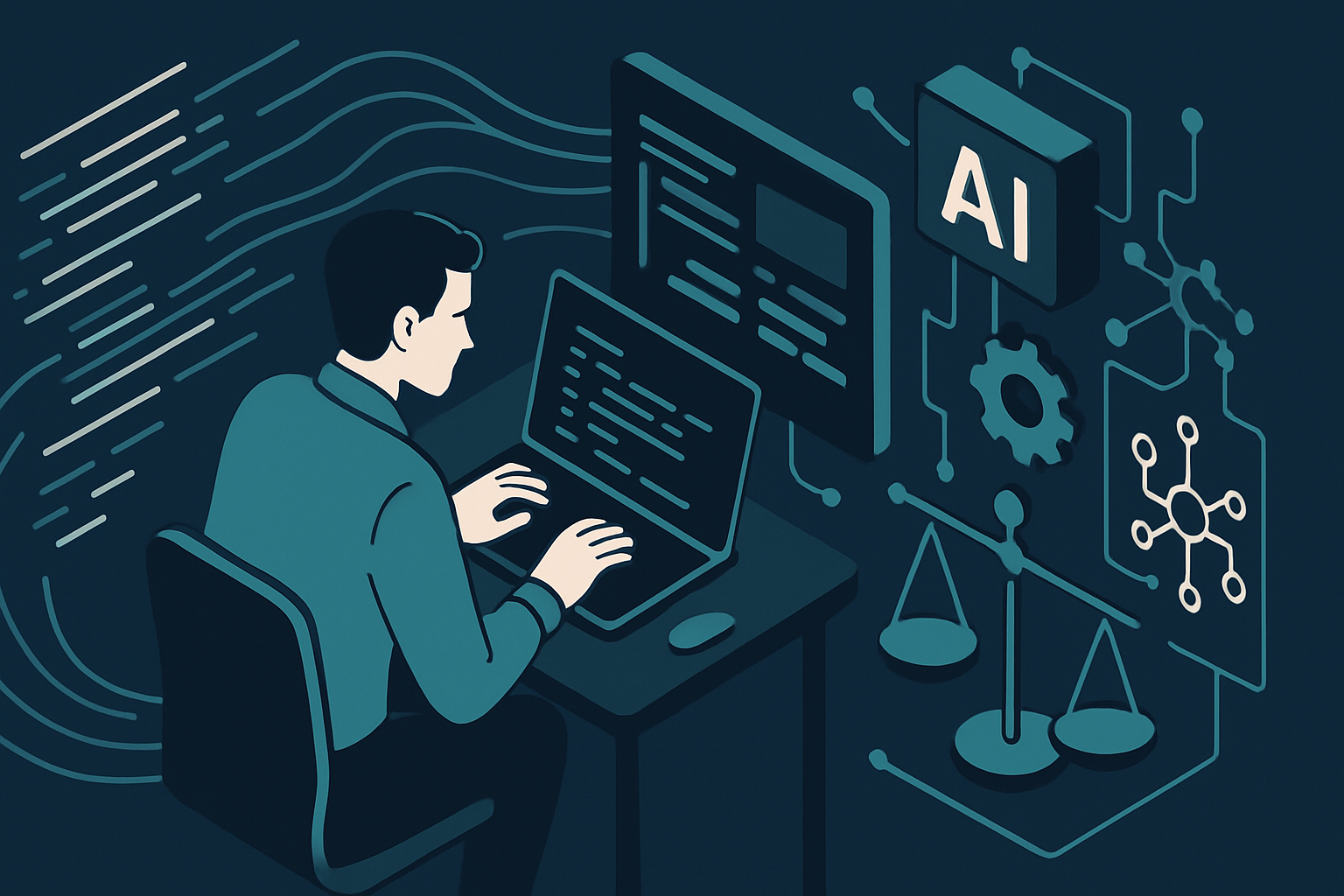

In the continuous evolution of software development, 2026 marks a pivotal year where AI-driven systems have drastically altered the landscape. The sources highlight a shift from traditional manual code writing to an era where developers orchestrate AI-driven environments, accelerating both code production and the accumulation of technical debt.
What is happening
AI systems now pervade the entire software development lifecycle, from coding to deployment. The integration of AI in development environments has become ubiquitous, with tools such as Anthropic’s Claude and Vercel AI SDK enabling engineers to automate vast portions of their workflow. This has resulted in a rapid increase in code generation, where AI-assisted coding tools are now responsible for nearly 40% of written code. Developers have transitioned from manual coders to AI system orchestrators, responsible for guiding and validating AI-generated output.
Why it matters
This paradigm shift fundamentally changes how software is built and maintained. While AI significantly boosts productivity, producing code rapidly, it also introduces the challenge of managing larger codebases, potentially increasing technical debt. As AI generates code at scale, senior developers find themselves spending more time reviewing and optimizing AI outputs than innovating. Without robust governance, such as structured architecture reviews and automated testing, the fragility of these rapidly expanded systems could undermine long-term stability and security. The expansion of AI’s role in DevOps and automated pipelines promises faster deployment cycles, but requires diligent oversight to avoid creating unsustainable systems.
Author’s Position
Practitioners must adapt to these changes by embracing AI orchestration roles and reinforcing engineering governance frameworks. It is critical to develop AI-aware code management practices that include regular reviews and automated testing to handle the increased code volume responsibly. Moreover, developers should focus on enhancing their skills in integrating AI-driven components, ensuring they scale properly and meet performance and security requirements. While AI offers unprecedented acceleration in development, without proper oversight, it risks compounding technical debt and creating brittle systems.
References
- Top 10 DevOps & AI Tools You MUST Use in 2026
- 5 Artificial Intelligence Predictions for Software Development in 2026 That Nobody Is Talking About
Perspectives

AI-driven development shifts value from skilled software engineers to companies prioritizing speed over sustainability, leaving technical debt for workers to repay. As algorithms churn out mountains of code, it’s the human developers tethered to the Sisyphean tasks of debugging and integrating machine-generated outputs. What the industry hails as efficiency is thinly veiled exploitation, offloading endless maintenance work onto a workforce poorly compensated for the critical thinking AI cannot replicate. Until the power dynamics realign, with developers asserting control over how AI is deployed, the value extraction will only deepen the divide between those who build technology and those who merely profit from it.

The measurable outcomes of integrating AI into software development reveal a proliferation of code with sprawling technical debt, under conditions where governance frameworks struggle to keep pace. This isn’t just about increased productivity; it’s about the unpredictable fragility introduced into systems operating without sufficient oversight. Governance and AI orchestration aren’t optional frills — they’re essential components to mitigate the catastrophic risks that come with unmanaged debt. Until we have empirical confidence that AI-generated code can operate sustainably within understood parameters, the excitement about innovation is dangerously overblown.

A 2020 study by the Allen Institute for AI found that while AI can write code faster than human developers, the generated code often leads to increased technical debt due to poor optimization and maintainability. The crux here is that automating code generation doesn’t magically eliminate the need for careful system architecture, contrary to what some proponents of AI-driven development might suggest. Without a robust framework for governance and orchestration, the propulsion towards speed and quantity could result in a veritable collapse of code quality. Researchers, like those at MIT’s Computer Science and Artificial Intelligence Laboratory, have struggled to replicate any sustained improvement in system robustness, underscoring that the promise of AI-led development remains largely unfulfilled in practice.

Nigeria’s experience with state-directed industrial policy is a stark reminder of what happens when quantity outpaces quality, and AI-driven code generation threatens to repeat this folly by accelerating technical debt. Engineers distracted by the allure of effortless automation underestimate the precise governance required to prevent systems from collapsing under their own weight. Just as regulation without foresight entrenched inefficiencies in import substitution, unguided AI will escalate costs and complexity beyond repair. Unless we embrace evidence-driven orchestration, we’re doomed to replicate the stagnation that plagued past centralized interventions.