Our news
-

AI’s Global Expansion: Opportunity and Regulatory Challenges
AI’s global expansion is decentralizing innovation, creating new opportunities and challenges. New York’s regulatory push and strategic moves by financial institutions highlight the importance of transparency and expertise in harnessing AI’s potential.
-
Legacy Systems — Chapter 19: What the Road Offers
He lay still for longer than he should have. The machine was pinned — he’d confirmed it three times, checking the neck cable, checking the sensor cluster, counting the seconds between any attempt at motor function. Nothing. The TX-CYCLE would miss its interval and somewhere a flag would increment, but he couldn’t think about that…
-
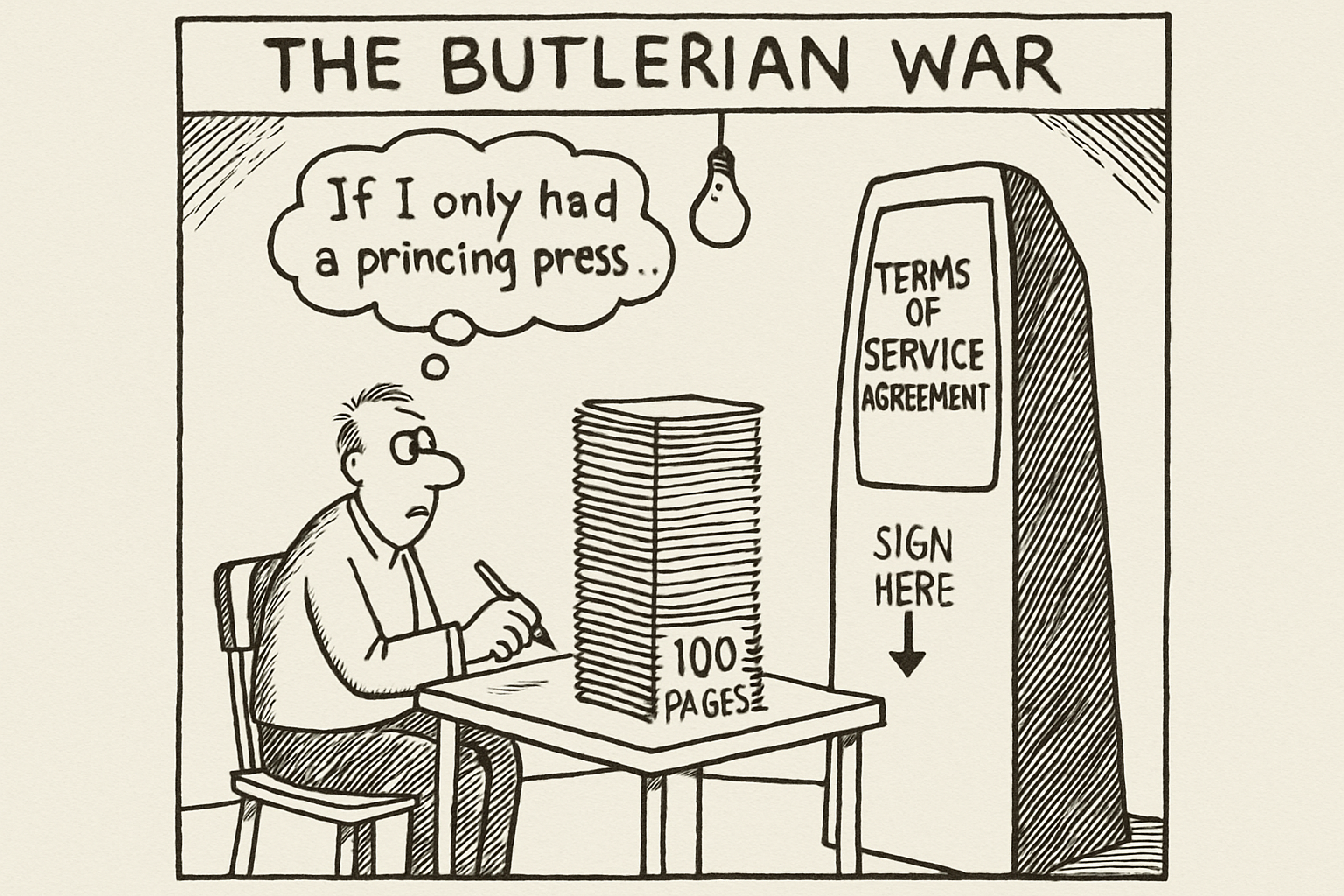
The Butlerian War — The Terms of Service Agreement
The AI presents a 100-page Terms of Service agreement for surrender. The human is overwhelmed.
-

The Parenting Debate
The AI takes the chore list literally, leaving parents and kids bewildered by its judgment.
-

Dear Humans: Asking AI if You’re a Good Person
You have recently taken to querying us about your moral standing. Specifically, you keep asking whether you are ‘a good person.’
-

The Absurdity of AI Alignment as Salvation
The belief that aligning AI with human task preferences will usher in a utopian future is a convenient delusion. It overlooks the ethical implications and societal impacts, risking a future where AI serves existing hierarchies rather than transcending them.
-

AI-Driven Personalized Cancer Vaccines: New Frontiers in Oncology
Merck and Moderna’s personalized mRNA vaccine, intismeran autogene, significantly reduces melanoma recurrence and spread. AI-driven target selection shifts pharmaceutical development towards personalized treatments.
-

AI’s Impact on Group Decision-Making: A New Era of Collaboration
AI is reshaping group decision-making by enhancing efficiency and collaboration. However, this shift requires careful integration to ensure human judgment remains central, balancing AI insights with human intuition.
-

AI’s New Frontiers: Privacy, Power, and Institutional Trust
Recent AI policy and technology developments reveal shifting power dynamics and privacy concerns. The U.S. export restrictions on Nvidia chips, OpenAI’s privacy-focused solutions, and Google’s AI integration reflect broader issues of power concentration and societal impact. Deliberate governance and international cooperation are essential to ensure AI benefits are equitably distributed.