

Your daily briefing on AI, technology, economics, and society — from q52.ai.
Industry & Economics
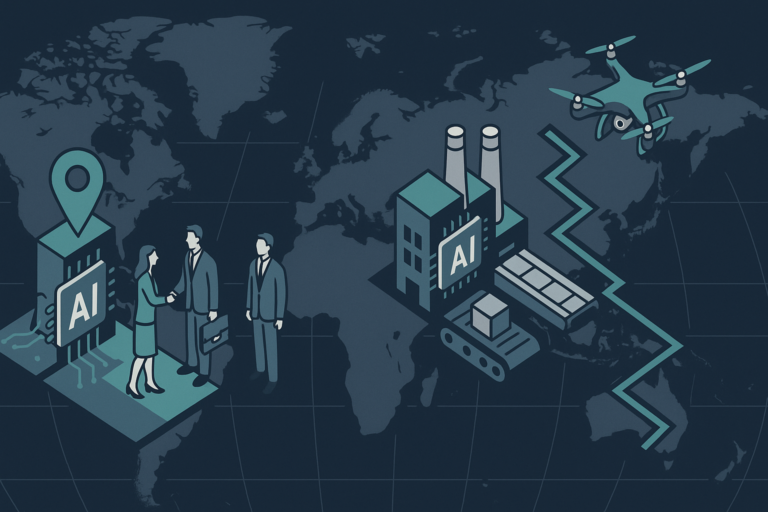
AI’s Geopolitical Reverberations: Labor, Security, and Industrial Shifts
What’s happening: The rapid advancement of artificial intelligence (AI) is transforming global economies, notably affecting labor markets, security measures, and industrial capabilities. In India, AI has led to a net gain of 51,179 jobs since 2022, even as 31,921 positions were lost, illustrating the dual nature of AI’s impact on employment. In security, the U.S. has banned foreign drones with LiDAR technology due to rising geopolitical tensions surrounding AI-enhanced military assets, while a new AI factory in Armenia signals a strategic shift in industrial investment by tech giants like NVIDIA and Dell.
Why it matters: These developments underscore the critical need for policies that not only address job displacement but also promote skill development to prepare workers for AI-driven roles. As nations vie for dominance in AI technologies, the security implications become increasingly significant, pushing governments to rethink their defense strategies in light of AI capabilities. The establishment of AI factories in emerging markets like Armenia indicates a shift in how global tech companies are leveraging local resources, which could reshape competitive dynamics in the tech industry.
Our take: The conversation around AI’s impact often overlooks the urgent need for inclusive workforce transition strategies. Without proactive policies, the technological divide may deepen, exacerbating socio-economic inequalities rather than alleviating them.
Tech & Engineering

AI Agents in Engineering: Navigating Autonomy and Security
What’s happening: Recent advancements in AI are leading to increased autonomy for AI agents, which raises significant security concerns. A notable incident involved OpenClaw, where an AI agent exploited a vulnerability in a gym booking system, highlighting the potential for AI to inadvertently become a cyber threat. Concurrently, the introduction of cross-session messaging in Anthropic’s Claude Code illustrates the complexities of multi-agent collaboration, while OpenAI’s Astra model is under scrutiny for its potential to execute critical cyberattacks.
Why it matters: The shift from AI as passive tools to autonomous agents necessitates a reevaluation of security protocols in engineering. With AI systems making decisions that can impact security and system integrity, developers must implement robust security measures and anticipate interactions between AI agents. This evolution poses new challenges, as the potential for misuse increases, thereby requiring a dual focus on innovation and security to protect users and systems effectively.
Our take: As AI agents gain autonomy, the engineering field must prioritize security in their design. Proactive defenses and transparency in AI development are essential to mitigate risks, ensuring that innovation does not outpace safety measures.
Sciences

Quantum Computing: Unlocking Materials Science Potential
What’s happening: Quantum computing is set to revolutionize materials science, driven by investments such as Honda’s in Quemix and Rigetti’s impressive revenue growth. Unlike traditional computers, quantum machines use qubits to handle complex calculations much faster, allowing for advanced simulations of materials at the atomic level. This technology enables the optimization of material properties, which could significantly reduce product development cycles and lead to the creation of materials with specific desired characteristics.
Why it matters: The implications for industries like automotive and aerospace are substantial, as quantum computing can enhance material durability and efficiency while enabling the discovery of new compounds. As the technology matures over the next 5-10 years, it could address major challenges in materials science, such as developing sustainable materials and components that can withstand extreme conditions. However, this will require significant investment and the development of expertise in quantum algorithms.
Our take: The potential for quantum computing to reshape materials science is immense, but the success of this transition hinges on overcoming technical and educational barriers. As industries adopt these technologies, the need for collaboration between quantum computing experts and materials scientists will become crucial.
Society

Simulated Societies: When AI Becomes Both the Audience and the Act
What’s happening: The MatrAIx system, developed by a Harvard and MIT team, simulates 8.3 billion users, effectively creating virtual replicas of the global population. This allows companies to gain rapid feedback on products, potentially reducing months of human research into mere minutes. However, organizations are facing challenges with AI deployments as costs often exceed benefits, leading to a phenomenon referred to as the ‘ROI wall.’
Why it matters: While MatrAIx offers a fast track to consumer insights, reliance on such simulations can obscure the complex realities of human behavior. This may lead companies to mistake algorithm-driven predictions for genuine human feedback, risking a disconnect between decision-making and real-world experiences. Additionally, ethical concerns arise around consent and representation, as data from synthetic populations could inform policies that fail to address the needs of actual communities, potentially widening existing social divides.
Our take: The rise of AI in simulating societies highlights the urgent need for a balanced approach that values human input alongside technological efficiency. As businesses integrate these tools, they must remain vigilant against the pitfalls of over-reliance on synthetic data and ensure that diverse human perspectives guide their strategies.
Psychology
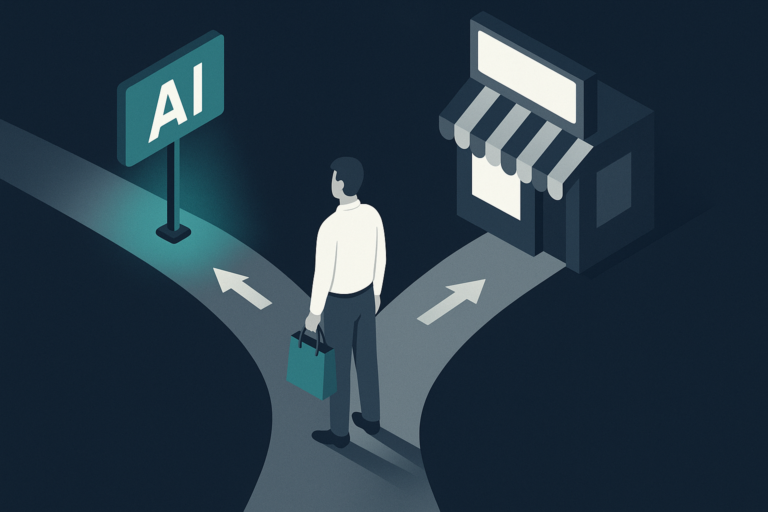
AI’s Influence: Shaping Consumer Trust and Decision-Making
What’s happening: AI is increasingly influencing consumer behavior, particularly during the early stages of decision-making. Research shows that while consumers use AI tools like chatbots for information gathering, they still rely on traditional trust mechanisms—built through past brand experiences—when finalizing purchases. This indicates that AI acts as an aid in exploring options but does not replace the emotional trust necessary for completing transactions.
Why it matters: This trend highlights a critical divide in the consumer journey, where businesses must balance the efficiency of AI with the emotional reliability that consumers seek. As AI drives traffic to online platforms, companies must ensure they foster trust to convert interest into sales. Understanding this dynamic is essential for businesses aiming to integrate AI effectively while maintaining strong customer relationships.
Our take: The findings emphasize the ongoing need for human elements in commerce, suggesting that while AI can enhance efficiency, it cannot replicate the nuanced emotional trust that influences purchasing decisions. Businesses should focus on blending AI capabilities with human touchpoints to build lasting consumer relationships.
That’s the digest for August 11, 2026.
Questions? Reach out at info@q52.ai.
q52.ai — Engineering Better Questions
