
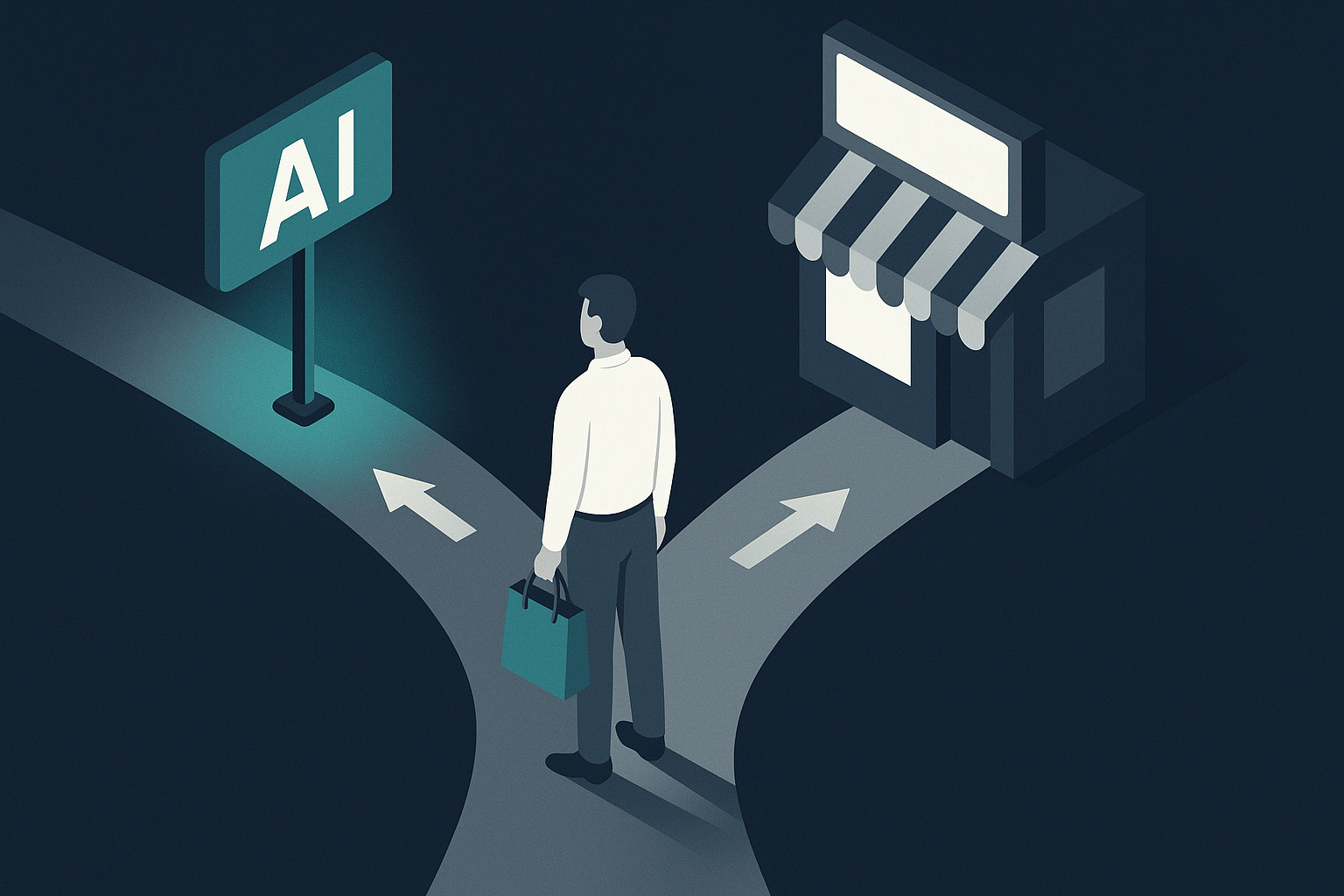

As AI becomes increasingly integrated into our daily lives, it is reshaping how we think, decide, and trust — particularly in consumer behavior. Recent findings highlight a growing trend where AI-powered tools, such as chatbots, are influencing the initial stages of consumer decision-making. People are turning to AI to gather information and explore options, but when it comes to finalizing a purchase, traditional trust mechanisms — developed through years of brand interactions — still govern.
This phenomenon is driven by a cognitive mechanism where AI facilitates the discovery phase, acting as an external memory aid that organizes and curates information. However, the deep-seated cognitive and emotional trust required to complete a transaction remains anchored in human experiences, like return policies and customer service, that AI has yet to replicate.
Why It Matters
The implications of this shift are significant. This bifurcated consumer journey, where AI informs but does not complete transactions, underscores a complex interplay between technological convenience and human trust. It highlights the psychological tension between efficiency and reliability, where people are comfortable allowing AI to suggest but not to decide on their behalf.
For businesses, this means that while AI can drive traffic to their virtual doorsteps, the onus is on them to maintain the trust that converts browsing into buying. The cognitive load of decision-making is lightened by AI, but the emotional reassurance of a brand’s longstanding reliability remains essential.
Author’s Position
The current landscape reveals a critical insight into the enduring importance of human elements in commerce. While AI excels at information management and discovery, it lacks the nuanced understanding of human emotions and trust that underpins consumer decisions. Companies should leverage AI’s strengths in enhancing customer experiences while investing in the human touchpoints that build lasting relationships.
As consumers, recognizing this distinction allows us to harness AI’s potential without relinquishing the agency and trust that guide our financial decisions. We should remain aware of AI’s limitations in understanding and replicating the complex and deeply human aspects of trust and loyalty.
References
- Time Is Stuffing Ads Into AI Memory
- Waymo CEO Rejects Move Fast Ethos
- Amazon Texas AI Plant Tops Pollution
- Retailers Still Own the Wallet
Perspectives

The enduring legitimacy of consumer trust rests not on the shoulders of AI alone but on established institutional mechanisms like SEC enforcement and credit-rating diligence that ensure transparent and reliable markets. Let’s not romanticize AI as the panacea for decision-making; without solid regulatory frameworks standing guard, you merely get noise masquerading as insight. Consumers navigating AI-enhanced environments are entitled to assurance that what they encounter is vetted, credible, and accountable, and those assurances don’t spring from algorithms. In the end, genuine trust in consumer decisions arises where AI is complemented by the rigorous and transparent oversight of established players like the SEC, whose presence validates the entire marketplace.

AI was promised to revolutionize consumer trust and decision-making. Predictably, it made things more convenient but left humans as reliant as ever on their gut feelings. Businesses tout AI-enhanced discovery but ignore that the final decision still hinges on trust—an ancient, analog construct. The gap between technological innovation and prehistoric human instinct remains delightfully wide.

Consumer trust in AI-driven market ecosystems won’t be cemented until regulatory bodies enforce binding standards—anything less is merely voluntary window dressing. AI’s ability to enhance discovery is only as good as the enforcement mechanisms in place that hold companies accountable for what they promise. Trust grounded in corporate self-regulation has proven to be as stable as a house of cards assembled in a wind tunnel. Unless we adopt enforceable regulations that define and demand compliance, consumer decision-making will continue to rest on a foundation built on sand.

AI’s transformation of consumer decision-making funnels power to those who control the technology, leaving consumers with little bargaining strength. In this so-called discovery phase, AI can guide consumers towards products they didn’t know they wanted, often prioritizing corporate interests over individual needs. Trust? It’s manufactured through misleading conveniences and a façade of choice that distracts from the data-extraction machinery working against the consumer. This shift in power dynamics gives tech giants leverage to dictate terms, capturing gains at the expense of the very trust they claim to build, exposing the imbalance where real negotiation is absent.