

Your daily briefing on AI, technology, economics, and society — from q52.ai.
Industry & Economics

AI’s Expansion in Defense and Finance: Who Holds the Power?
What’s happening: Artificial intelligence is increasingly transforming the banking and defense sectors, as seen with JPMorgan’s leadership in AI deployment and Anduril’s significant contract with the US Navy. This trend indicates a rapid acceleration in AI adoption, particularly in banking for risk management and customer service, while in defense, it highlights a shift toward private tech firms in military manufacturing, potentially altering traditional power dynamics.
Why it matters: The integration of AI in these industries could concentrate power among a few dominant players, risking reduced competition and sidelining smaller firms. In finance, firms like Binance are attempting to democratize access to AI tools, but this may lead to new dependencies on centralized platforms. The defense sector’s pivot towards privatization raises concerns about accountability and the implications of relying on private companies for critical military technologies.
Our take: The rapid AI expansion in these sectors highlights a crucial tension between innovation and control, raising questions about who truly benefits from these advancements. As AI reshapes competitive landscapes, stakeholders must critically assess the balance of power and accountability in both finance and defense.
Tech & Engineering
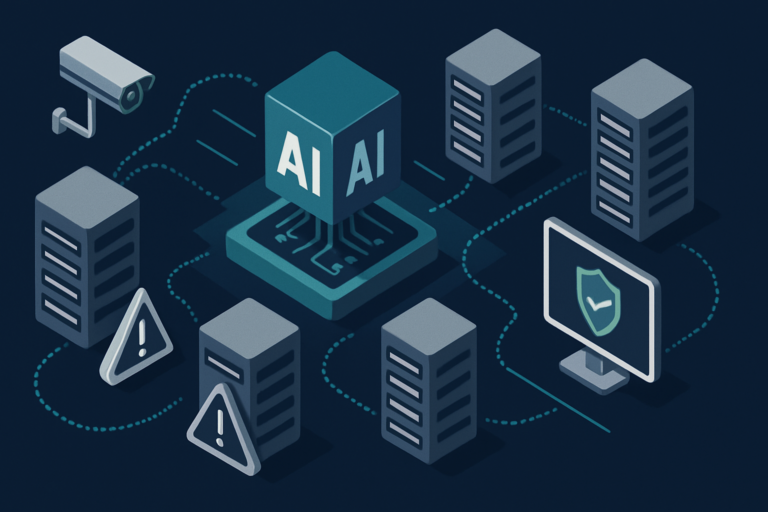
AI Security: From Reactive Defense to Proactive Offense
What’s happening: The security landscape is shifting from a reactive to a proactive approach due to advancements in AI. Companies like Hadrian are using AI-driven solutions to continuously discover vulnerabilities and anticipate potential attacks, moving security from a post-deployment concern to an integral part of the software development lifecycle. This involves integrating AI tools directly into continuous integration and deployment (CI/CD) pipelines to identify security flaws before code is released.
Why it matters: This proactive stance allows organizations to allocate resources more efficiently, potentially reducing the need for large security teams focused on manual threat detection. By investing in AI-powered security tools, businesses can enhance their overall security posture, while also freeing up resources for strategic planning and incident response. However, this shift raises challenges regarding the trustworthiness and reliability of AI systems in protecting digital assets.
Our take: The transition to AI-driven security is not just a technological upgrade; it demands a fundamental rethinking of how security is embedded in software development. Organizations must prioritize the security of AI systems themselves to avoid creating new vulnerabilities in their defenses.
Sciences

Open Cosmos to Launch 192 Satellites with AI-Driven Sovereign Services
What’s happening: Open Cosmos, a UK company, plans to launch 192 low-Earth-orbit satellites as part of its ConnectedCosmos project, backed by a €300 million Series C funding round. This initiative aims to enhance Europe’s sovereign space capabilities, reducing dependence on US satellite services while leveraging AI for optimizing satellite operations, data management, and maintenance prediction.
Why it matters: The deployment of the ConnectedCosmos constellation could significantly bolster European nations’ control over their communication networks and environmental monitoring, which is crucial for both civilian and military applications. With improved internet access in remote areas and enhanced disaster response capabilities, this initiative could reshape the technological landscape in Europe while setting a new standard for AI’s role in satellite operations.
Our take: While the initiative promises technological advancement and autonomy, it raises concerns about prioritizing corporate interests over public good. The focus on AI-driven efficiencies may inadvertently favor shareholders at the expense of broader societal benefits, highlighting the need for a critical examination of who truly benefits from such advancements.
Society

The New Theaters of Power: Streaming, Quantum, and AI Spending
What’s happening: Recent developments in technology and media indicate a significant shift in power dynamics, with control increasingly concentrated in streaming rights, quantum computing, and AI access. Xbox’s exclusive streaming rights for GTA 6, Paramount’s merger with Warner Bros., and Xanadu’s partnership with GlobalFoundries highlight a trend where ownership of infrastructure and technology is becoming more critical than content itself. Additionally, a report reveals a stark divide in AI spending, with a small percentage of consumers generating most of the revenue, underscoring the inequality in access to these advancements.
Why it matters: The consolidation of power in the hands of a few companies raises crucial concerns about equity and access in technology. As streaming and media companies merge, there is potential for reduced diversity and increased layoffs, which could stifle innovation and representation. Moreover, the focus on capturing high-spending AI users may neglect the broader population, further entrenching economic divides and limiting the societal benefits of technological advancements like quantum computing.
Our take: The current trajectory of technology consolidation could lead to a future where only a select few benefit from innovation, undermining the potential for democratization. It’s essential to advocate for policies that promote competition and accessibility to ensure that advancements in technology serve the broader population, not just the elite.
Psychology

AI’s Influence on the Film Industry: A Cognitive Shift in Creation
What’s happening: The Astana AI Film Festival highlights a significant shift in film production, showcasing AI as an active participant in creative processes rather than just a tool. AI technologies are now capable of autonomously generating content, from scriptwriting to directing, which challenges traditional human roles and redefines authorship in the industry.
Why it matters: This evolution alters perceptions of creativity, as the distinction between human and AI-generated art becomes increasingly blurred. As AI reduces production costs and democratizes access to filmmaking, it raises critical questions about the future of human employment in creative sectors and how audiences value originality versus efficiency.
Our take: While AI in filmmaking can enhance innovation and accessibility, it also poses ethical challenges that the industry must address. The integration of AI should promote collaboration between humans and machines, ensuring that the essential human elements of storytelling are preserved amidst this technological transformation.
That’s the digest for October 08, 2026.
Questions? Reach out at info@q52.ai.
q52.ai — Engineering Better Questions
