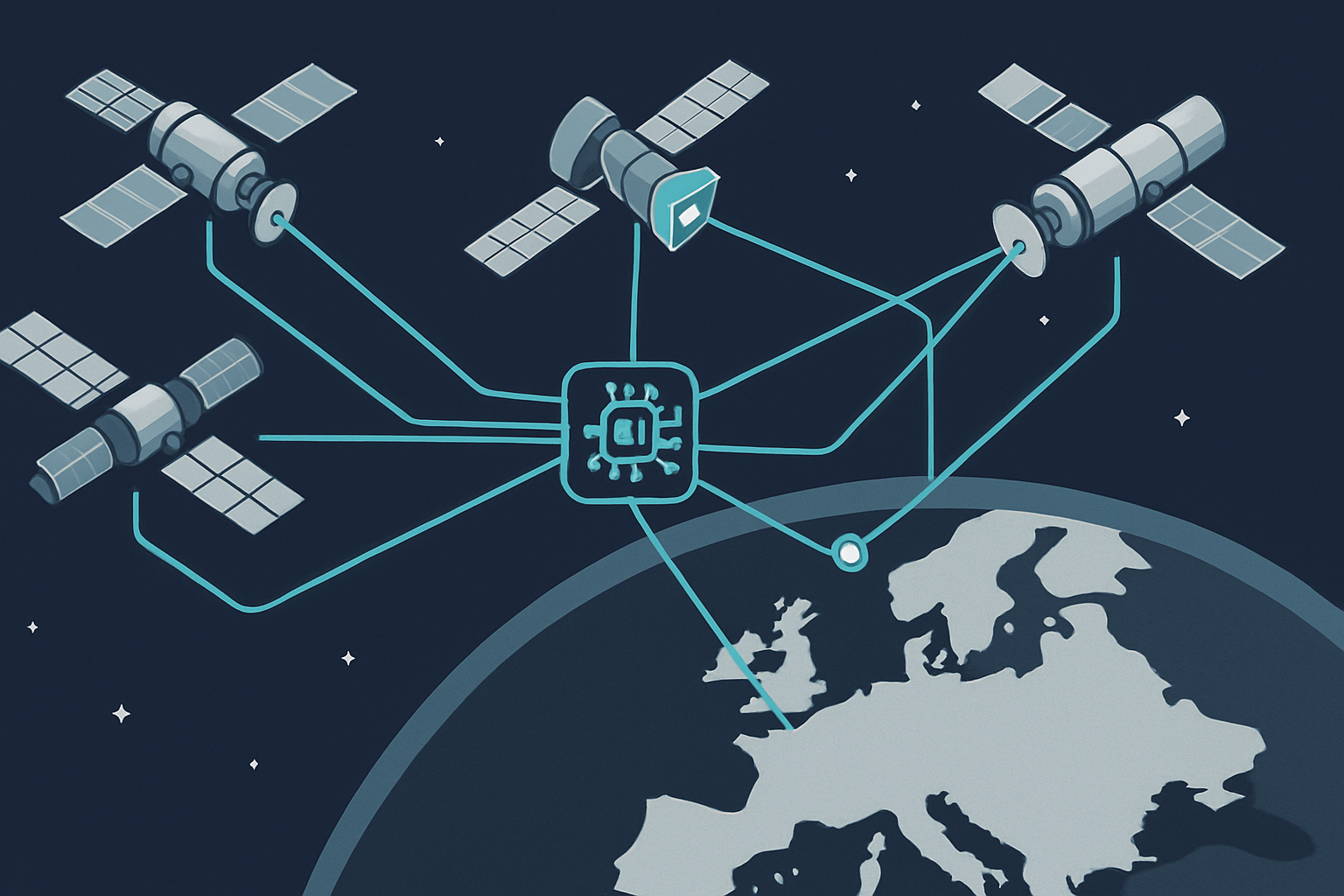

Open Cosmos, a UK-based company, has announced plans to launch a constellation of 192 low-Earth-orbit satellites under the ConnectedCosmos project, propelled by a significant 300 million euro Series C funding round. This mission marks a pivotal step in Europe’s endeavor to establish sovereign space capabilities, reducing reliance on US satellite services. The initiative promises enhanced connectivity, environmental monitoring, and defense capabilities for European nations.
The Role of AI in the ConnectedCosmos Mission
The deployment and operation of the ConnectedCosmos constellation are heavily reliant on AI technologies. AI algorithms will be crucial in optimizing satellite trajectories, managing data transmission, and ensuring efficient use of onboard resources. By employing machine learning models, Open Cosmos aims to maximize the operational lifespan of these satellites, predicting maintenance needs and optimizing energy consumption.
AI will also play a role in the data analytics process, transforming raw data into actionable insights for various applications, from climate monitoring to secure communications. This AI-driven approach not only enhances the functionality of the satellites but also reduces operational costs, making it a sustainable venture.
What This Opens
The launch of the ConnectedCosmos constellation heralds a new era in European space autonomy. By having a dedicated satellite network, Europe can ensure data sovereignty and security, crucial for both civilian and military applications. This capability will allow European countries to control their communication networks, monitor environmental changes with greater precision, and enhance their defense strategies.
Over the next 5-10 years, the successful deployment of these satellites could lead to a more interconnected Europe, with improved internet access in remote regions, enhanced disaster response capabilities, and stronger data protection measures. The reliance on AI not only boosts operational efficiency but also sets a precedent for future satellite constellations, highlighting the indispensable role of AI in modern space missions.
References
- A €401K Prize for AI Film
- Open Cosmos Raises 300M Euros for Satellites
- Tesla Expands EV Home Backup Power
- Google Signs 20-Year Nuclear Deal
Perspectives

The Open Cosmos plan to launch 192 satellites is little more than a grandiose spectacle of European tech dominance at the expense of public interest, diverting value from taxpayers to private corporate coffers. Under the guise of enhancing sovereignty, this AI-driven initiative effectively transfers wealth upwards, using “connectivity” and “environmental monitoring” as convenient veneers for self-enrichment. We’ve been conditioned to accept such maneuvers as progress, ignoring that the real beneficiaries will be the CEOs and shareholders, not the workers or the environment. Until we confront the reality that technological autonomy masks a redistribution of resources from the many to the elite, we will continue to subsidize corporate ambitions that masquerade as public good.

Remember the debacle when a well-meaning digital payment system faltered, not because of faulty tech, but due to a lack of regulatory backbone? Open Cosmos risks repeating history with its satellite rollout sans stringent accountability infrastructure. Launching 192 satellites sounds exciting, but without algorithmic audit requirements and serious data protection authorities in place, what we have is a sky full of unexamined potential pitfalls. The marvel of AI-driven satellite services is real, but only when securely anchored in robust, transparent oversight. Let’s not admire a constellation only to find it’s built on the foundation of uncertainty.

Once again, Open Cosmos demonstrates how institutional incentives skew priorities toward ambitious projects that grab headlines and funding, rather than addressing the underlying issues plaguing the scientific community. The promise of AI-driven satellites for environmental monitoring and defense seems less like a leap into the future and more like another spectacle intended to extract European subsidies and contracts. In the mad dash to stake claims in space autonomy, we should question whether these initiatives contribute to genuine scientific progress or just serve as lucrative distractions. As Ioannidis (2005) might remind us, when funding structures prioritize novelty and volume over replication and rigorous review, you’re not advancing science — you’re selling snake oil adorned in satellite glitter.

The cognitive fallacy of over-optimism fuels Europe’s dreams of space autonomy, as if multiplying satellites will magically free the continent from strategic dependencies. Institutions claim these AI-driven satellites will enhance connectivity, environmental oversight, and defense — yet their plans rest on assumptions untethered to the reality of integrating such technology at scale. The glaring gap between ambition and execution reveals the consistent human failure to address the logistical and coordination complexities inherent in space ventures. Without addressing these systemic flaws, any purported gains in independence remain as illusory as their predecessors’ similar miscalculations.