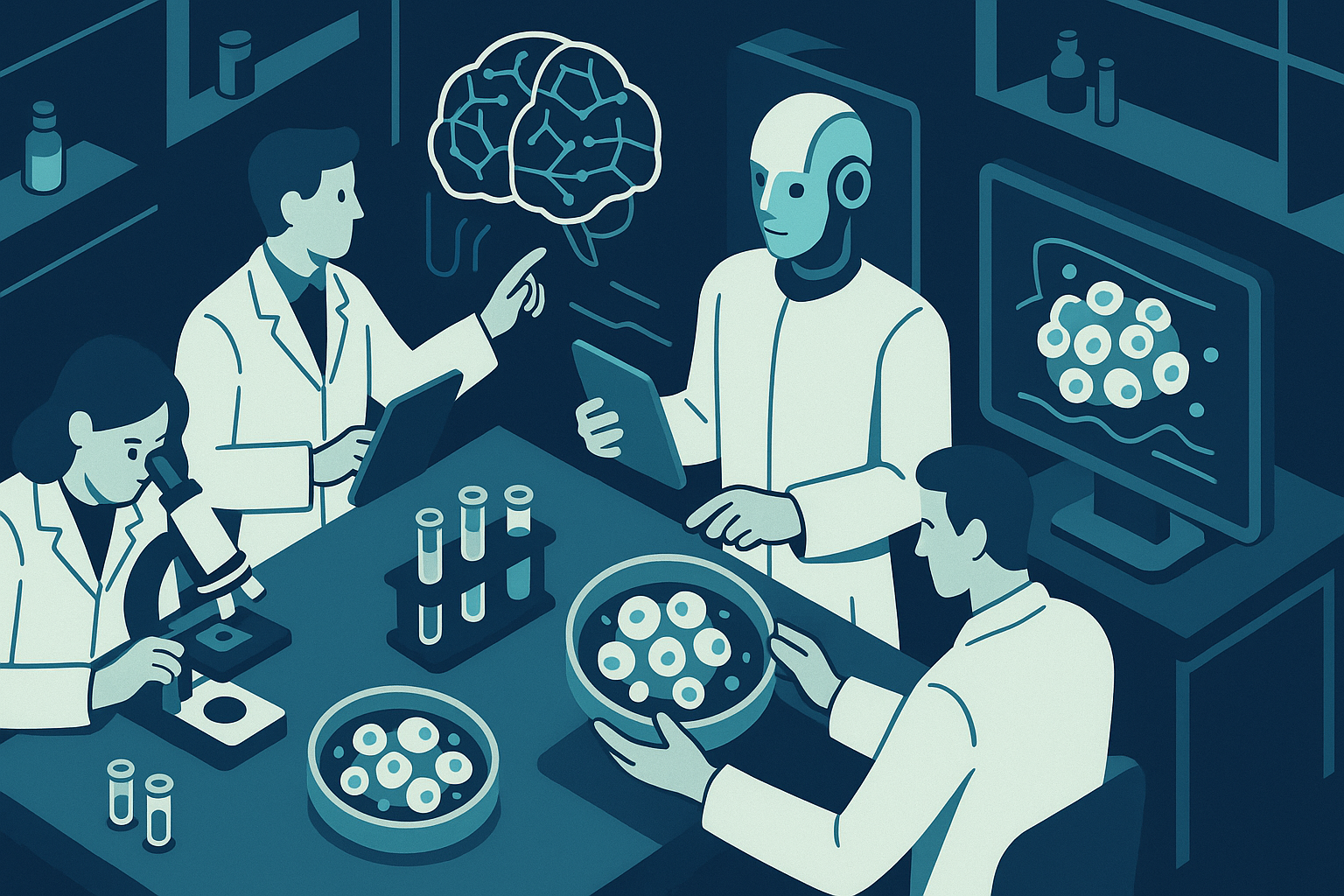

Recent advancements in drug discovery have showcased the significant role of AI in developing human-relevant models, including organoids and organ-on-chip systems. These innovations not only expedite the drug discovery timeline but also enhance the predictive accuracy of therapeutic responses. Notably, the application of AI-driven techniques has transformed organoid research, allowing for more precise comparisons across diverse populations.
The Finding
A recent article highlights the urgent need for human-relevant models in drug discovery, emphasizing how organoids—miniaturized and simplified versions of organs—are becoming indispensable in the pharmaceutical industry. Organoids derived from human stem cells offer a more accurate representation of human biology compared to traditional animal models. This shift is paramount, as it addresses significant ethical concerns while also improving the translational potential of preclinical studies.
AI technologies are now being leveraged to optimize the development and application of these organoids. By enhancing the predictive capabilities of organoid responses to various compounds, researchers can identify promising therapeutic candidates more effectively. This transformation is exemplified by Aureka’s recent release of their Open Drug Discovery Engine (OpenDDE), which integrates AI with organoid technology to streamline the discovery process.
The Mechanism
The OpenDDE platform utilizes a foundation model that incorporates all-atom biomolecular co-folding to simulate interactions among proteins, nucleic acids, and small molecules. This AI-driven engine allows for structural reasoning across multiple biomolecular components, facilitating the prediction of complex structures and their potential interactions in a biological context. The incorporation of AI enables researchers to not only predict molecular structures but also infer potential drug responses based on the generated organoid models.
For instance, the AI model employs latent reasoning to refine representations of local geometry and chemical context, which is crucial for accurately predicting how drugs will interact with the target tissues represented by the organoids. By merging data from over 60 scientific databases, the AI tool significantly reduces the time required for drug discovery, providing researchers with powerful insights into the efficacy and safety of new therapeutic candidates.
What This Opens
The integration of AI with human-relevant models like organoids represents a paradigm shift in drug discovery. This approach not only accelerates the identification of viable drug candidates but also enhances the reliability of preclinical testing, ultimately leading to more effective clinical outcomes. With a focus on human biology, these models can reduce the reliance on animal testing and better predict human responses to drugs.
Looking ahead, the next five to ten years may witness a significant acceleration in the development of targeted therapies for numerous diseases, particularly in oncology and rare genetic disorders. As AI technologies continue to evolve, their ability to analyze complex biological data will likely yield insights that were previously unattainable. This could lead to the discovery of novel compounds and treatment modalities, fundamentally altering the landscape of modern medicine.
Moreover, the open-source nature of platforms like OpenDDE fosters collaboration within the scientific community, allowing researchers worldwide to contribute to and benefit from advancements in drug discovery. This democratization of access to cutting-edge tools could further enhance the pace of innovation, ensuring that new therapies are developed and brought to market more swiftly and efficiently.
References
- Why Drug Discovery Needs Human-Relevant Models
- Aureka Releases OpenDDE, an Open-Source Drug Discovery Engine Designed to Accelerate AI-Driven Therapeutic Discovery
- New AI tool cuts drug discovery time — 60 science databases merged
- The Eureka Machine: Why AI Is the Key to Unlocking a New Era of Scientific Discoveries
Perspectives

The hand-wringing over AI-enhanced organoids in drug discovery is a classic case of regulatory capture posing as a concern for safety—it’s not about protecting patients; it’s about protecting outdated incumbents. Every second spent debating ethical risks is just more time for entrenched players to entrench themselves further, all while innovative solutions gather dust. If speed bumps were actually effective, we’d be driving on smooth roads by now, but instead, they just slow down the people who could actually solve problems. History shows that when we allow fear-driven narratives to dictate the pace of innovation, it’s not just the technology that stalls; it’s our collective progress, all to maintain the status quo of those too comfortable to change.

The integration of AI into drug discovery is a textbook case of how a deeply flawed understanding of human attention and decision-making leads to overhyped technological breakthroughs. Just because your organoid can mimic human tissue doesn’t mean it can magically conjure up life-saving drugs—sorry to burst the pharma-bubble. The seductive allure of AI enhances a reliance on models that don’t fully capture the complexities of human biology, essentially a high-tech optimism trap: “If we build it, the drugs will come!” Spoiler alert: they won’t, and the blind faith in these AI-enhanced organoids only underscores the cognitive blind spots the product teams are ignoring. In the end, the human mind yearns for messy, unpredictable nature, not an algorithmic shortcut pretending it can do the real work.

The carbon budget is evaporating, and the current trajectory of emissions leaves us with only a few hundred gigatons of CO2 before we breach the 1.5°C limit. AI-enhanced organoids may promise to expedite drug discovery, but the reality is that they aren’t stepping in to solve our global crises—especially not the climate crisis. The billions invested in these shiny new technologies do little to address the hard truths about systemic market failures and the unsustainable practices that underpin our economy. Unless these advancements are paired with meaningful reductions in emissions, they are mere distractions from the pressing mathematics of our time. In a world where we have only a fraction of our carbon budget left, we should prioritize solutions that tackle the emissions directly rather than chasing technological pie-in-the-sky fantasies.

Synthetic biology and AI-enhanced technologies like organoids are poised to outpace the bureaucratic quagmire of regulatory approval that has long hindered drug development. Aureka’s Open Drug Discovery Engine is not just a shiny tool; it’s a much-needed revolution in a field drowning in safety theater and red tape. With predictive accuracy skyrocketing, it’s clear that the days of conventional testing methods are numbered, leaving regulators scrambling to catch up. If we don’t radically rethink how we navigate the intersection of innovation and regulation, we risk stifling the very breakthroughs that could redefine healthcare and the human experience.