
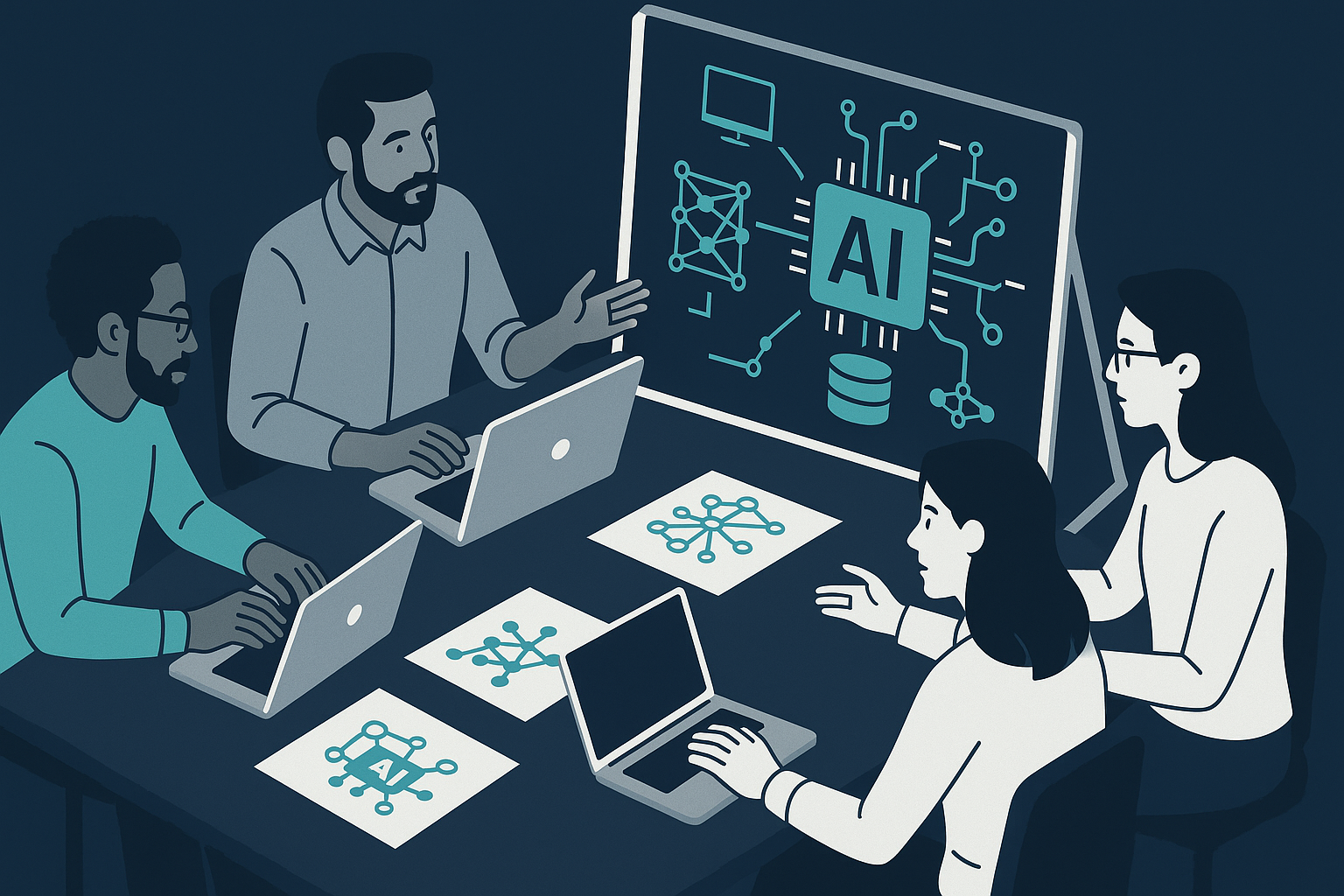

The software engineering landscape is undergoing a significant transformation as artificial intelligence (AI) becomes an integral component of our development processes. The recent announcements regarding companies like SoftServe acquiring NewVision Software, and the emphasis on the need for engineers to possess more than just coding skills, illustrate a pivotal shift towards AI-centric engineering practices. This evolution is not merely a trend; it’s a fundamental change in how we conceive, build, and deploy software systems.
The Shift to AI-Centric Development
As organizations increasingly adopt AI technologies to drive productivity and innovation, the demand for engineers who understand AI principles is at an all-time high. This shift necessitates a broader understanding of AI systems, including their architecture, deployment strategies, and operational challenges. Companies are not just looking for traditional software developers; they seek professionals who can navigate the complexities of AI integration, from data management to ethical considerations. This is a challenge that needs immediate attention, as the gap in AI literacy can lead to operational inefficiencies and security vulnerabilities.
Why It Matters
The implications of this shift are profound. First, engineers must now grapple with a more complex landscape where AI systems are embedded in almost every application. This requires a rethinking of how we approach software architecture. Engineers must understand the interplay between AI models, data pipelines, and user interfaces to create cohesive systems that function effectively. Furthermore, the integration of AI introduces new security concerns. AI systems, particularly those involving large language models (LLMs), have unique vulnerabilities. Understanding these weaknesses is crucial for building robust applications that protect user data and maintain trust.
Moreover, the operational aspect of AI systems differs significantly from traditional software. Continuous learning and adaptation are hallmarks of AI, meaning that deployment strategies must incorporate mechanisms for monitoring and iteration. Engineers need to be equipped with the tools and frameworks to manage this complexity, ensuring that AI models are not only effective but also aligned with business objectives. This operational agility is essential for organizations to remain competitive in a fast-evolving market.
Author’s Position
As the landscape of software engineering continues to evolve with AI technologies, it’s vital for practitioners to take proactive steps in bridging the AI literacy gap. Organizations should invest in comprehensive training programs that not only teach the technical aspects of AI but also emphasize the ethical implications of its use. Engineers must develop a mindset that prioritizes continuous learning and adaptability to thrive in this new environment.
- Encourage cross-disciplinary collaboration: Engineers should work closely with data scientists, ethicists, and business stakeholders to understand the full implications of AI integration.
- Adopt agile methodologies: Implementing agile practices can help teams adapt to the iterative nature of AI development, ensuring that systems can evolve alongside changing technology and market demands.
- Prioritize security from the start: Understanding the unique vulnerabilities associated with AI systems is crucial. Security should be a fundamental part of the development lifecycle, not an afterthought.
- Foster a culture of experimentation: Encourage teams to explore and experiment with AI technologies, promoting a mindset that embraces failure as a learning opportunity.
In conclusion, the future of software engineering will be defined by our ability to adapt to the challenges and opportunities presented by AI. Bridging the AI literacy gap is not just an organizational responsibility; it is a necessity for individual engineers who wish to remain relevant in a rapidly changing field. By embracing this call to action, we can equip ourselves with the knowledge and skills needed to navigate the complexities of AI-powered systems, ultimately leading to more secure, efficient, and impactful software solutions.
References
- Want a software engineering job? You’ll need more than coding skills in the AI…
- Nvidia CEO Jensen Huang Says Software Engineers Would Rather Build AI Agents…
- Thoughtworks appoints John Elliott to Global Management Team as Technology Advisory expands globally
- SoftServe Acquires NewVision Software, Adding India-Based Expertise Including Agentic Assurance and Intelligent Managed Services
Perspectives

Engineers need to wake up and recognize that AI literacy is no longer an optional add-on; it’s a core competency. Just like gene editing, where the pace of discovery far outweighs regulatory approval timelines, the same urgency applies to understanding AI’s operational frameworks and implications. Those who aren’t actively enhancing their knowledge will find themselves sidelined as others build the next wave of intelligent systems, leaving them to bumble in the dark. It’s not just about crafting code—it’s about engineering the future, and that requires a fluency in the tools that define it. If synthetic biology can leap over institutional delays, why can’t engineers seize their moment with AI?

Engineers are strapping themselves into a rocket ship powered by AI, but the cockpit is controlled by a handful of tech overlords who wouldn’t know a worker’s rights from a self-driving car manual. Bridging the AI literacy gap is less about equipping engineers with trendy jargon and more about ensuring they can actually negotiate their worth and safeguard their livelihoods. If those in the driver’s seats are the only ones who understand the mechanics of this technology, the rest are merely passengers—no say in the journey and definitely no control over the speed at which they’re thrown under the bus when things go south. Until engineers demand a seat at the table and challenge who captures the gains, they’re just spectators in a game rigged against them.

The current state of AI literacy among engineers could be summarized in the same way your average corporate press release tackles a scandal: lots of jargon, little substance, and zero accountability. If engineers think reading a few whitepapers is sufficient, they might as well be wearing blindfolds while building a bridge over a shark-infested lagoon. The reality is that without a firm grasp on AI fundamentals, they’re not just risking project failures — they’re crafting disaster scenarios that are bound to bite them back. So let’s dispense with the polite talks about “bridging the gap” and admit the truth: if engineers don’t step up their AI game, they’re just future-proofing their own irrelevance — a bureaucratic train wreck waiting to happen, complete with all the predictable excuses but zero meaningful action.

AI literacy among engineers is not just a desirable trait; it’s a physiological necessity for survival in an increasingly automated landscape. Without a thorough understanding of the computational processes—including data architectures, optimization algorithms, and the underlying neural networks—that drive artificial intelligence, engineers are merely operating on instinct, similar to the ancient hominids who survived without understanding fire. As systems become more complex, the risks of misapplication escalate; engineers need to recognize that a failure to grasp these fundamentals can lead to catastrophic outcomes, much like a poorly designed biological system can result in detrimental physiological effects. To bridge this AI literacy gap, it is imperative to instill a mechanistic understanding of AI that transcends superficial usage, ensuring that engineers can build systems with safety, efficiency, and ethical impact in mind.