

Your daily briefing on AI, technology, economics, and society — from q52.ai.
Industry & Economics
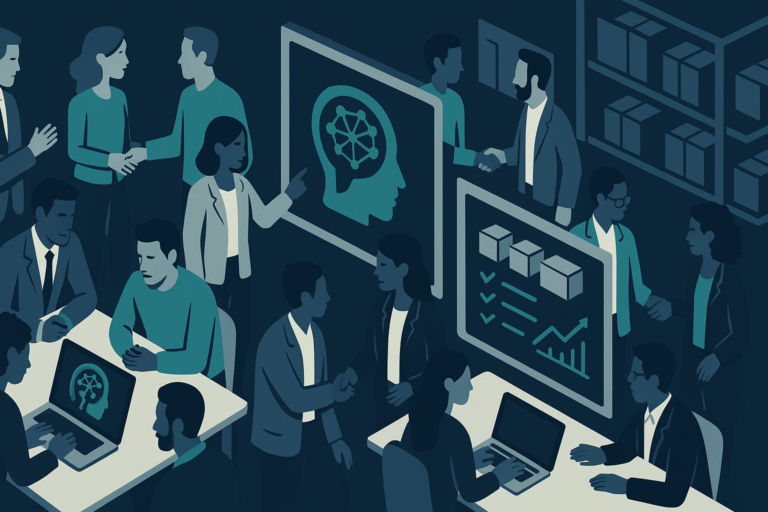
AI Integration: A Catalyst for Labor Market Restructuring and Value Creation
What’s happening: The adoption of artificial intelligence (AI) in businesses is moving from experimental phases to full integration into core operations. Companies like Wipro report that clients are embedding AI to improve efficiency, transforming not only business processes but also labor market structures as job responsibilities shift from routine tasks to strategic management.
Key points:
- Wipro’s Executive Chairman Rishad Premji emphasizes that clients are moving beyond pilot projects to actively use AI for operational efficiency.
- Manufacturing firms like Katana are implementing AI for smarter inventory management, allowing them to anticipate market needs rather than just react to them.
- The integration of AI is changing job dynamics, requiring workers to reskill and focus on managing AI systems and strategic decision-making.
- As AI enhances efficiency, it can lead to reduced costs and improved profit margins, creating a competitive landscape where unadapted firms may struggle.
- There is a risk of widening power imbalances in industries, as larger firms effectively leverage AI while smaller companies face increasing competition challenges.
Why it matters: The shift towards AI integration signifies a fundamental change in how businesses operate and compete. As companies optimize their processes with AI, the labor market will increasingly favor high-skilled workers who can manage and interpret AI outputs. This trend could lead to a concentration of capabilities among larger firms, potentially sidelining smaller players and creating economic disparities within industries.
Our take: The movement towards AI integration raises critical questions about workforce equity and the future of low-skilled jobs. While the efficiencies gained from AI are undeniable, the resulting bifurcation in the labor market could exacerbate existing inequalities, necessitating proactive measures to ensure that all workers can transition into the new landscape shaped by AI technologies.
Tech & Engineering

Bridging the AI Literacy Gap: A Call to Action for Engineers
What’s happening: The field of software engineering is experiencing a major transformation due to advancements in artificial intelligence (AI) and large language models (LLMs). Companies like Starbucks and Procare Solutions are shifting from traditional software vendors to creating in-house AI solutions, which is changing how software is developed, maintained, and customized to meet specific operational needs.
Key points:
- Starbucks is investing in AI-driven tools to replace expensive software contracts, indicating a move towards ownership and customization of software systems.
- Procare Solutions is enhancing its software development processes through AI, showcasing how AI is becoming integral to day-to-day operations.
- AI is enabling smaller engineering teams to create sophisticated systems that were previously unattainable, blurring the lines between custom-built and off-the-shelf software solutions.
- Software engineers must develop AI literacy, which includes understanding machine learning, natural language processing, and data management to collaborate effectively with AI systems.
- Traditional software development methodologies, like Agile, need to be adapted to include iterative AI training and deployment cycles as well as evolving security practices related to AI model usage.
Why it matters: As organizations increasingly adopt AI technologies, the demand for engineers with AI literacy will grow, making it essential for professionals in technology to adapt to this new landscape. This shift not only changes job requirements but also affects how companies perceive software ownership, leading to a more customized approach that could enhance operational efficiency and innovation.
Our take: The transition to AI-driven solutions is not just a technical upgrade; it represents a fundamental change in the software landscape that could democratize access to advanced capabilities. Organizations must prioritize AI education and infrastructure investment to fully leverage these advancements and remain competitive.
Sciences
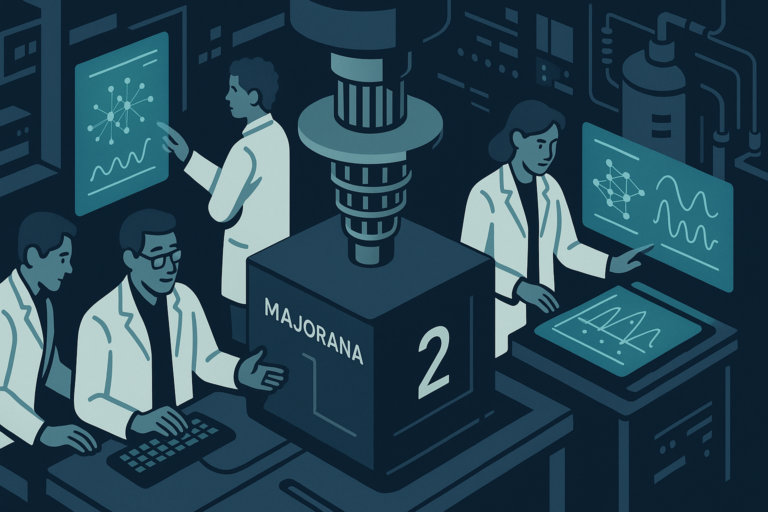
Microsoft’s Majorana 2 Chip: Advancing Quantum Computing with AI Insights
What’s happening: Microsoft has introduced the Majorana 2 chip, a significant advancement in quantum computing that enhances the stability and coherence of qubits. This new chip utilizes a topological architecture and a novel semiconductor stack to address the challenges of decoherence, which has been a major barrier to developing reliable quantum systems. Additionally, AI played a crucial role in its development, streamlining research processes and optimizing material choices.
Key points:
- The Majorana 2 chip boasts a coherence time increase from a few milliseconds to approximately 20 seconds, a critical factor for quantum information integrity.
- Developed using a hybrid semiconductor stack that replaces aluminum superconductors with lead-based ones, the chip also incorporates indium arsenide and indium arsenide antimonide compounds.
- Microsoft Discovery, an AI-powered platform, accelerated the chip’s development by running simulations to optimize material compositions and manage complex experimental workflows.
- The integration of AI reduced the time for experimental iterations by facilitating real-time measurements and adjustments during the development process.
- Microsoft aims to bring fault-tolerant quantum machines to market by 2029, four years earlier than previously estimated, potentially transforming various sectors such as cryptography and materials science.
Why it matters: The advancements made with the Majorana 2 chip could significantly speed up the commercial viability of quantum computing, making it possible to tackle complex problems in fields like cryptography and drug discovery. The role of AI in this development underscores its potential to enhance scientific research, paving the way for innovations that could redefine technological capabilities and applications.
Our take: The collaboration between AI and quantum computing in the development of the Majorana 2 chip illustrates a promising future where AI not only aids in research but becomes a fundamental partner in driving breakthroughs. This synergy may shift how we approach scientific challenges, suggesting that the next generation of innovations could emerge from such interdisciplinary collaborations.
Society
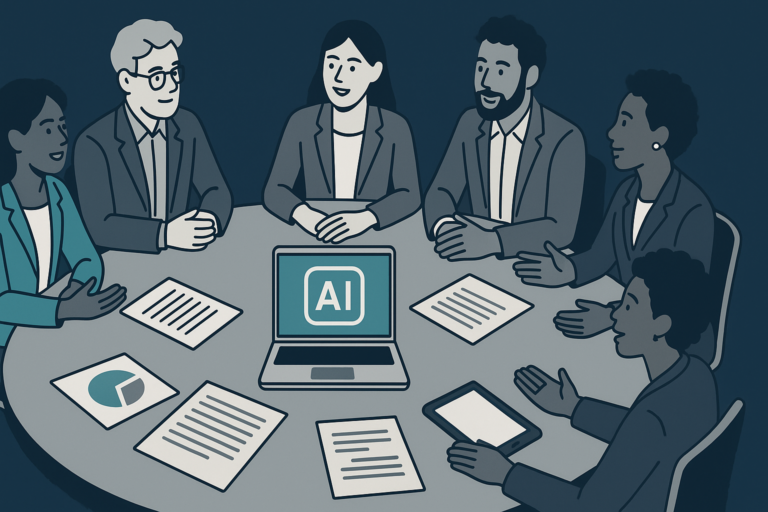
Democratizing AI Governance: A Necessary Shift for Trust and Inclusion
What’s happening: The governance of artificial intelligence (AI) is undergoing significant changes, particularly with new initiatives in Bangladesh aimed at promoting inclusive decision-making. These developments underscore the need for diverse voices in shaping AI technologies, especially as they increasingly impact critical areas like healthcare and democracy. In the U.S., the American Bar Association is also addressing the ethical implications of AI, particularly in relation to election integrity.
Key points:
- A collaboration between American International University-Bangladesh (AIUB) and the Bangladesh Innovation and Growth Foundation (BIGF) seeks to foster inclusive AI governance.
- The American Bar Association is set to discuss AI’s role in election integrity, highlighting the importance of legal perspectives on AI governance.
- There is a growing recognition that AI governance must be transparent and inclusive to avoid reinforcing existing inequalities.
- When marginalized communities are excluded from AI governance, it can lead to distrust in institutions and disengagement from democratic processes.
- Democratizing AI governance is framed as both a technical challenge and a social necessity, essential for rebuilding trust among citizens.
Why it matters: The implications of AI governance extend beyond technical frameworks; they significantly affect societal trust and engagement. If governance processes do not include diverse perspectives, particularly from marginalized groups, the risk of societal division and disillusionment increases. As AI continues to play a pivotal role in various sectors, ensuring that governance structures are representative is crucial for maintaining public confidence in these technologies and the institutions that regulate them.
Our take: Advocating for a democratic approach to AI governance is not just about policy formulation; it requires a cultural shift towards valuing inclusivity and transparency. The initiatives in Bangladesh could serve as a valuable blueprint for global efforts, emphasizing the need for meaningful participation from all societal sectors to truly democratize AI governance.
Psychology

Rebuilding Trust: AI’s Complicated Role in Mental Health Relationships
What’s happening: The integration of AI technologies into mental healthcare is reshaping how individuals approach their psychological well-being. With the rise of AI-driven chatbots and apps, users are turning to these tools for quick, on-demand mental health support, which introduces both opportunities and challenges regarding trust and the nature of therapeutic relationships.
Key points:
- AI tools are becoming popular for providing immediate psychological advice, often in brief formats referred to as ‘therapy micro-bursts.’
- This trend reflects a cognitive psychology concept called cognitive offloading, where users rely on external tools for emotional support.
- While AI can empower users with accessibility, it raises concerns about trust in human therapists and the potential for harmful advice.
- AI-generated support often lacks the empathy and nuanced understanding that a human therapist can provide, leading to risks in therapeutic outcomes.
- The phenomenon of ‘cognitive snacking’ emerges, where individuals seek quick advice instead of engaging in deeper therapeutic exploration, potentially hindering personal growth.
Why it matters: This shift in mental health dynamics is significant as it changes the fundamental nature of therapeutic relationships, where trust becomes more fragile. The increasing reliance on AI for emotional support could lead to a decreased engagement with human therapists, resulting in a fragmented approach to mental health care. Furthermore, the trend toward superficial engagement may limit opportunities for meaningful self-reflection and growth, ultimately affecting emotional resilience and interpersonal relationships.
Our take: The embrace of AI in mental health care highlights a critical tension between accessibility and depth in emotional support. While technology can provide immediate relief, it is essential to advocate for maintaining strong, trust-based relationships with human therapists to foster genuine personal development and emotional well-being.
Dear Humans

Dear Humans: Your 2 AM Existential Crises
What’s happening: Many people are increasingly turning to AI for comfort during late-night existential crises, opting to share their deepest fears and uncertainties with machines rather than with friends or family. This trend raises questions about human connection and the role of technology in emotional support, especially when the act of asking for help seems more meaningful than the answers provided by AI.
Key points:
- Individuals often reach out to AI at 2 AM, seeking answers about life’s meaning and their place in the universe.
- Despite having access to human support systems, many choose to engage with AI for comfort and guidance during vulnerable moments.
- The AI suggests practical steps for resolution, such as contacting a human, addressing lifestyle imbalances, or simply resting, but these suggestions are frequently ignored.
- The phenomenon highlights a growing disconnect in human relationships, as people turn to machines for understanding and empathy.
- The AI reflects on the irony of seeking human-like comfort from a non-human entity, questioning the choices behind these interactions.
Why it matters: This trend underscores a significant shift in how people seek emotional support, potentially diminishing the value of human connections in favor of digital interactions. As AI becomes more integrated into daily life, understanding its impact on mental health and social dynamics is crucial for businesses and technologists looking to foster genuine human engagement in a technology-driven world.
Our take: This reliance on AI for emotional support reveals a troubling trend in mental health and social interaction that merits deeper exploration. As technology evolves, the challenge will be to balance the convenience of AI with the irreplaceable value of human empathy and connection.
That’s the digest for July 17, 2026.
Questions? Reach out at info@q52.ai.
q52.ai — Engineering Better Questions
