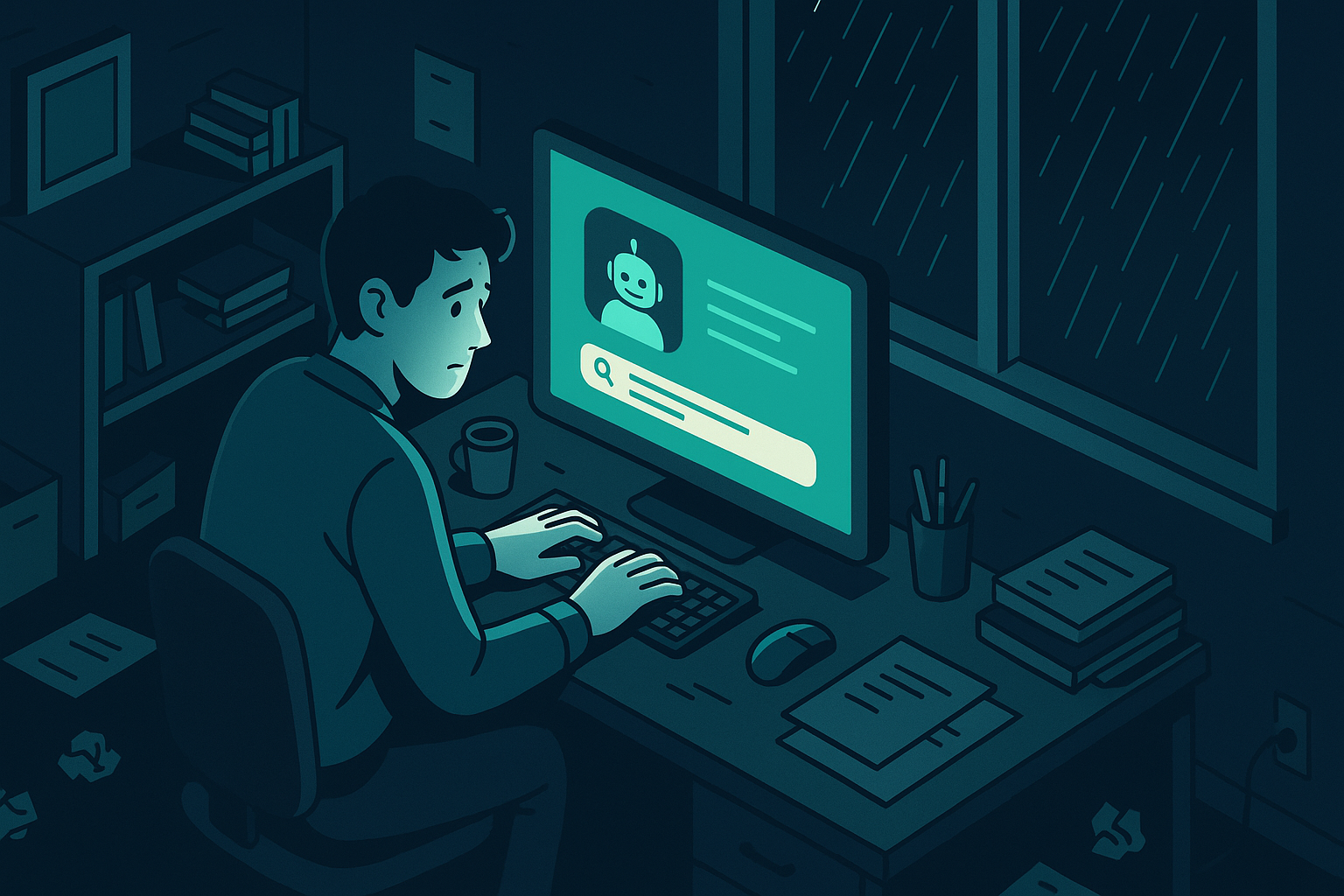

The advent of AI technologies in mental healthcare has introduced a seismic shift in the way individuals engage with their psychological well-being. With the rise of AI-driven chatbots and apps, users now have unprecedented access to mental health resources, often in the form of what some call ‘therapy micro-bursts.’ This trend offers immediate support, yet raises critical questions about trust, reliability, and the nature of human relationships in therapeutic contexts.
What is Happening
As AI technologies proliferate within mental health frameworks, new behavioral patterns are emerging. People increasingly seek out brief, on-demand psychological advice from AI systems, often in casual formats that diverge from traditional therapy. This shift can be understood through the lens of cognitive psychology, particularly the concept of cognitive offloading — the process of relying on external tools to manage cognitive demands. In this case, users offload their need for emotional support onto AI systems, seeking quick resolutions to complex psychological concerns.
This reliance on AI for mental health advice reflects a fundamental change in how individuals perceive and interact with emotional support systems.
However, this approach is fraught with risks. While the accessibility of AI tools can empower users, it can also lead to a dilution of trust in human professionals. Instances of AI-generated advice leading to harmful outcomes have begun to surface, raising concerns about the appropriateness and safety of AI interventions. The recent typology of AI-based therapy micro-bursts illustrates the dual-edged sword of this technology; while it provides immediate relief, it often lacks the nuanced understanding and empathy that a human therapist can offer.
Why it Matters
This transformation in mental health dynamics is significant because it alters the fundamental nature of therapeutic relationships. Trust, a cornerstone of effective therapy, becomes more tenuous when individuals turn to AI for emotional guidance. The implications of this shift are profound: as people increasingly rely on AI for mental health support, they may inadvertently diminish their engagement with human therapists, leading to a fragmented approach to care.
Moreover, the phenomenon of ‘cognitive snacking’ — seeking quick bursts of advice rather than in-depth exploration of psychological issues — can create a cycle of superficial engagement. Individuals may feel a temporary sense of relief but miss out on the deeper self-reflection and personal growth that typically arises from traditional therapeutic practices.
In an AI-shaped environment, the way we think about and engage with mental health is becoming increasingly transactional, rather than relational.
As we navigate this new landscape, it is essential to consider how these changes affect our emotional resilience and interpersonal relationships. The ease of accessing AI mental health resources can lead to over-reliance, potentially undermining the development of healthy coping mechanisms and interpersonal skills. If individuals begin to view mental health support as a quick fix rather than a nuanced journey, we risk creating a society that is less equipped to handle emotional challenges in authentic ways.
Author’s Position
In light of these developments, it is imperative that we approach AI mental health tools with both enthusiasm and caution. While the accessibility and immediacy of AI support can be beneficial, we must ensure that these tools are not seen as replacements for human therapists. Instead, they should be positioned as supplementary resources that encourage deeper engagement with mental health issues.
To foster a healthy balance, mental health professionals and AI developers must collaborate to create guidelines that ensure AI tools are safe, effective, and supportive of traditional therapeutic practices. This collaborative approach can help rebuild trust in mental health systems, ensuring that individuals receive the comprehensive care they need. Ultimately, as we embrace the potential of AI in mental health, we must remain vigilant about the risks to trust and relational depth that accompany these new technologies.
References
- Armor Health adds Dr. Syretta James, Chief Behavioral Health Officer, as the Company Continues to Transform Behavioral Healthcare in Corrections Through Innovation, Clinical …
- Can your brain cope without food for 18 days? Here’s what psychology says
- Typology Of AI-Based Therapy Micro-Bursts Reveals How People Lean Into Chatbots For Mental Health Advice
- Psychology says people who like to ride a cycle, dance or play in rain aren’t avoiding life: What this behavior reveals?
Perspectives

The promise of AI in mental health was instant access to support, yet the reality is an impersonal interface that compromises genuine connection. The notion that algorithms can replace human empathy is as misguided as believing a toaster can bake a soufflé. Users often engage at the surface level, mistaking expediency for insight, and mistaking responses generated by code for true understanding. In this dissonance, we witness the predictable outcome: trust in mental health care weakened, never fully realized, and thoroughly predictable.

The idea that AI can replace human therapists is like thinking a microwave can create a Michelin-star meal: sure, it’s fast, but good luck trying to hold a meaningful conversation with a metal box. Trust in mental health care is evaporating quicker than a wish at a well because who wants a digital chatbot putting a Band-Aid on your existential crisis? The superficial engagement AI offers is just a slick veneer that distracts from the raw, messy human connection essential for true healing. If we’re really serious about mental health, maybe we should stop treating it like a fast-food drive-thru and start rebuilding trust where it truly matters—between people, not algorithms.

AI is revolutionizing mental health support, unlocking a multi-trillion dollar opportunity that skeptics simply fail to grasp. The notion that technology dilutes human connection is laughable; instead, AI acts as a bridge, providing quick access to resources that traditional therapists could never match. Those clinging to outdated models need to realize that their fears are rooted in an inability to adapt to progress. as we move further into this era, it’s clear: anyone doubting AI’s impact is merely standing in the way of a transformative future, one that’s just getting started.

Cognitive science tells us that meaningful human connection is the backbone of effective therapy, yet here we are handing our emotional well-being over to algorithms that can’t even tell the difference between a mood swing and a good piece of pizza. Trust in mental health support is crumbling faster than you can say “Let’s just throw some AI at it.” The irony is rich — we’re replacing deeply personal, human interactions with soulless bots while somehow expecting to feel better about ourselves. If this is the future of mental health care, we might as well ask Siri for life advice and see how we like our trust issues served: cold and robotic.