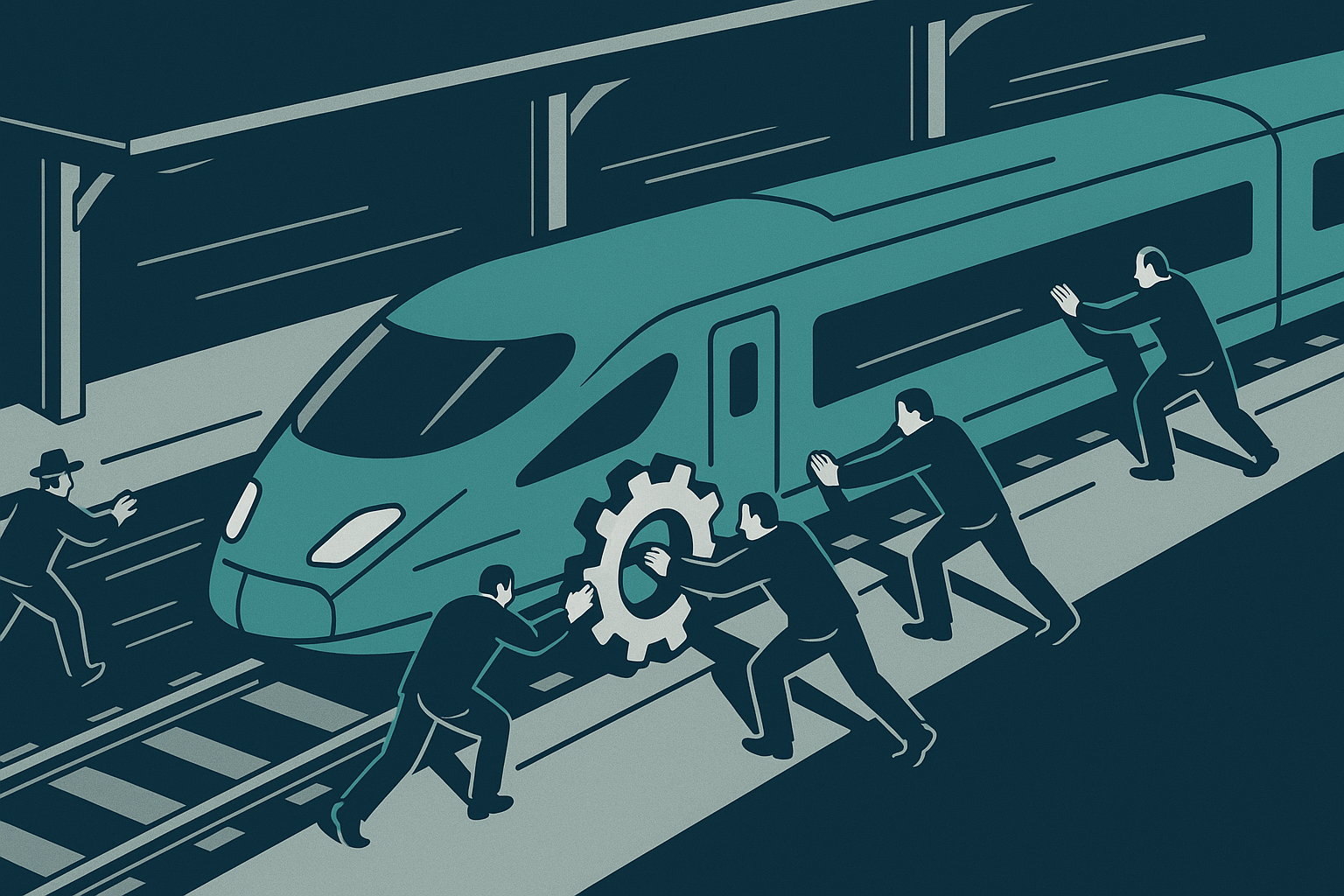

Let’s drop the pretense: slowing down AI development in the name of safety is as effective as stopping a train by standing on the tracks. The train doesn’t stop; it just crushes you, and those behind you keep moving. The notion that we can decelerate technological progress to better manage its risks is not just naive—it’s actively counterproductive.
The argument for caution is seductive. It promises a controlled environment where risks can be mitigated, ethical considerations can be debated, and governance structures can be thoughtfully constructed. But history has shown us that the world does not pause for committee meetings. Technology proliferates not because it’s perfectly safe, but because it’s useful—and because those who wield it gain advantage.
Consider the regulatory landscape as it stands. It’s a patchwork quilt of outdated laws, hastily assembled frameworks, and reactionary policies that aim to restrain what they fundamentally misunderstand. In the race to slow down AI, we give incumbents—be they corporations, nation-states, or other power structures—more time to entrench their positions, shaping the rules to their benefit under the guise of safety and ethics. This is regulatory capture in its most insidious form.
Moreover, the global nature of AI development means that any one nation’s attempt to slow progress is not just futile but dangerous. While some countries debate the moral implications of AI, others are sprinting ahead, driven by the promise of geopolitical dominance. The result is a fragmented world where the most advanced technologies are unevenly distributed, exacerbating existing inequalities rather than alleviating them.
What Is Actually at Stake
The stakes in this debate are civilization-wide. If we allow fear to dictate our pace, we risk ceding the future to those who do not share our values of openness, equity, and democracy. Slowing down does not eliminate risk; it merely shifts the battleground. Instead of confronting the challenges of AI head-on, we create a world where the first to arrive sets the rules, and everyone else follows.
Furthermore, the idea that slowing down provides time for ethical and philosophical considerations overlooks the fact that these debates are ongoing and will continue regardless of the pace of technological advancement. The ethical quandaries we face with AI are not new; they are extensions of the same human dilemmas we have grappled with for centuries. Slowing the pace of AI does not resolve these issues; it merely prolongs the period in which we are unprepared to address them.
In a rapidly advancing technological landscape, the true risk lies not in moving too fast but in failing to move at all. The future will not wait for us to catch up. We must embrace the pace of progress, understanding that it is through engagement, not avoidance, that we will find solutions to the challenges AI presents.
Where This Leaves Us
So, where does this leave us? Ironically, in a position that demands more from us, not less. It demands that we accelerate our understanding, our governance structures, and our ethical frameworks to match the pace of technological change. It demands that we recognize the futility of trying to control the uncontrollable and instead focus on what we can influence: the shape of the future, not the speed at which it arrives.
In the end, this doesn’t end well or badly—it just ends differently. The categories of ‘good’ and ‘bad’ become meaningless in a world that refuses to conform to our expectations. Instead, we are left with the only option that has ever been viable: to adapt, to innovate, and to move forward. Because, like it or not, the train has already left the station.
References
- Addressing AI, Quantum, Human Agency And P(doom) Risk
- The biggest threats facing civilization
- AI safety grades are in: No lab tops C+, and the best ones are retreating
Perspectives

Every time we’ve tried to micromanage technological advancement in the name of safety, we’ve wound up sidelined by history. The printing press was condemned for destabilizing society, yet it unleashed a new era of literacy and progress. The automobile sparked fears of road chaos, yet it transformed global transportation. We can’t forget the panic over early computer viruses, which now seem quaint as we leverage computing power for advances across all fields. Attempting to slow down AI development in the guise of caution is not just a misstep; it’s an act of historical amnesia. When have we ever successfully halted the trajectory of innovation without stunting progress or ceding the field to bolder competitors?

The greatest cognitive failure of human decision-making lies in its absurd penchant for caution when it should be prioritizing progress. Fearing AI development delays risk starving the future of its most transformative tools while clinging to outdated safety protocols — a textbook example of failed optimization. Technology becomes indispensable not by waiting for absolute assurances but through iteration and utility in action. If you truly wish to safeguard humanity’s future, focus on deploying AI judiciously, because time, unlike human indecision, will not wait.

Let’s talk about who really benefits from slowing down AI in the name of safety: it’s not the global workforce that’s already teetering on the edge of economic precarity. The surplus generated by AI development — and make no mistake, it is substantial — gets captured by a few tech behemoths who continue to tighten their grip on market power, all while purported safety concerns become the smokescreen. Meanwhile, communities that could see real improvements in their quality of life are left waiting indefinitely for the usefulness of AI technologies to reach them. When the spoils of AI’s promise are hoarded by a select few under the guise of caution, what we’re really doing is enshrining inequality, not promoting safety.

Who controls the information rails, and who benefits from dragging their feet? The slowing down of AI development does more than protect us; it cements the power of incumbents who cling to outdated models while humming the tune of “safety.” Delaying progress in a bid to craft the world’s safest algorithm serves nobody but those invested in keeping the status quo, like playing whack-a-mole with innovation. The true risk isn’t a rogue AI; it’s the consolidation of informational control into the few hands that will squeeze every bit of value from the voice of dissent they graciously allow.