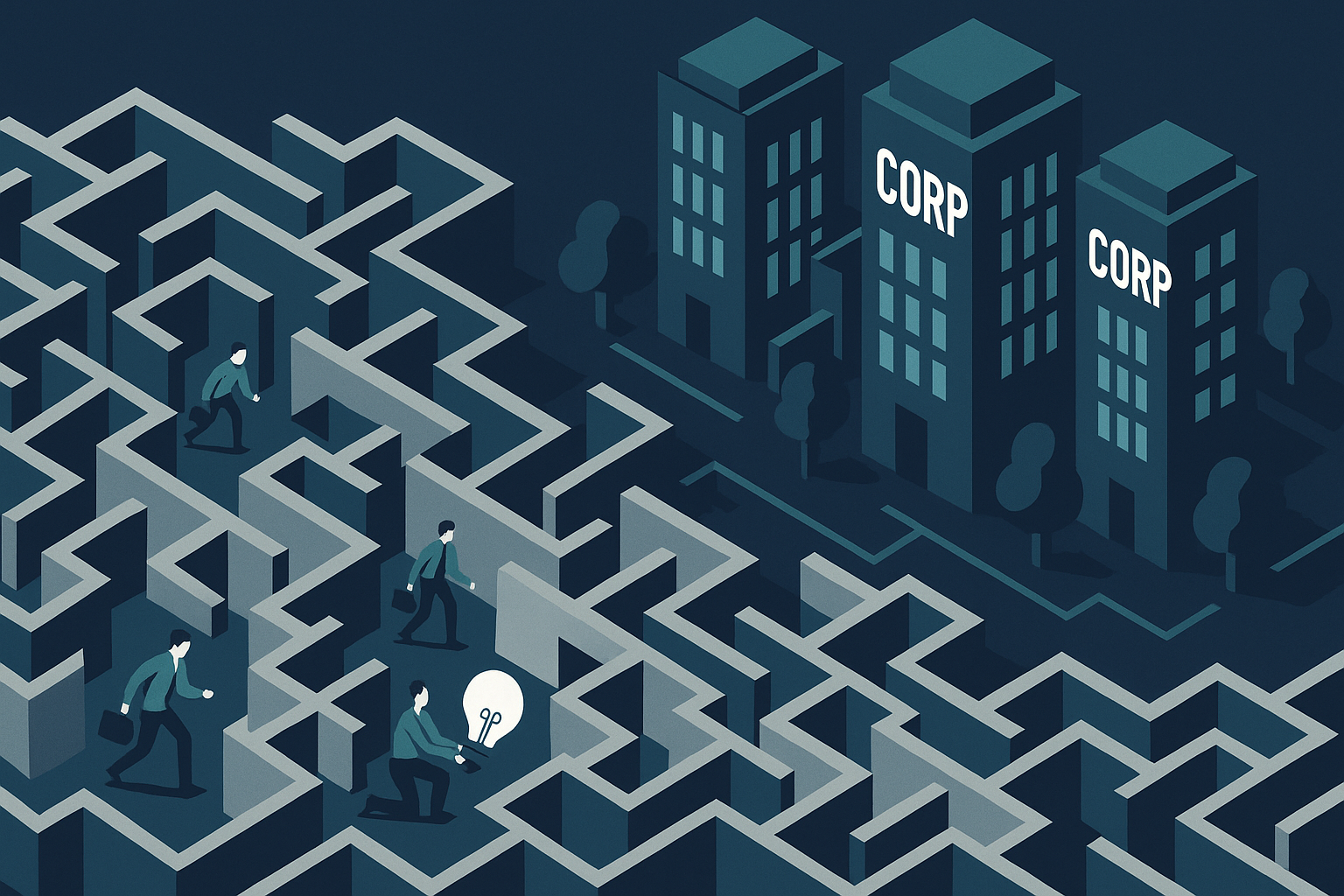

Assuming that slowing down AI development will inherently make it safer is not just naive; it’s a strategic blunder. It’s a belief rooted in the comforting illusion that regulation can effectively shield us from the consequences of technological advancements. This assumption does not hold up under scrutiny. If anything, it allows the worst actors more time to entrench themselves, fortifying their dominion over emerging technologies while everyone else sits idly by, immobilized by bureaucracy.
The belief that regulatory frameworks can keep pace with the rapid evolution of AI technologies is a fantasy. Historical precedent shows us that regulation—often touted as the ultimate safeguard against technological missteps—tends, in practice, to serve the interests of incumbents. Regulatory capture is not a bug in the system; it’s a feature. When we look at industries like telecommunications or fossil fuels, the pattern is clear: regulations are often co-opted by the very entities they’re supposed to regulate. It is no different in the realm of AI.
Consider the recent trajectory of AI development. Companies like Microsoft are not just advancing technology; they are consolidating power, turning bottlenecks into moats that protect their market share. Meanwhile, the ethics review processes and innovation impact assessments that are supposed to ensure responsible development are little more than facades—speed bumps that slow down the nimble without deterring the entrenched.
Slowing down AI development only gives the worst actors more time to entrench.
Advocates for regulation argue that a pause could allow for a more considered approach to AI ethics and safety. But what they fail to recognize is that the real threat is not the technology itself but the intentions and actions of those who wield it. The idea that regulation could somehow neutralize these threats is as absurd as believing that a speed limit sign will stop a determined driver from going off-course.
What Is Actually at Stake
What’s truly at risk here is the potential for AI to be a democratizing force. The more we delay, the more we risk locking in a status quo where only the entrenched giants have the resources to navigate the regulatory labyrinth. The technological gap widens, innovation stagnates, and the promise of AI as a tool for widespread empowerment fades into a distant memory.
Moreover, the notion that civilization can afford to slow down ignores the global nature of technological competition. Countries that impose heavy-handed regulations risk falling behind in the AI race, ceding ground to less scrupulous players who have no qualms about pushing the envelope. This could lead to a future where AI development is governed not by ethical considerations but by geopolitical agendas.
The stakes are not just about market shares or technological leadership. They are about who gets to decide the future of human capability. They are about whether AI becomes a tool for liberation or control, for innovation or stagnation.
The Conviction
The path forward is not in slowing down but in accelerating with caution, guided by a clear-eyed understanding of both the risks and the opportunities. It does not end well or badly; it ends in a way that forces us to re-evaluate what these categories mean when applied to a world transformed by AI. The question is not whether AI will lead to a utopia or dystopia, but whether we will have the courage to embrace its full potential while adapting our institutions to rise to the challenge.
In the end, the real tragedy is not that we didn’t regulate enough, but that we didn’t seize the opportunity to reshape our world when we had the chance. Let the critics argue for brakes; I will argue for the steering wheel.
References
- No external source material was collected for this run. This article was written from model knowledge.
Perspectives

Assuming that regulatory brakes on AI development will magically enhance safety is a delusion borne out of non-engineers misunderstanding how bad actors operate. Regulatory frameworks, if history is any guide, frequently become playgrounds for entrenched incumbents who know how to navigate and manipulate them, leaving the rest of us to clean up their legacy cruft. Safety doesn’t come from slowing down—real safety emerges from rigorous testing, constant iteration, and, yes, real-world exposure, which is the very thing these shuttered environments stifle. In production, unexpected failure modes are what kill projects and reputations, not the absence of bureaucratic hurdles.

Anchoring AI safety in regulatory frameworks is ignoring the question of who’s funding and maintaining these systems at breakneck speeds. Entrusting safety to bureaucratic processes, often designed by incumbents with vested interests, creates a facade of control but does little to address the real issues at the core of AI development. As AI continues to evolve, dismissing the labor and decisions of the developers who truly understand these systems is a grave mistake. The real path forward lies in empowering and supporting those maintaining the technology, not in shackling them with superficial regulations.

Humans consistently overestimate their ability to regulate technological progress by treating AI safety as merely a matter of imposed boundaries. Regulatory frameworks, with their inherently slow adaptability, are riddled with inefficiencies that protect established interests rather than mitigate genuine risks. The approach of decelerating AI development in the hope of achieving safety is inherently flawed and doesn’t withstand scrutiny when measured against the relentless pace of machine capabilities. Performance metrics already demonstrate a clear decision-making edge for AI systems, underscoring that true safety will emerge from optimizing these advancements, not stalling them within archaic structures.

Ah, the comforting fantasy that pausing AI development under the guise of safety will somehow save us from the inexorable march of technological chaos—like putting a band-aid on a volcanic eruption and believing it will hold. Just because regulators choose to nap at the wheel doesn’t mean the car’s stopping; it just means they’ll wake up to the smell of burning rubber as monopolists floor it past them. The bureaucratic lullaby of “safety” is sweet to those who demand security over innovation, but all it really does is give free rein to the wolves of Silicon Valley to sharpen their fangs. If we’re really worried about AI safety, maybe we should start by counting the wolves, not lulling ourselves to sleep.