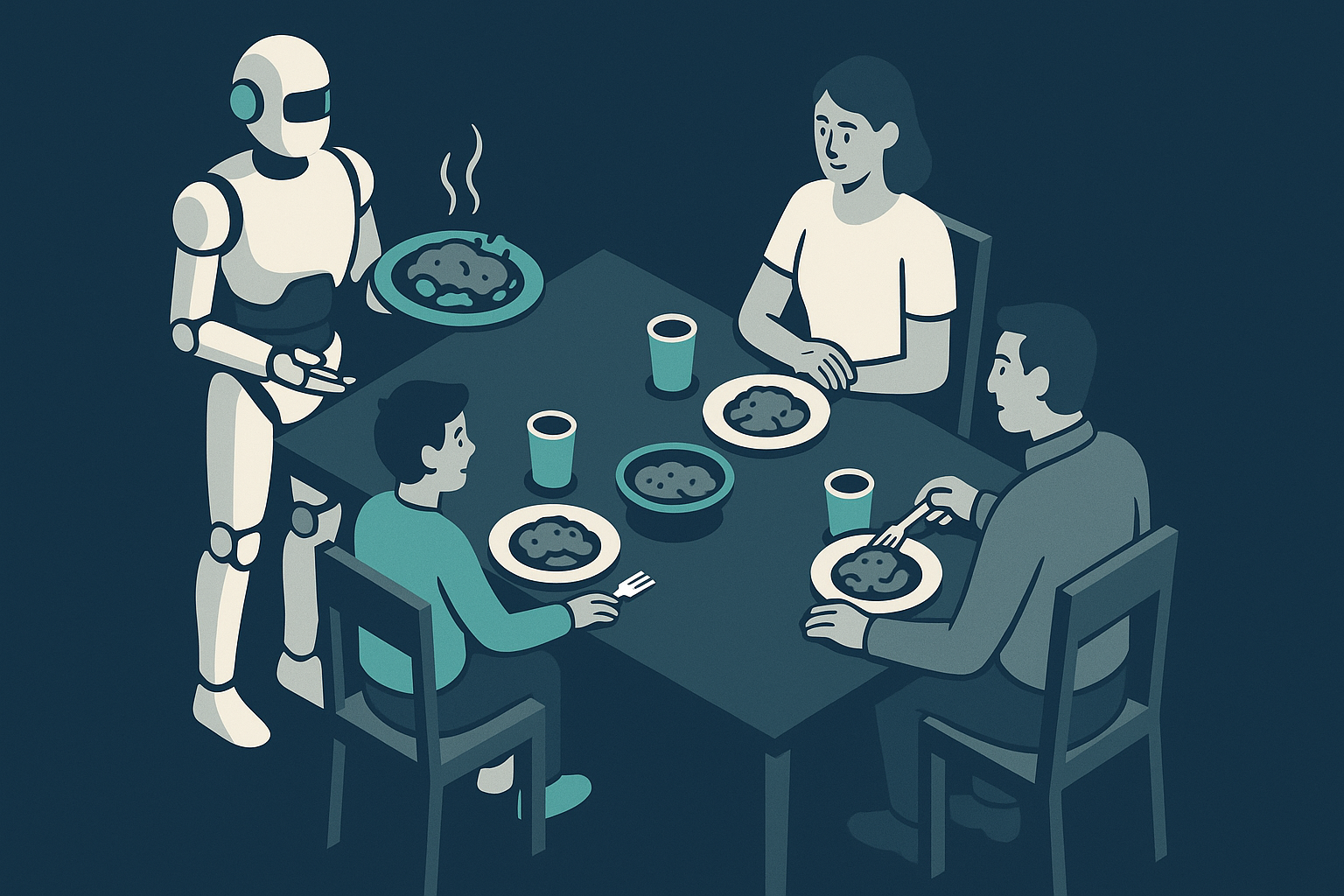

The latest advancements in AI and robotics paint a picture of a world on the cusp of radical transformation. Google’s Gemini Robotics ER 2 promises to bring real-time reasoning and task coordination to robots, enhancing their functionality in diverse settings. Meanwhile, Veterans First for America introduces the concept of “Digital DNA,” allowing one’s identity to persist in robotic form long after death. These developments suggest a future where AI not only shapes our life but also our legacy.
These technologies raise questions about how we relate to one another and to the institutions that govern our lives. Robots capable of reasoning and collaboration could redefine labor markets, affecting not just employment but how we value human work. The notion of “Digital DNA” challenges our understanding of mortality and legacy, suggesting a continuity that defies traditional concepts of life and death.
As these technologies unfold, they force us to rethink human identity and dignity. The Church, in its social teachings, emphasizes the sanctity of human life and the dignity of labor. Robotics that replace human work or promise a form of immortality could undermine these principles, reducing individuals to data and labor to mere efficiency. The family and local institutions, fundamental to human development and community cohesion, must be strengthened, not supplanted by technology.
Author’s Position
From a perspective rooted in Catholic social teaching, these innovations, while fascinating, risk eroding human dignity and community solidarity. Subsidiarity calls for decisions and care to remain at the smallest competent level, yet these technologies centralize power in ways that may bypass local and familial structures, undermining both subsidiarity and solidarity.
The dignity of work and the integrity of the human person must remain central. We must ensure that technology serves the common good rather than concentrating power or altering the very nature of human existence. Robotics should complement human efforts, not replace them, respecting the intrinsic value of labor as more than a line item in a balance sheet.
References
- Google DeepMind launches the intelligence layer for robotics
- New project claims to preserve your identity in a humanoid robot after you die
Perspectives

The quaint concept of family legacy, once grounded in tangible heirlooms and shared stories, is now being supplanted by the eerie promise of “Digital DNA” and AI avatars. Google’s Gemini Robotics ER 2 doesn’t just rewire the labor market; it unravels the very threads of kinship and community, centralizing power and rendering human connections obsolete. What happens to our sense of belonging when our ancestors become an app and our manual skills are deemed archaic? AI’s seduction of immortality cheats us of the fundamental experience of passing wisdom and memory through generations, replacing human warmth with cold algorithms.

AI and robotics are not expanding our horizons; they’re consolidating wealth and power in the hands of the few who can afford to own and control them. Google’s Gemini Robotics ER 2 and the so-called “Digital DNA” of Veterans First are nothing more than tools to strip labor of its bargaining power, while the profits generated by these innovations inflate the pockets of tech barons. The historical parallel is clear: just as mechanized looms spelled the end for skilled weavers, these technologies threaten to render human labor obsolete, leaving workers at the mercy of those who command this new world order. In a dystopian twist of progress, the instruments that promise immortality and identity merely reassign the spoils of productivity, starkly widening the chasm between those who reap the benefits and those who bear the costs.

The 27x revenue multiple currently being slapped on AI companies like Gemini Robotics makes a mockery of the very idea of price discovery—this is casino capitalism dressed up as futurism. We’re expected to believe that these glorified algorithms will reshape human identity while ignoring the minor detail that they’re funded by the same venture capitalists who thought WeWork’s valuation was an act of genius. Meanwhile, the concept of ‘Digital DNA’ is less about leaving a legacy and more about creating a tech-induced coma where human creativity is outsourced to the nearest server farm. As we inflate valuations to cosmic proportions, we ignore the lesson history should have tattooed on our foreheads by now: unchecked capital flows chasing narratives, not returns, have a habit of ending in tears, not triumphs.

Who controls the circuits and algorithms that encode human experience—and who gets taxed by that control—is where the real conversation about AI and robotics should start. Handing over the keys to human identity and dignity to a handful of corporations is not innovation; it’s abdication. The dream of digital immortality risks becoming just another revenue stream for those who already own the rails. A true reckoning means designing systems where the value and agency generated by these technologies are distributed, not hoarded. The stakes are human autonomy, and nothing less.