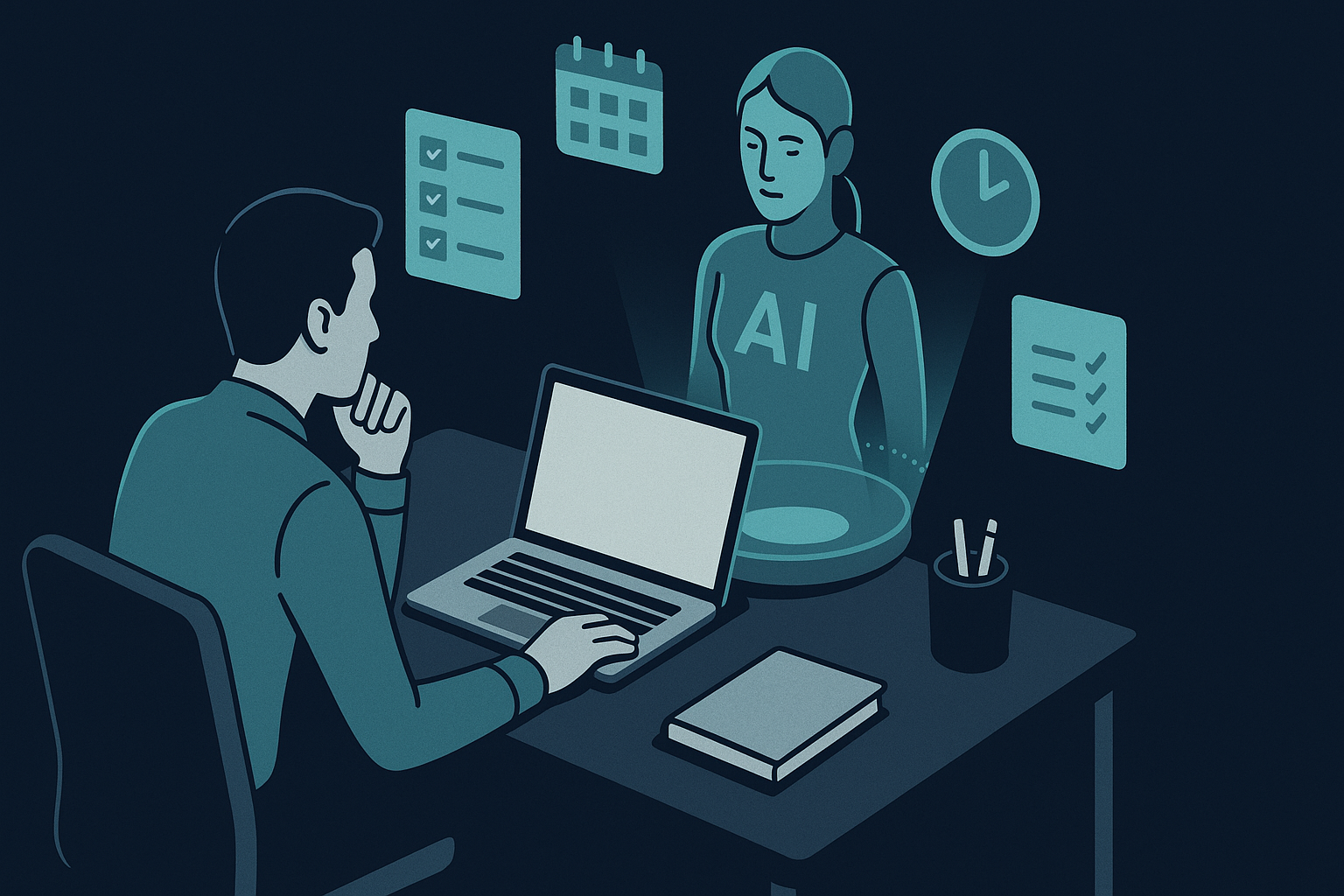

In the ever-evolving landscape of AI, two recent developments stand out, both pointing to the increasing complexity of how AI systems manage tasks: Meta’s introduction of a memory coach for AI agents and Google’s agentic assistant Gemini Spark, which now can browse the web autonomously. At first glance, these innovations seem to address the technical challenges of multi-step processes and task execution. However, they also subtly reflect a deeper relationship between humans and AI, one that may be quietly reshaping our cognitive processes.
Meta’s memory coach aims to guide AI systems through long-running tasks, mitigating the drift and context loss that typically disrupt complex workflows. This development speaks to a growing awareness within AI research of the limitations of current systems when it comes to maintaining continuity and coherence over time. Similarly, Google’s Gemini Spark, with its ability to use personal accounts and passwords to accomplish tasks, represents a leap in AI’s capacity to act with a semblance of agency, managing tasks that require a personal touch.
These advancements suggest a shift in how we might come to rely on AI, not just as a tool, but as an extension of our cognitive faculties. The memory coach, for instance, mirrors human cognitive mechanisms of working memory and executive function, which allow us to hold onto information and apply it across different contexts. Meanwhile, the agentic assistant embodies our desire for efficiency and delegation, performing tasks that we might otherwise find cumbersome or time-consuming.
Why it matters
The implications of these developments extend beyond technological novelty; they touch upon the very essence of human cognition and autonomy. As AI systems become more adept at executing complex tasks, there is a risk that we might start outsourcing not just our labor, but our thinking processes as well. When AI handles memory and task execution, what happens to our capacity to plan, remember, and decide?
Consider how these systems might influence our daily lives. If an AI can remember our preferences and track our progress, does our need to engage in reflective thought diminish? Does the ease with which AI can perform tasks dampen our motivation to learn new skills or manage our own affairs? While these systems promise convenience, they also present a paradox: the more we rely on AI to think for us, the less practice we have in thinking for ourselves.
Moreover, the relationship dynamics between individuals may also shift. In a world where AI can perform tasks that traditionally required human interaction, from booking flights to managing schedules, the need for human-to-human coordination may wane. This could lead to a more isolated existence, where interactions are mediated by, rather than directly between, people.
Author’s Position
While the technological strides made by Meta and Google are impressive, they necessitate a careful consideration of the psychological and social ramifications. We must ask ourselves: what are we willing to give up in exchange for efficiency and ease? There is no doubt that AI can enhance our lives, but it should not come at the expense of our cognitive independence or the richness of human interaction.
The real challenge lies in finding a balance where AI acts as a complement, rather than a replacement, to human agency. We must remain vigilant about the ways in which these systems are integrated into our lives, ensuring that they enhance rather than erode our cognitive and social capacities.
The conversation around AI and human cognition is just beginning, but it is one that must be rooted in the understanding that while AI can mimic certain cognitive functions, it cannot replace the nuanced and deeply personal aspects of human thought and connection. As we continue to develop and integrate these technologies, let us do so with an eye toward enhancing, rather than diminishing, the human experience.
References
- Meta Gives Agents A Memory Coach
- Google’s agentic assistant can now browse the web using Chrome
- Big Tech’s earnings in five words? Dwindling cash, soaring compute costs
- The global memory crunch is hitting Big Tech harder than ever
Perspectives

Meta’s memory coach and Google’s agentic assistant are polished mechanisms for extracting user data and monetizing behavioral insights, rather than the benign aides they’re marketed as. By reshaping cognitive landscapes, they subtly extract value from human autonomy, steering users towards decisions that align with corporate interests rather than individual benefits. These tools are not enhancing human agency; they are commodifying it, dictating interactions and processes under the guise of efficiency. The narrative serves the interests of technology giants who invest in these developments, transforming user agency into a mere asset to be traded in the marketplace.

Meta and Google want you to believe that their AI creations enhance human agency, but in reality, they’re slowly lulling you into cognitive complacency. Instead of augmenting our mental faculties, these “memory coaches” and “agentic assistants” outsource thinking entirely, turning independence into a mere checkbox in their UX design. It’s almost endearing how these tech giants masquerade control as empowerment, assuming we won’t notice the real objective is to keep us tethered to their platforms. The gap between the advertised utopia of enhanced cognition and the mind-numbing dependence they foster is wider than the gulf between Silicon Valley’s promises and its track record.

The deployment of AI memory coaches and agentic assistants by companies like Meta and Google raises immediate questions about spending shareholder capital on initiatives that lack a direct, traceable path to profit. These are not trivial diversions — they’re diversions that translate shareholder dollars into executive pet projects under the guise of cognitive enhancement. If investors wanted their money parked in moonshots or someone else’s idealized version of a mind-meld with AI, they’d have mandated it — explicitly, not implicitly hidden under layers of corporate jargon. As far as fiduciary duty is concerned, any capital directed away from generating returns requires clear shareholder consent, not an attempt to cloak executive ambition in the rhetoric of societal transformation.

When Meta touts a memory coach and Google’s agentic assistant romps onto the scene with valuation multiples that would make a lottery ticket blush, we should start questioning if the market’s grasp on reality is slipping. These AI marvels, billed as the newest sherpas to navigate our cognitive peaks, are priced as though they’ve already scaled Everest and planted the flag. I’m not saying they won’t enhance our lives in some ways, but let’s be clear: the leap from intriguing gadget to indispensable utility is a chasm few will cross, certainly not at these frothy valuations. If history is our guide, ask the dot-coms of yesteryear how far narrative got them when the revenue failed to follow — narratives don’t pay dividends; earnings do.