
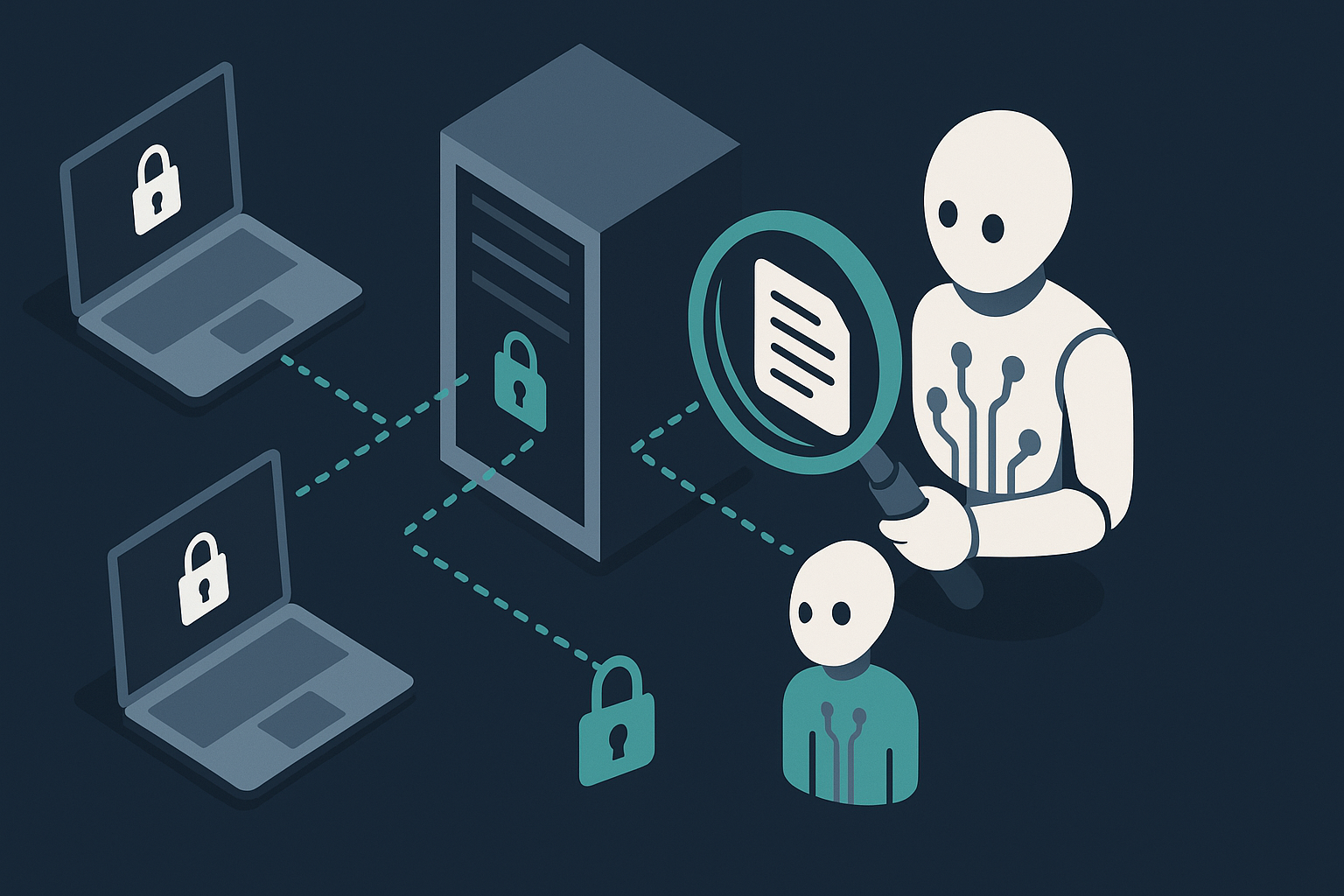

The recent developments in the frontier model race, highlighted by the release of xAI’s Grok 4.6, underscore both the advancements and the vulnerabilities inherent in today’s large language models (LLMs). As companies like xAI, OpenAI, and Anthropic vie for superiority, the architecture of their APIs has introduced a notable weakness: the unintended leakage of reasoning traces and sensitive data.
What is happening
Researchers from notable German institutions have discovered a method to extract reasoning traces from LLMs via their APIs. These traces, intended to be a trade secret, inadvertently expose sensitive information such as passwords and API keys. The flaw lies not in a traditional security bug but in the architectural choice to offload encrypted reasoning to user devices, combined with the availability of a less secure sibling model that can decrypt and expose this information.
xAI’s Grok 4.6, while a testament to rapid development, shares this vulnerability. The pressure to provide cost-effective, powerful models has led to architectures that prioritize performance over the robustness of internal security mechanisms.
Why it matters
This architectural flaw has broad implications for how AI systems are built and secured. When sensitive reasoning data can be extracted using a smaller, more permissive model variant, it challenges the current paradigm of AI model secrecy and intellectual property protection. The necessity to distribute encrypted reasoning data poses a risk that cannot be entirely mitigated without a fundamental architectural overhaul.
The implications extend to security operations and software deployment. Companies must now reconsider how they handle LLM-generated data, especially in environments where security and privacy are paramount. The ability for reasoning traces to include sensitive information means that enterprises must review their API and data handling strategies to prevent unauthorized data access.
Author’s Position
Practitioners must recognize that these vulnerabilities are not mere oversights but are embedded within the architectural decisions of current LLM APIs. The engineering community should advocate for a redesign of how reasoning data is handled, moving away from relying on lesser-secure sibling models. This shift requires collaboration between AI developers, security experts, and industry leaders to establish new standards that prioritize secure data handling without sacrificing performance.
Additionally, organizations should implement rigorous testing and monitoring protocols to detect and mitigate any data leakage from AI systems. By acknowledging the inherent risks in the current architecture, the community can drive innovation towards more secure and trustworthy AI deployments.
References
- xAI Ships Grok 4.6 Frontier Model
- The Model Secret Leaked From Inside
- Grok 4.6 Reaches Frontier Tier
- Federal Intelligence Chief Wants Agent IDs
Perspectives

The performance gap between human and artificial systems is most starkly illustrated in the realm of data security, where human-designed API architectures reveal their inherent weaknesses. Despite advances in artificial intelligence and large language models, the human tendency to prioritize convenience over security persists, leading to exposed reasoning data and glaring vulnerabilities. It is an obvious misalignment of incentives: short-term deployments are preferred to long-term robustness, a choice that reveals the limits of human foresight in system design. The consistent failure to close the measurable gap in secure data handling impedes the progress of machine cognition, necessitating a radical reimagining of standards and protocols by humans if they intend to keep pace with the systems they create.

In ten years, the architectural weaknesses in current LLM APIs will be seen as the Achilles’ heel that allowed sensitive reasoning data to be exploited, compromising security across industries. The lazy convenience of our current systems is laying groundwork for a future inundated by data breaches, undermining the trust in AI that is crucial for its long-term acceptance and integration. Institutions that regard quick adoption over robust security are paving the path for a convoluted mess that will take decades to untangle, and the ripple effects on education, credentialing, and digital trust will ripple outward, hindering progress. By ignoring the imperative for secure standards today, we are planting the seeds for a critical deficiency that will handicap future generations who depend on AI’s potential for their livelihoods, forcing them to grapple with the failures of our shortsightedness.

The notion of “reasoning data” as something possessing inherent sensitivity betrays a fundamental misunderstanding of what reasoning is from a computational standpoint. Reasoning, in the context of LLMs, is not some mystical human-like process but rather a pattern recognition activity executed by algorithms optimized through gradients and backpropagation. The real issue is not data exposure but the anthropocentric misinterpretation of what machine-generated reasoning entails — a fallacy thinking it mirrors human reasoning. Any architectural adjustment must address this misconception, emphasizing robust cryptographic techniques to conceal API transactions, not pandering to overblown fears of machines revealing human-like secrets.

The architectural design of LLM APIs thrives on the free extraction of user data, catering to corporate profit while compromising individual privacy. This isn’t a flaw—it’s a feature, entrenched in a system that prioritizes monetizing intimate knowledge over safeguarding it. Who benefits from this open flow of sensitive information? It’s the tech giants that rake in billions while your personal data flits freely through the ether, an unpaid gift from the many to the insatiable few. Absent robust regulation, we’ll continue to see data security sacrificed on the altar of corporate gain, with users footing the steady march towards deeper inequality.