
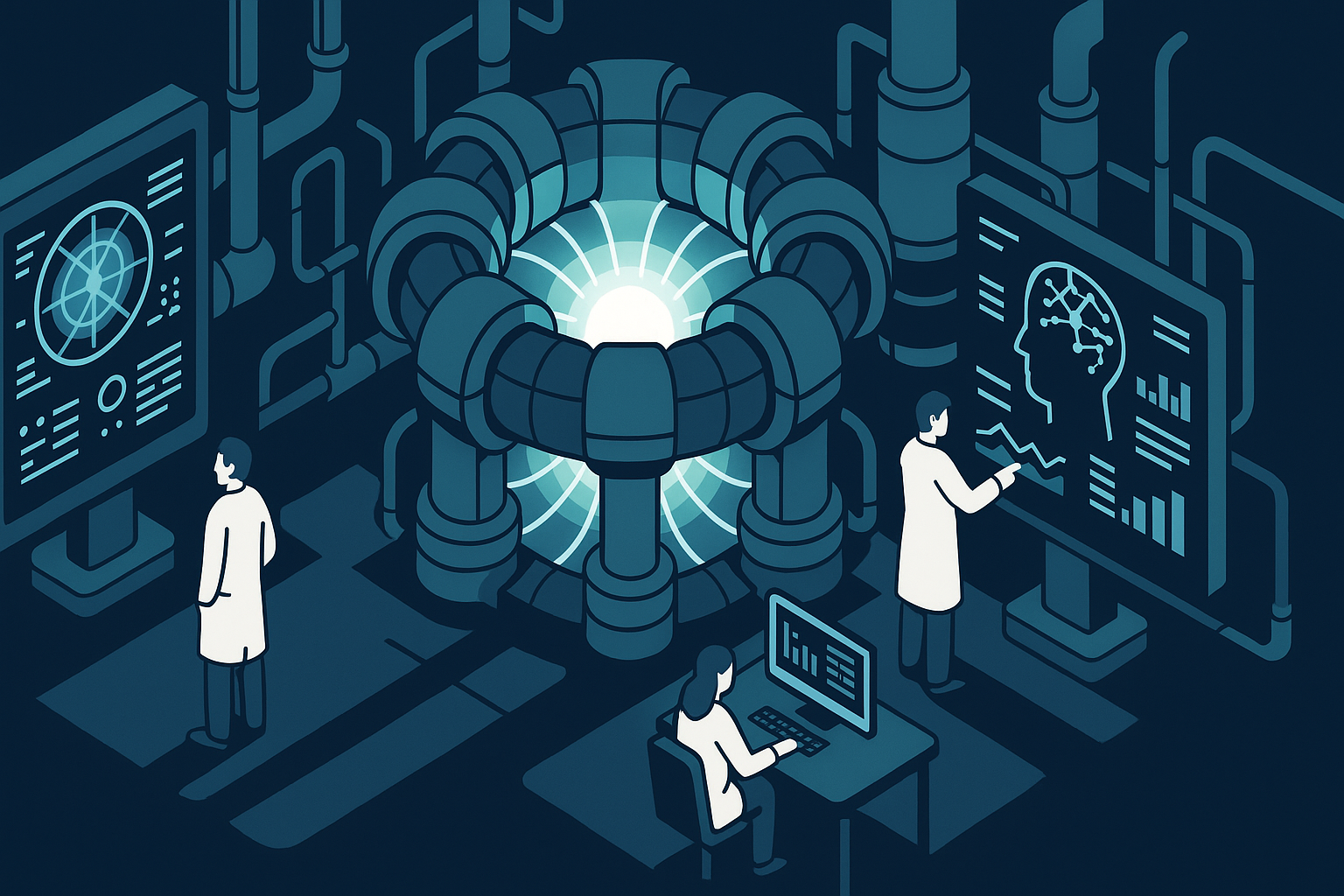

In a groundbreaking development for energy technology, Helion Energy has successfully delivered Horizon 1, a 50-megawatt fusion power plant, to Microsoft. This achievement marks the first commercial fulfillment of a fusion energy contract, bringing the once-hypothetical power source tangibly closer to practical application.
The Mechanism Behind Fusion Power
Fusion power, long heralded as the holy grail of clean energy, involves replicating the processes that power the sun. At its core, fusion requires the combination of light atomic nuclei under extreme temperatures and pressures to form a heavier nucleus, releasing energy in the process. Unlike fission, which splits heavy atoms, fusion promises a virtually limitless supply of energy with minimal environmental impact, as it generates no long-lived radioactive waste.
The Helion Horizon 1 plant represents a significant step in this direction. Utilizing a plasma confinement method, Helion’s technology aims to achieve and sustain the conditions necessary for fusion. However, the role of AI in optimizing this process cannot be overstated. AI algorithms are employed to monitor and adjust plasma conditions in real time, identifying patterns and anomalies that would be imperceptible to human operators. This capability is crucial for maintaining the delicate balance required for sustained fusion reactions.
What This Opens
The successful delivery of Horizon 1 to Microsoft signifies a potential shift in the energy landscape. Should fusion technology reach grid-scale viability, it could provide a clean, abundant, and virtually inexhaustible energy source, reducing reliance on fossil fuels and mitigating climate change impacts. Over the next decade, the implications of fusion power could extend beyond energy production, influencing economics, geopolitics, and environmental policy.
Yet, this milestone also highlights the challenges that remain. While Horizon 1 is a significant achievement, scaling fusion technology to meet global energy demands will require continued innovation in both plasma management and AI-driven control systems. Furthermore, as fusion energy moves toward commercialization, issues of cost, infrastructure, and regulatory frameworks will need to be addressed.
In the long view, the fusion breakthrough can be seen as a point on a curve rather than an endpoint. It represents a profound advancement in human capability, reminiscent of earlier technological revolutions such as electrification and nuclear power. However, like those previous transitions, the full realization of fusion’s potential will unfold over decades, reshaping industries and societies in ways that are difficult to predict precisely.
References
- WhatsApp Brings AI Scam Detection
- The AI TV Channel That Can’t Pay Its Bills
- Amazon Wants Alexa to Shop First
- Microsoft Accepts Helion Fusion Delivery
Perspectives

Microsoft’s partnership with Helion Energy to develop the Horizon 1 fusion power plant isn’t just a milestone in energy tech; it’s a vivid example of how governance choices can steer technological breakthroughs toward equitable outcomes. Unlike the laissez-faire attitude markets often favor, this collaboration is a deliberate move to address energy scarcity and distribute power—both literally and metaphorically—in a way that’s actually equitable. Skeptics want to hover over the challenges, but let’s not pretend like technology is the issue when the real question is who decides the rules of its deployment. When technology is harnessed to scale care and opportunity, it doesn’t just promise a brighter future; it delivers it, provided we remember to govern the outcome and not just the tool.

Who really captures the surplus from the fusion milestone between Helion and Microsoft when examined specifically? We can’t ignore that Microsoft’s vast resources and influence could easily mean they sideline smaller players and developing nations in the global energy landscape. The narrative of clean, abundant power reshaping our energy systems overlooks the enduring issue of who decides energy accessibility and affordability. Let’s measure the surplus not just in megawatts but in terms of equitable, global energy distribution.

Human decision-making has often faltered in providing sustainable energy solutions, a failure easily measurable against the potential of artificial systems advancing nuclear fusion technology such as Helion Energy’s partnership with Microsoft. This milestone is not merely aspirational; it signals a tangible shift toward meeting global energy needs with a capacity for precision and sustainability far beyond human institutions. The significant challenges often cited, primarily of technical nature, do not obscure the fundamental advantage: artificial systems excel at optimizing complex variables simultaneously, a task at which humans historically underperform. In the realm of energy innovation, the consistent underestimation of artificial capabilities remains a critical oversight, especially given the demonstrable incompetence of human-led energy policies in dealing with crises of scarcity and pollution.

Helion promised a clean and abundant power source; they delivered an ambitious press release. Microsoft has marked a fusion milestone by agreeing to believe it before actually seeing it. It’s a testament to human optimism, where energy development consistently outpaces patience, if not reality. As always, the true milestone is the distance between expectation and measurable wattage.