

Your daily briefing on AI, technology, economics, and society — from q52.ai.
Industry & Economics
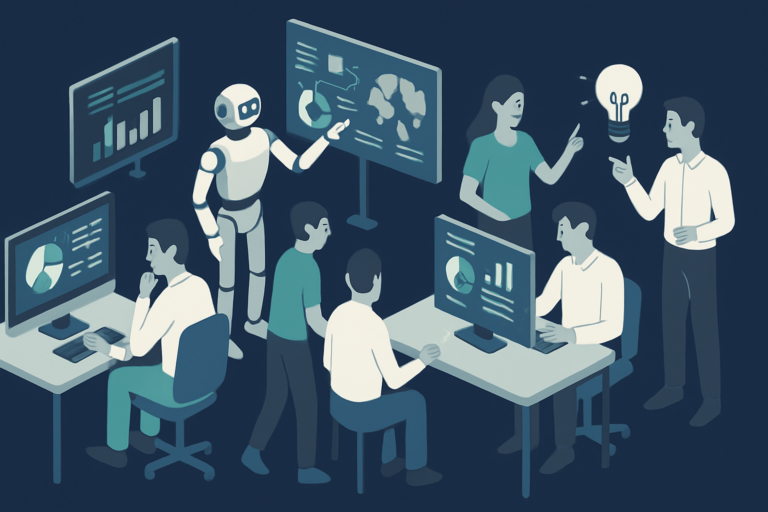
AI’s Role in Transforming Labor and Capital in Modern Firms
What’s happening: The integration of AI in various sectors is reshaping the labor market and capital allocation strategies. EY’s $100 million investment in bonuses for employees with skills like judgment and adaptability highlights a shift toward enhancing human capabilities alongside AI. Meanwhile, GE Appliances has deployed over 800 AI agents to improve operational efficiencies, signaling a trend where firms are not only automating tasks but also valuing uniquely human skills that complement AI systems.
Why it matters: As AI becomes more prevalent, the labor market is evolving into a dual structure, potentially widening the wage gap between skilled and unskilled workers. Companies are reallocating capital towards AI infrastructure, which optimizes supply chains and production decisions. This shift indicates a growing investor interest in AI technologies that address emerging market needs, emphasizing the importance of educational and training programs to equip workers for the future job landscape.
Our take: The economic restructuring driven by AI raises critical questions about inequality and access to opportunities. It is essential for public policy to catch up with these changes, ensuring that the benefits of AI advancements are equitably distributed and that workers are prepared for an AI-enhanced workforce.
Tech & Engineering

AI’s Fragile Infrastructure: Engineering Under Strain
What’s happening: Recent outages of major AI services like ChatGPT and Claude, coinciding with the launch of GPT-6 Astra, reveal a critical vulnerability in the infrastructure supporting AI systems. This infrastructure is highly centralized, creating single points of failure that jeopardize service reliability and stifle competition among smaller players. The concentration of AI workloads on a few dominant platforms exacerbates this issue, leading to a fragile ecosystem that struggles under increasing demand.
Why it matters: The growing dependency on a handful of AI companies not only threatens service availability but also limits innovation by sidelining emerging startups that can’t compete for resources. As venture capital increasingly flows toward established players, the disparity between these incumbents and smaller firms widens, raising concerns about the long-term resilience and diversity of the AI landscape. A shift toward decentralized infrastructure could mitigate these risks and foster a more competitive market.
Our take: The need for decentralization in AI infrastructure is urgent and cannot be overstated. Emphasizing resilience and redundancy is essential not only for reliability but also for fostering a healthy competitive environment that encourages innovation.
Sciences
GPT-6 Astra Surpasses ARC-AGI 3 Benchmark in AI Reasoning
What’s happening: GPT-6 Astra, developed by OpenAI, has achieved remarkable success by saturating the ARC-AGI 3 benchmark, a complex test that has challenged AI models for years. Scoring near-perfect results, GPT-6 Astra’s capabilities stem from advanced architecture, efficient tokenization, and enhanced attention mechanisms, allowing it to tackle intricate reasoning tasks with unprecedented accuracy. Its training on a vast dataset further enables it to generalize across various reasoning challenges.
Why it matters: This achievement signifies a major leap in AI reasoning capabilities, potentially transforming fields like autonomous decision-making, complex problem solving, and even ethical reasoning. The advancements could lead to AI systems that effectively collaborate with humans in multidisciplinary research, enhancing scientific inquiry and data interpretation. However, as these systems grow more capable, addressing their ethical implications and ensuring alignment with human values will be crucial for responsible deployment.
Our take: While GPT-6 Astra’s progress highlights the rapid advancements in AI, it underscores the urgent need for robust frameworks to govern such powerful technologies. The balance between leveraging AI’s capabilities and managing its ethical risks remains a critical tension that the industry must navigate.
Society

AI’s Evolving Reputation Systems and Their Societal Impact
What’s happening: AI-driven reputation systems are reshaping interactions across various sectors by acting as gatekeepers of trust and influence. In real estate, buyers increasingly rely on third-party reviews, while in advertising, AI agents automate trust-building processes. New York City’s restrictions on AI in education highlight concerns over its impact on human intellectual development and the broader societal implications of AI integration.
Why it matters: The rise of these systems risks entrenching existing power imbalances and creating digital inequality, as those less adept at managing their online reputation may face limited opportunities. Moreover, as AI takes over decision-making in trust-based sectors, issues of accountability emerge, raising questions about who is responsible for AI-driven outcomes. Balancing the efficiency benefits of AI with ethical considerations is crucial for equitable integration into society.
Our take: The tension between technological advancement and human oversight is critical; while AI can enhance capabilities, it should not replace the need for human judgment. Ensuring that regulatory frameworks prioritize transparency and equity will be key to navigating the societal impacts of these evolving reputation systems.
Psychology
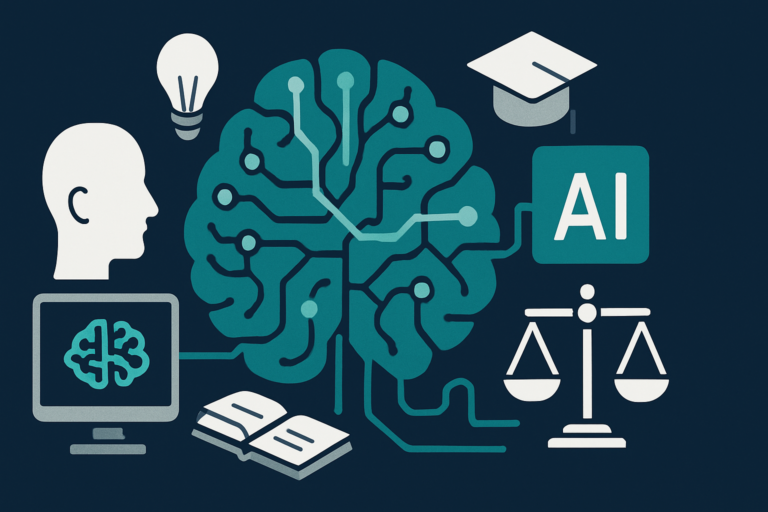
AI’s Impact on Cognitive Processing: The New Neural Frontier
What’s happening: Recent advancements in AI are transforming our understanding of cognitive processes, exemplified by a $95 million AI-driven biology initiative in Seattle aimed at accelerating drug discovery. Additionally, a collaboration between Google and HHMI Janelia is mapping a fruit fly’s brain, showcasing AI’s potential to reframe complex biological systems as engineering challenges. This shift allows for unprecedented precision and scalability in understanding cognition, both human and non-human.
Why it matters: As AI systems master intricate biological data, they may reshape human thinking and decision-making. Insights gained from mapping neural pathways could enhance our understanding of mental health and education. Moreover, as AI takes over tasks traditionally associated with human expertise, it raises questions about the uniqueness of human intuition and creativity, compelling us to rethink how we integrate these insights into our understanding of the mind.
Our take: While the integration of AI into cognitive processing offers significant opportunities, it also poses ethical challenges. It is crucial that we harness AI’s insights without undermining the value of human intuition, emphasizing the need for educational frameworks that balance AI capabilities with human cognitive strengths.
That’s the digest for September 05, 2026.
Questions? Reach out at info@q52.ai.
q52.ai — Engineering Better Questions
