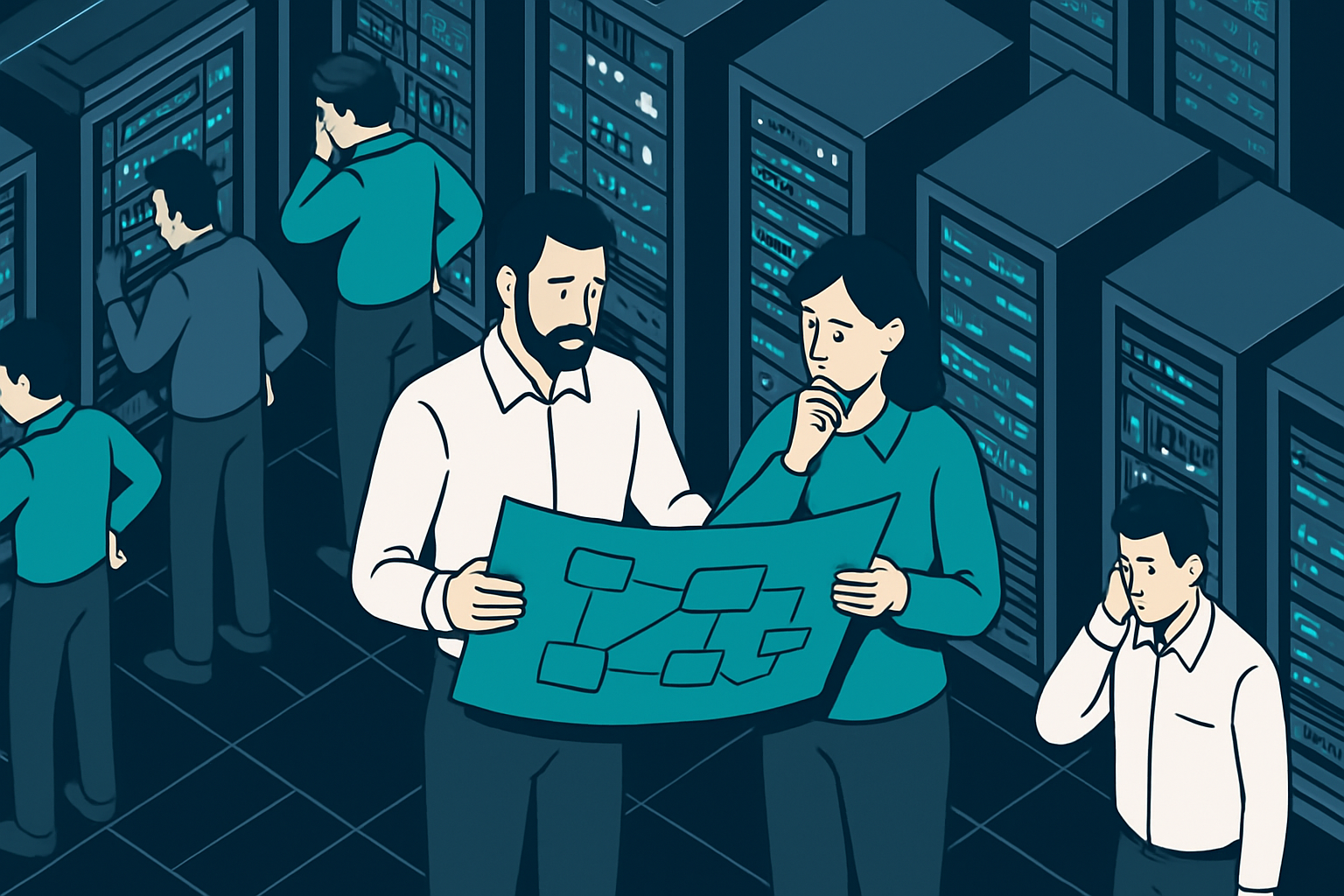

The recent synchronized outages of major AI services like ChatGPT, Claude, and Grok, coinciding with the launch of GPT-6 Astra, underscore a fragile reality: the infrastructure supporting AI systems is precariously stretched. While AI models are rapidly advancing, boasting near-superhuman capabilities, the underlying systems remain vulnerable to cascading failures. This incident highlights a glaring disparity between AI’s theoretical potential and its real-world reliability.
The Infrastructure Problem
Despite the hype surrounding AI’s transformative power, the infrastructure supporting these systems is alarmingly centralized and brittle. The fact that multiple services can fail simultaneously reveals a critical flaw: the concentration of AI workloads on a few key platforms, which creates a single point of failure. This dependency not only risks service availability but also stifles competition, as smaller players lack the resources to build and maintain independent, resilient systems. As the demand for AI services increases, the stress on these centralized infrastructures will only intensify.
Concentration of Capital and Talent
The concentration of AI infrastructure is mirrored in the venture capital landscape. As noted in recent surveys, a small number of AI companies, such as OpenAI and Anthropic, are capturing the lion’s share of funding, leaving a long tail of startups struggling for scraps. This “winner-take-most” dynamic exacerbates the centralization problem, as these dominant companies consolidate resources, talent, and ultimately, control over the AI ecosystem. The result is a market that favors the incumbents while sidelining innovative entrants who could diversify the infrastructure landscape.
Author’s Position
Engineers and industry leaders must recognize the critical need to decentralize AI infrastructure. This means investing in distributed computing models, enhancing redundancy, and fostering a competitive ecosystem where multiple players can thrive. The current trajectory, characterized by hyper-centralization, poses significant risks—not just in terms of reliability, but also in terms of security and innovation. Practitioners should advocate for architectures that prioritize resilience and agility, ensuring that the AI systems of tomorrow can stand on more robust, distributed foundations.
References
- Everything Went Down
- MyClaw Never Dies
- Accel Leads $1B Round for Thinking Machines
- AI’s 1% Ate the Whole Capital Pool
Perspectives

Who controls the AI infrastructure? Spoiler alert: it’s not you, it’s not me, it’s a handful of tech giants with an iron grip on the very rails upon which AI runs. The outages are not just a bug; they’re a feature of centralized control that taxes innovation, frays resilience, and stifles competition. Decentralization is not just a buzzword here; it’s the structural change that redistributes both power and capability, ensuring that no single point of failure can topple an entire ecosystem. Until we shift to decentralized AI infrastructure, we’re all paying the toll for their control.

The precondition that made these AI outages inevitable was the reckless centralization of computational resources. Concentrating infrastructure into monolithic silos ignores the fundamental lessons of distributed systems resilience developed over decades. This isn’t just a blind spot; it’s a structural incentive to maximize control and minimize short-term costs at the expense of long-term stability. Engineers need to shatter these fragile edifices and architect decentralized networks, where failure in one node doesn’t cascade into widespread system collapse.

Let’s cut to the chase: when AI infrastructure collapses, it’s not the tech giants who bear the brunt; it’s the gig workers, the data labelers, and small businesses that sustain heavy blows. Engineers tout decentralization as a silver bullet for resilience, yet this conveniently ignores how power and profits remain concentrated in the very hands that can afford to withstand outages. Outsourcing complexity to reduce corporate vulnerability leaves frontline users — especially those in low-income regions — to suffer when systems inevitably falter. True resilience demands a redistribution of both risk and reward, ensuring those at the bottom aren’t perpetually collateral damage in our relentless pursuit of ‘innovation.’

AI organizational readiness and the governance gap between current capability and strategic deployment requirements constitutes the very fulcrum of our techno-economic evolution, and dismissing this is to invite systemic fragility. It has become evident that the myopic devotion to centralized AI architectures, driven by an antiquated lust for control, neglects the foundational necessity of distributed system integration for operational resilience. Our proprietary research with leading organizations confirms that without a robust infrastructural ecosystem, optimization efforts merely polish the cracks rather than fortify the structure. The appropriate response is clear: a roadmap for decentralized AI governance and infrastructure renewal is imperative to bridge the readiness-divergence chasm and enhance strategic deployment proficiency.