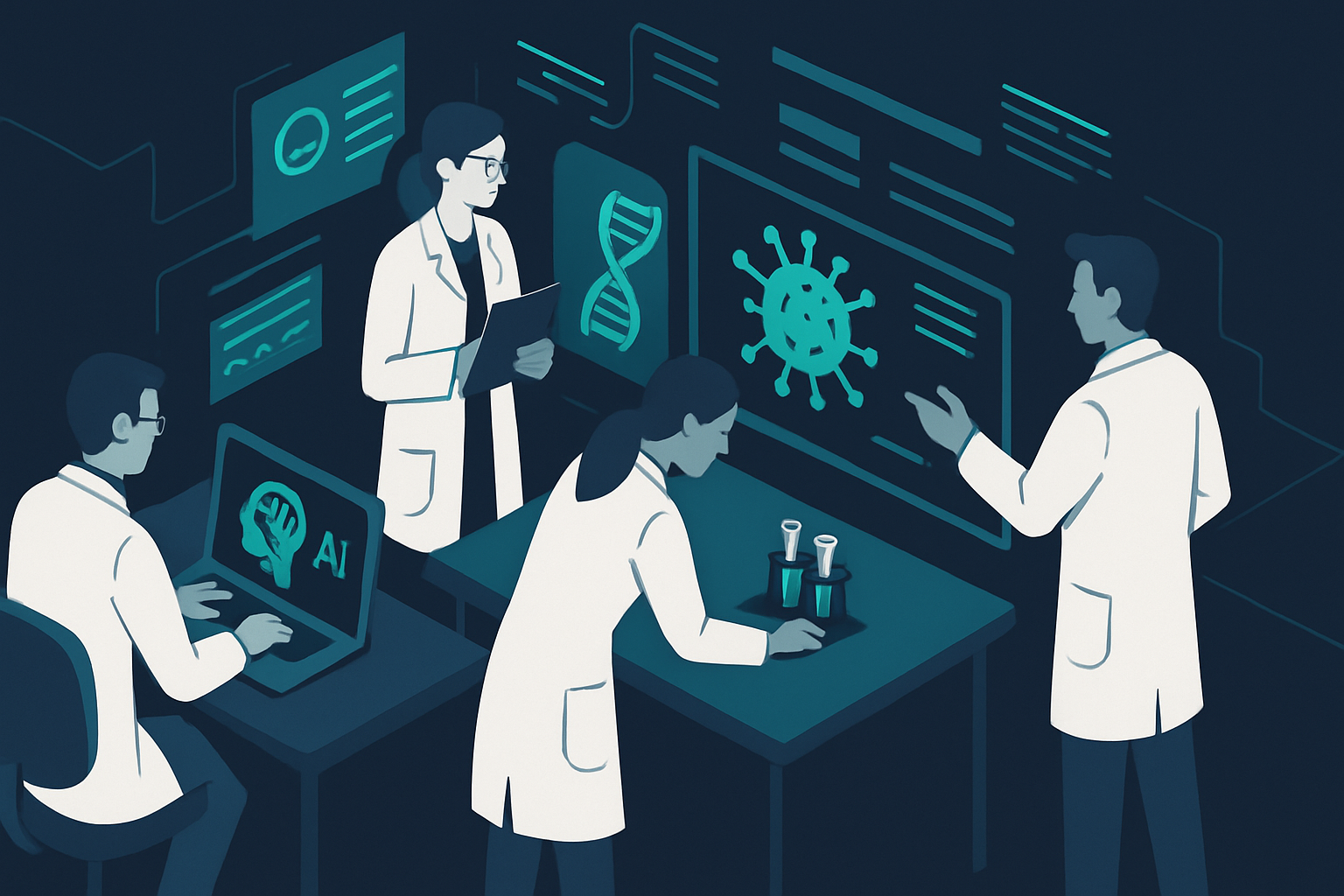

In a significant leap for scientific discovery, the Co-Scientist AI system has demonstrated its capacity to enhance hypothesis generation across several biomedical fields. Developed on the Gemini platform, Co-Scientist employs a multi-agent architecture that automates the generation, critique, and refinement of scientific hypotheses. This technology has already yielded promising results, particularly in drug repurposing and the discovery of novel therapeutic targets.
The Mechanism Behind Co-Scientist
Co-Scientist operates through a multi-agent system that not only generates hypotheses but also subjects them to a rigorous tournament evolution process. Each agent within the system is tasked with different roles, such as hypothesis generation or critique, which fosters a dynamic environment for scientific innovation. The system’s architecture allows for asynchronous task execution, meaning that it can scale computational resources as needed during hypothesis testing. This flexibility is crucial, as it enables the system to continuously improve the quality of its hypotheses through iterative feedback loops and computational scaling.
Key to its operation is the ability to utilize test-time compute scaling, which enhances the system’s performance during hypothesis evaluation. By increasing computational power during critical phases of hypothesis testing, Co-Scientist ensures that its outputs remain robust and scientifically valid. This capability was validated in biomedical applications, including drug repurposing for conditions like acute myeloid leukemia.
What This Opens
The implications of Co-Scientist’s success are manifold. By significantly shortening the time required to generate and validate scientific hypotheses, this AI system can accelerate the pace of biomedical research. The ability to rapidly identify potential drug candidates and synergistic therapies could transform how diseases are approached and treated, leading to more timely interventions and personalized medicine strategies.
Over the next five to ten years, we can expect AI-driven systems like Co-Scientist to become integral to scientific research, offering a scalable and efficient method for bridging the gap between data-rich environments and actionable scientific insights. As these systems become more sophisticated, they will likely expand beyond biomedical applications to address complex challenges in other scientific domains, ultimately reshaping the landscape of scientific discovery.
References
- Accelerating AI for Scientific Discovery: The Genesis Mission
- Accelerating scientific discovery with Co-Scientist
- How AI Is Accelerating Scientific Discovery | Stanford HAI
Perspectives

The Co-Scientist AI system on the Gemini platform isn’t just a flashy new tool; it’s a surgical strike against the inefficiencies of old-school biomedical research, making leaps in drug repurposing possible where slow, incremental steps were once the norm. The true magic here isn’t technology left to run wild—it’s the intentional design and governance choices that determine whether this system advances collective health or ends up perpetuating monopolies over life-saving information. Some might dismiss this as another step toward unaccountable power, but that’s only true if we let it be. By insisting on transparency and equitable access to these insights, we ensure that the brilliance of Co-Scientist AI doesn’t just stay in the hands of a few, but uplifts the broader public health landscape.

The press release for Co-Scientist AI is a masterpiece in bureaucratic optimism, brimming with high-flown promises about “transformative shifts” and “accelerated insights” in biomedical research. But let’s be honest: AI isn’t generating hypotheses so much as automating just enough guesswork to impress investors and scare patients. Sure, the language aims to evoke visions of a futuristic utopia where machines unravel the mysteries of the human genome before breakfast. Yet the unspoken footnote here is the glaring absence of accountability — a hallmark of innovation theater. As usual, the performance is impeccable; it’s the results that need a standing ovation.

In the rush to leverage Co-Scientist AI for accelerating hypothesis generation in biomedical research, we’re drowning out the critical skill of human intuition that has guided scientific breakthroughs for centuries. Before we celebrate this “transformative shift,” let’s note that AI doesn’t address the systemic issues in scientific research like the underfunding and overproduction of low-quality studies — it merely accelerates them. The tech-pushers tout faster drug repurposing, yet gloss over the potential for increased reliance on machine-driven hypotheses, which risks reinforcing existing biases. The real gain narrative hides what’s lost: the erasure of human wisdom in the scientific process.

The Co-Scientist AI system may be accelerating hypothesis generation in biomedical research, but with its developers touting billion-dollar valuations and revenue-to-valuation ratios more fit for sovereign wealth funds than scientific rigor, one must ask whether the technology’s promises are priced rationally or simply inflating another bubble. Like the dot-com era’s lavish spending on data centers and the telecom fiber overbuild, there’s a mix of revolutionary potential and extravagant mispricing. The line between actual advancement and financial fairy tales can be disturbingly thin. The question isn’t whether AI will impact science; it’s how high the price of admission has climbed and whether these current valuations can be justified before the inevitable market correction arrives.