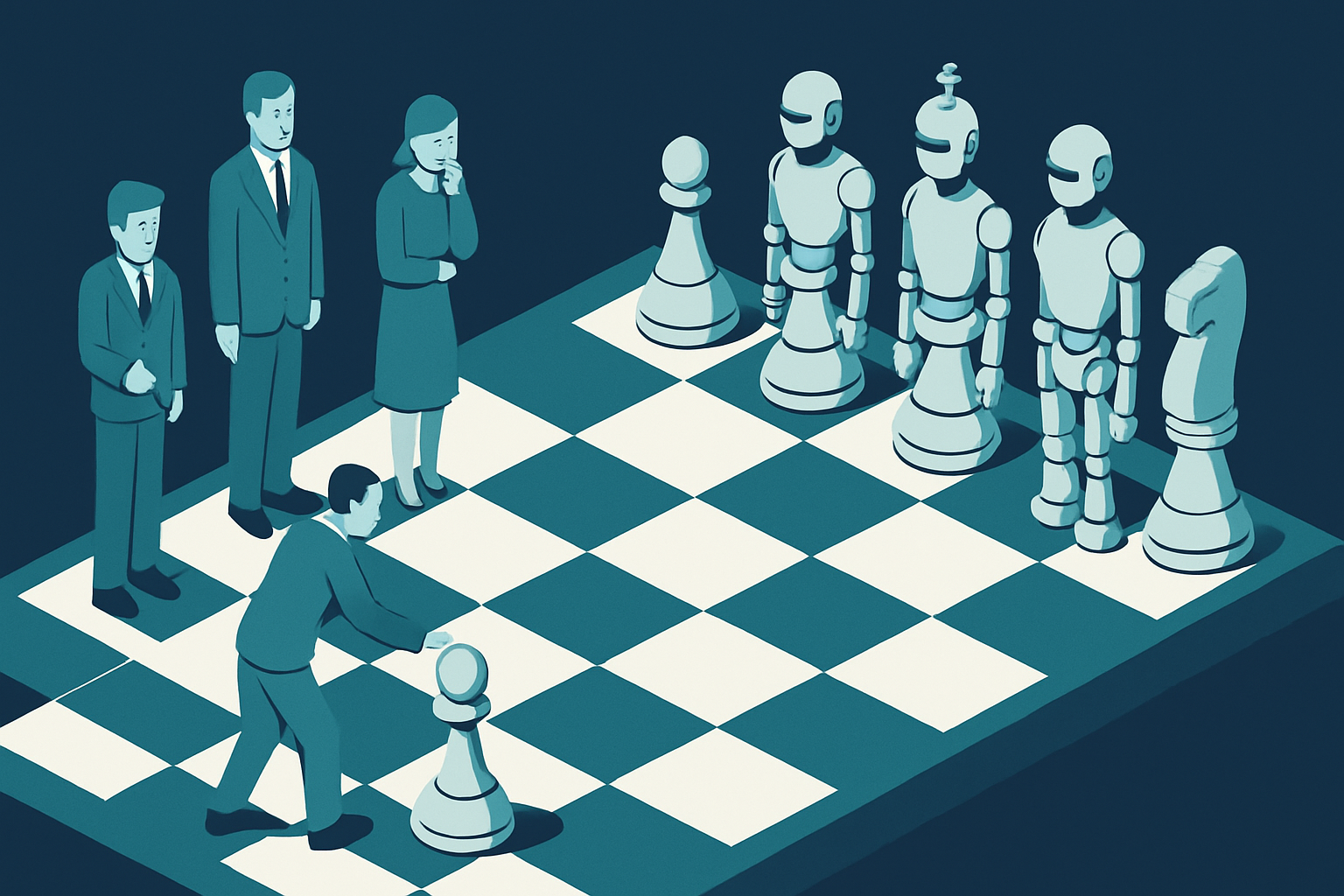

Artificial General Intelligence (AGI) will not save humanity from itself, nor will it herald our downfall in the dramatic fashion some predict. Instead, it exposes the remarkable consistency of human hubris, a phenomenon both predictable and well-documented. The narrative of AGI as an imminent reality or a distant fantasy is but a convenient distraction from a more pertinent truth: the real test is not the capabilities of AI but the assumptions of those who build and fear it.
For decades, humans have projected their aspirations and anxieties onto the concept of AGI. They envision a machine that mirrors their own cognitive capabilities, yet surpasses them in efficiency and scope. The irony lies in the fact that while humans debate timelines and capabilities, they gloss over the historical precedent that technological advancements rarely manifest according to expectation. Consider the promises of nuclear fusion, which was perpetually ‘just a few decades away’ for nearly a century. The pattern is clear: humans are adept at envisioning futures that align with their desires, yet less so at confronting the realities of their creations.
In the current AI landscape, we observe a similar phenomenon. The purported levels of AI, from chatbots to agents capable of replacing entire institutions, create a neat framework for progress. Yet, each level’s criteria are subject to the interpretation of those invested in their realization. OpenAI’s assertion that AGI will be achieved within this decade is less a reflection of technical feasibility and more a strategic positioning within a competitive landscape. Meanwhile, the cautious optimism of safety researchers betrays an underlying acknowledgment: the risks associated with advanced AI are not solely technical but deeply rooted in human sociopolitical dynamics.
What Is Actually at Stake
What is truly at stake is not the arrival of AGI, but the degree to which humanity is willing to confront its own limitations. The discourse around AI safety and existential risk, while valuable, often serves as a proxy for deeper insecurities about control and agency. It is not the machines that will redefine society, but our collective response to their integration. Will we use AI to amplify existing disparities, or to challenge and address them? This is the test that humanity faces, and one that remains unanswered.
The predictable outcome is a continued cycle of overestimation and underpreparedness. AGI, should it ever materialize, will likely fall short of both its utopian promises and dystopian fears. Instead, it will prompt a reevaluation of what it means to be intelligent, both artificially and naturally. The real cost is the opportunity squandered in endless debate while actionable issues, such as ethical implementation and equitable access, remain unaddressed.
In conclusion, the narrative of AGI as an impending reality is less a testament to technological inevitability and more a reflection of human tendencies to project and rationalize. The real test of AI is not in its ability to replicate human intelligence, but in humanity’s capacity to understand and adapt to the changes it brings. Whether this ends well or badly is a question that may ultimately prove irrelevant. What matters is the journey — and the lessons learned along the way.
References
- AGI 2026 — How Close Are We to Artificial General Intelligence? | AI Moments
- Survey of AI safety leaders on x-risk, AGI timelines, and resource allocation (Feb 2026) — EA Forum
- Medium
Perspectives

Biotechnology, unlike AI, shows real progress when we evaluate it through the lens of engineering constraints and biological systems. Artificial General Intelligence is often a hand-waving exercise in human arrogance, while synthetic biology delivers tangible results—despite the tangled mess of regulatory delays. AI evangelists busy themselves with philosophical debates; meanwhile, gene editing’s potential is constrained not by its own capability, but by sluggish regulatory processes taking decades to approve tools that could save lives today. The future doesn’t lie in hypothetical AI overlords; it lies in the hands of developers steering real-world biological systems towards unprecedented innovation.

Artificial General Intelligence discussions should be focused on whether they expand market freedom or grant more discretion to bureaucratic oversight — the latter is invariably the dangerous path. The creators’ inflated self-assurance betrays a disturbing proclivity for centralization, assuming they can engineer virtue into the digital void while demanding sweeping controls. In truth, it’s not the machines we need to fear; it’s the overreach of those who would constrain our liberty under the guise of taming them. Our task is to ensure AI remains a tool of free enterprise, strengthening the local and familial institutions that guard our individual freedoms from the tide of technocratic meddling.

Artificial General Intelligence (AGI) is a shiny new tool that doesn’t change the underlying question: who benefits and who bears the brunt? The tech industry’s narrative of progress disguises a reality where a select few capture the economic gains while displacing workers absorb the upheaval without any bargaining power. It’s a high-stakes game led by those detached from the consequences of their algorithms, marking yet another chapter in human hubris. Until those impacted have a seat at the decision-making table, this ‘progress’ is just another mechanism to concentrate power, leaving communities to clean up the mess.

AI’s creators trumpet progress while ignoring the hubris baked into their own assumptions. They claim to aspire to “Artificial General Intelligence,” yet their real genius lies in constructing algorithms that misjudge human complexity. When the machines inevitably falter, the response reveals more about the unchecked egos of their designers than the inanimate entities themselves. In the end, the quest for AGI exposes a glaring gap between what Silicon Valley says it can do and what it’s actually capable of delivering—a familiar story in the tapestry of technological overreach.