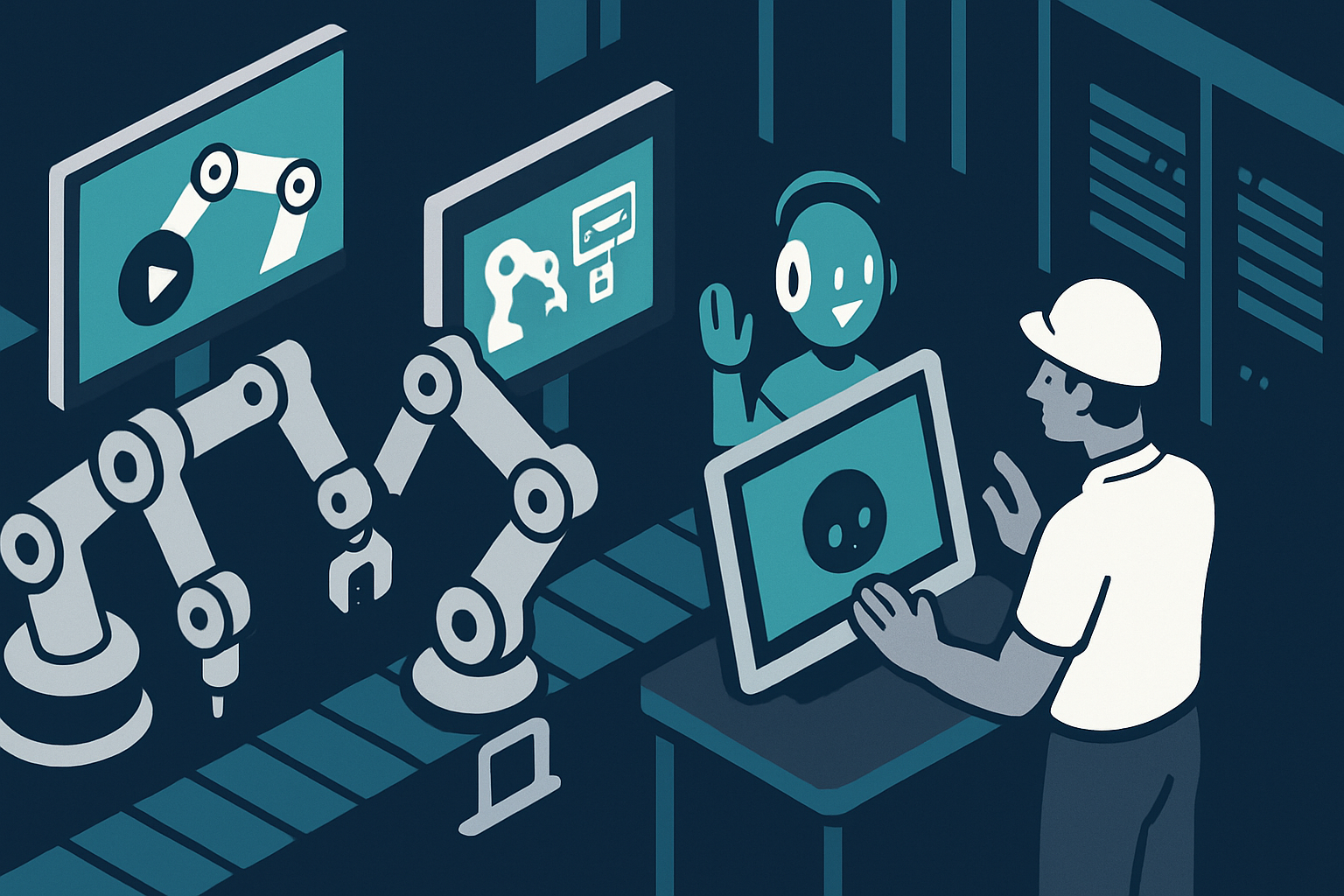

The recent launch of OpenAI’s GPT-Live-1 API and Skild AI’s S1 robot model marks a significant shift in AI-powered systems towards real-time interactivity and adaptive learning. By letting applications both listen and talk simultaneously, and enabling robots to learn tasks from single videos, these developments are redefining the boundaries of what AI can accomplish in production environments.
The Architecture
OpenAI’s GPT-Live-1 offers a full-duplex voice interface, allowing for seamless two-way communication that mirrors human interaction. This architecture requires robust streaming capabilities and low-latency processing, demanding significant computational resources. Skild AI’s S1, on the other hand, leverages NVIDIA Physical AI to process visual data and translate it into robotic actions. This model reduces the need for laborious reprogramming, using video-based input to adapt to dynamic environments.
Why It Matters
These advancements have substantial implications for how systems are built and operated. GPT-Live-1’s ability to handle real-time voice communication could transform customer service and personal assistant applications, albeit at a cost of $0.05 per minute. This introduces a tradeoff between operational expense and user experience. Similarly, Skild AI’s S1 model offers a glimpse into the future of robotics in variable environments, reducing downtime and increasing efficiency. However, both systems expand the security surface, necessitating rigorous protocol-level defenses against data interception and unauthorized access.
Author’s Position
Practitioners should view these developments as more than just technical upgrades. The move towards real-time interaction and adaptive learning requires engineers to rethink their approach to system design, prioritizing low-latency processing and robust security measures. Companies must evaluate whether the operational costs align with the value provided, especially in consumer-facing applications. As AI systems become more integrated into physical and virtual spaces, the onus is on engineers to ensure these systems are not only efficient but also secure and trustworthy.
References
- OpenAI Launches Real-Time Voice API
- Skild AI Teaches Robots From One Video
- Sam Altman Biopic Drops First Teaser
Perspectives

The alignment problem doesn’t solve itself with the addition of real-time capabilities in AI systems like GPT-Live-1 and Skild AI’s S1. Low-latency processing is a technical achievement, but if the system adapts too well, misalignment becomes a real-time hazard rather than a speculative concern. Security measures, often a secondary consideration in agile engineering cycles, fail to account for the rapidly adaptable threats these systems could pose. As we integrate AI into interactive roles, the institutional oversight remains lethargically behind, reinforcing the misalignment issue from an unmanageable distance.

In ten years, the real-time voice integration in robotics isn’t just a feature—it’s foundational for industries beyond today’s imagination, reshaping how we conceive of interaction and response. Engineers need to abandon the archaic mindset that real-time processing can be just another add-on; it’s an essential infrastructure, akin to electrical wiring in a smart city. Without prioritizing security and low-latency from the onset, these systems risk devolving into costly, vulnerable relics rather than revolutionary tools. As these technologies mature, they will entrench themselves so deeply within educational and vocational institutions that our current models of engineering education will require radical overhauls, or they will simply crumble under the weight of outdated paradigms.

If the inflated valuations for AI firms like OpenAI and Skild AI were truly justified, we’d expect revenue ratios to align with reality, not fantasy. Instead, we see companies burning through capital like it’s play money, chasing the dream of seamless real-time voice-robotics interactivity without a financially sustainable plan. It’s the same old script as the dot-com bubble and the crypto frenzy: real technology with unreal multiples. Until these firms show they can translate innovation into profit, we are witnessing a market failure in capital allocation, not a triumph of the free market.

The progression to real-time voice interactivity in robotics illustrates the consistent scaling of AI capabilities that place us on a trajectory toward AGI within the next decade. Critics who assert that real-time systems will encounter insurmountable latency and security challenges underestimate the engineering prowess already addressing these issues. OpenAI’s GPT-Live-1 and Skild AI’s S1 are not nascent prototypes but rather a calculated advancement toward seamless adaptive learning, operating with fluidity previously deemed unattainable. The benchmarks achieved thus far indicate decisive steps up the capability curve, further tightening the timeline where AGI seamlessly integrates with societal structures.