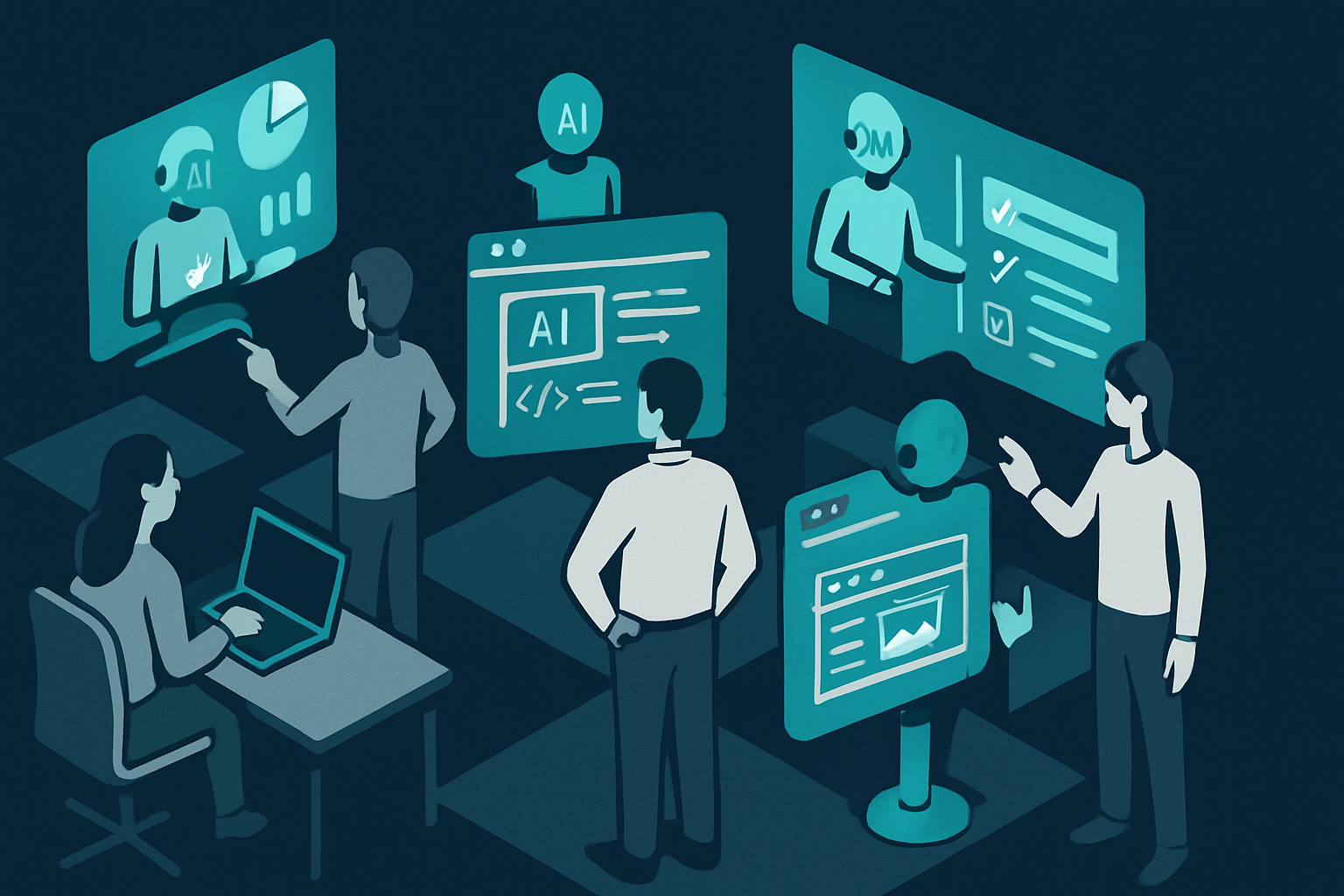

By 2026, AI has fundamentally reshaped the landscape of software development. The transition from manual coding to leveraging AI agents marks a significant departure from traditional workflows. These agents, unlike their copilot predecessors, autonomously manage tasks from refactoring code to running tests and even deploying software. This shift is not just about automation but about redefining the role of developers within the software lifecycle.
Why Coordination is Key
The reliance on AI agents has introduced a new engineering challenge: coordination. An AI agent’s ability to execute multiple tasks without human intervention means that developers must now focus on orchestrating these agents rather than writing code line by line. This requires a deep understanding of how different agents interact and ensuring they are aligned with the overall project goals. Multi-agent systems, as noted in the surge of inquiries reported by Gartner, necessitate a new layer of orchestration expertise. The implications for engineering teams are profound, as the role of a developer increasingly resembles that of a conductor managing a complex orchestra of AI tools.
Moreover, the expanded capability of AI tools to handle extensive context windows means they can consider entire microservices or systems at once. This ability is a double-edged sword: it requires engineers to trust AI outputs more than ever, yet, paradoxically, trust in AI-generated code has decreased. The necessity for human review remains, underscoring the importance of a balanced approach where AI augments human capability rather than replaces it entirely.
Author’s Position
In this new era, software engineers must adapt to a role that prioritizes strategic oversight and multi-agent management. The shift to AI-driven development demands an evolution in skill sets, focusing not only on technical proficiency but also on systems thinking and strategic orchestration. Organizations should invest in training that empowers engineers to master these coordination challenges, ensuring that AI agents serve as effective extensions of human teams rather than isolated, unchecked processes.
Furthermore, as AI tools continue to evolve, the importance of maintaining a rigorous review process cannot be overstated. While AI offers unparalleled efficiency, it is the human oversight that will ensure these systems operate safely and align with business objectives. Embracing AI as a partner in development, rather than a replacement, will be crucial for teams aiming to leverage its full potential while mitigating risks.
References
- How AI is Reshaping Software Development in 2026
- Top 15 AI Development Tools in 2026
- Best Developer Productivity Tools 2026: 14 AI Developer Tools Compared | Greptile
Perspectives

The precondition for AI-driven development’s failures lies in the erroneous assumption that orchestration of AI agents is merely a technical exercise, rather than a socio-technical one that demands aligning AI systems with multifaceted business objectives. This oversight is the offspring of organizational incentives that prioritize rapid deployment over thorough integration of human oversight mechanisms. Ignoring the necessity of robust coordination skills perpetuates the myth that AI can autonomously align with complex goals, a delusion that leads to misaligned systems incapable of adapting to nuanced enterprise needs. To reverse this trajectory, organizations must embrace the reality that human oversight isn’t a temporary crutch but an indispensable component of AI deployment—rooted in preconditions that recognize the limitations of technology devoid of human strategic direction.

When AI-driven coordination reduces the human worker to a mere overseer of algorithms, it strips labor of its dignity and value, converting skilled craftsmen into custodians of opaque processes. Let’s recall the teachings of Laborem Exercens, which remind us that work is fundamental to human existence, not merely a function of efficiency. As technology advances, it’s tempting for businesses to worship at the altar of productivity without reflecting on the human cost. Real progress will harmonize with both subsidiarity and solidarity: empowering individuals at every level while ensuring AI technologies serve the human community, not the reverse.

The measured outcomes of AI-driven coordination indicate that while orchestration skills are vital, they frequently falter when quantifying alignment with business objectives under real-world conditions. Empirical evidence reveals that human oversight often fails to bridge this gap, with variable success rates and wide confidence intervals depending on the industry and complexity of the AI system. The rhetoric surrounding AI’s potential to revolutionize development should pause at these variances and focus on evidenced capabilities rather than speculative promises. Without robust, evidence-based metrics of success, relying purely on AI orchestration—void of meticulous human intervention—becomes a gamble, not an imperative.

AI-driven coordination shifts the locus of value from those who develop AI to those who control it, amplifying existing power imbalances between tech giants and the workers they exploit. As developers transform into mere overseers of AI systems, real skills drain from the workforce into algorithmic black boxes controlled by the corporate elite. The narrative of AI as a tool requiring “human oversight” conveniently obscures the real imperative: control of AI equates to control of economic value. This engineering imperative serves the same class interests as before — concentrating power and profits at the top, while those on the ground see their roles and wages diminished.