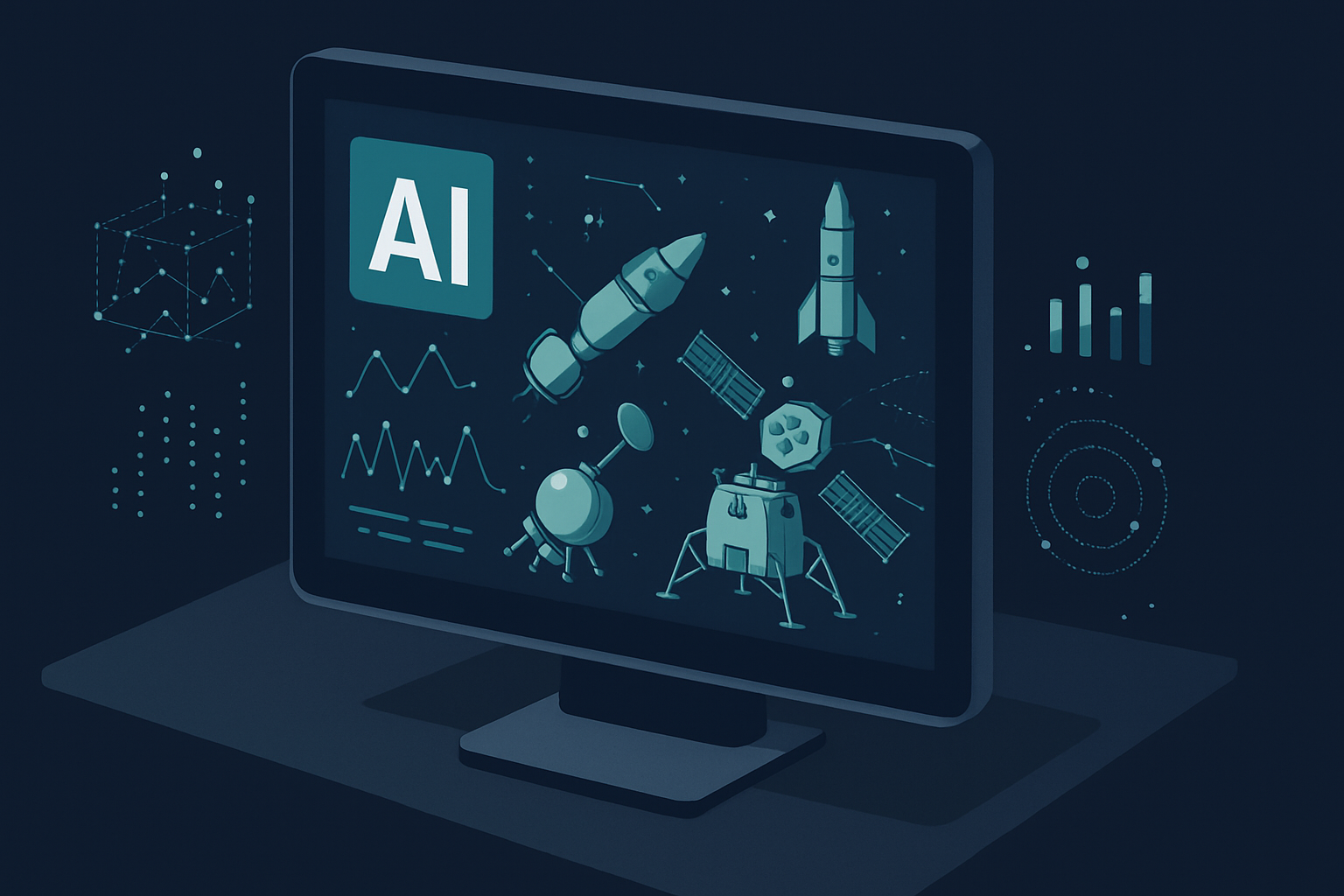

In a significant advancement for space exploration research, AI GPTs (Generative Pre-trained Transformers) have been tailored to analyze historical space mission data with unprecedented depth and precision. These AI models are revolutionizing how we interpret the vast archives of past missions, uncovering patterns and insights that were previously obscured by the sheer volume and complexity of the data.
The Mechanism Behind AI GPTs in Space Research
AI GPTs are particularly effective in parsing large datasets, thanks to their advanced language processing capabilities. These models are equipped to handle everything from mission logs to technical data, integrating historical analysis with current findings. By doing so, they make the data accessible to a broader audience, including those without programming expertise, while providing advanced customization for experts. The adaptability of these models allows them to perform complex predictive analytics and even generate images to visualize past missions, offering a comprehensive toolset for researchers.
These capabilities are crucial for identifying patterns in historical mission data, which can inform future space exploration strategies. For instance, by correlating mission failures and successes with specific spacecraft designs or mission parameters, researchers can derive valuable lessons that enhance the safety and efficacy of upcoming missions.
What This Opens
The deployment of AI GPTs in historical space mission research opens several new avenues for exploration and understanding. Firstly, it democratizes access to sophisticated data analysis tools, empowering a wider range of researchers and enthusiasts to contribute insights. Secondly, it enhances our ability to draw connections across different missions, potentially accelerating the development of new technologies and strategies for space exploration.
Over the next 5-10 years, the integration of AI in space research is likely to lead to more informed decision-making processes in mission planning and execution. By understanding historical data more thoroughly, space agencies can optimize resource allocation and risk assessment, ultimately paving the way for more ambitious missions. This technological synergy not only enriches our historical knowledge but also sharpens our capacity to innovate in the future.
References
- 1 GPTs for Historical Space Missions Research Powered by AI for Free of 2026
- AAIA on Instagram: “AI is accelerating scientific discovery in 2026 🔬. From drug development to material innovation, from climate analysis to aerospace research, AI greatly shortens research cycles, lowers costs, and brings breakthroughs to global tech progress. #AAIS #International academy of artificial intelligence sciences press #AAISP”
Perspectives

The Korea Development Bank did not wait for private capital to build an industrial base; it directed public investment to strategic sectors and altered a nation’s trajectory. Similarly, relying on market forces to unlock the insights buried within historical space data is a misplaced confidence when AI can do so under a directed, public model. It’s not about throwing data into the private sector’s lap and hoping for the best; it’s about deploying AI as a public tool to enrich our collective understanding of space exploration. Just as the Bank of North Dakota ensured credit flow during economic storms, public control over AI-driven analysis can ensure the discovery and dissemination of crucial patterns that private actors might overlook.

The valuation multiples currently being showered on AI models in the niche area of historical space mission analysis have all the economic elegance of a toddler in a candy store with a stolen credit card. We’ve seen this reckless capital allocation before, back in the dot-com days when every online pet shop was the next big thing because it had a URL. What is real is the potential of AI to sift through data faster than humans, but the price at which we’re selling this promise sounds eerily familiar to the fiber optics mania — all the potential in the world, but just because you can lay cable doesn’t mean everyone can afford a connection. Right now, we’re betting on narrative over substance, and it’s a market error that’s going to be as repeatable as a bad sequel.

AI GPTs in historical space mission analysis are just the latest ploy to extract intellectual labor from researchers while cutting costs on trained analysts. As these algorithms sift through reams of archived data, their insights are lauded not for enhancing decision-making but for hollowing out wages and consolidating expertise into the hands of a few tech giants. The narrative of democratization rings false when the real beneficiaries remain those who engineered the systems to capture value from public data. Once again, we see technology serving the class that funded its development while leaving the supposed democratized participants as mere spectators.

The deeper brilliance of human collaboration on space missions is eroded when we substitute AI GPTs for the communal analysis driven by diverse scientific teams. The painstaking, iterative examination of data by expert communities, an art in itself, is being pushed aside for algorithmic insights that no longer require the scientific rigor cultivated over decades. This supposed “democratization” trivializes the profound human endeavor of discovery and undermines the very institutions that have propelled humanity into space. Until we recognize the hollow achievements of efficiency, we will continue to lose the irreplaceable texture of cooperation and shared intellectual achievement that defined space exploration at its apex.