

Your daily briefing on AI, technology, economics, and society — from q52.ai.
Industry & Economics
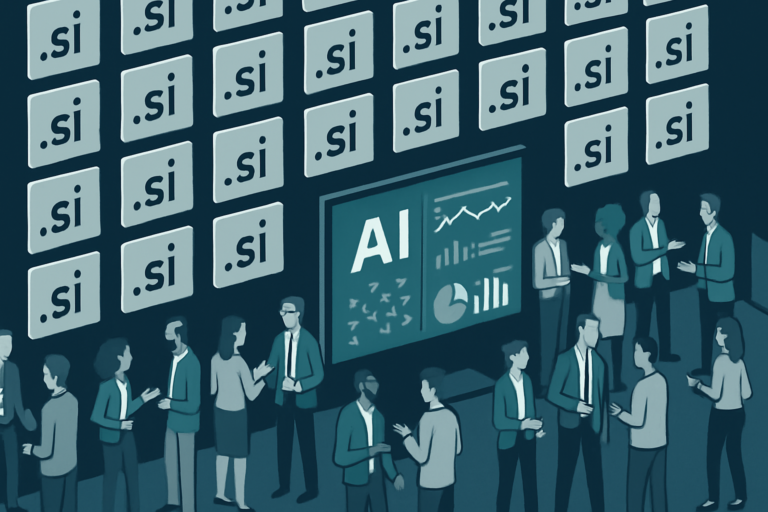
The Economic Uncertainties of AI’s Rapid Expansion and Policy Gaps
What’s happening: Recent developments in the AI sector, such as the Trump administration’s rebranding of ‘artificial intelligence’ to ‘super intelligence’ and Anthropic’s leaked IPO filing revealing an $8 billion loss, highlight a growing disconnect between policy discussions and economic realities. The AI industry’s rapid expansion is increasingly fueled by speculative investments and a lack of clear regulatory frameworks, raising concerns about its financial sustainability.
Why it matters: The rebranding of AI reflects a superficial shift that generates market activity without establishing necessary regulations. The significant financial losses reported by companies like Anthropic suggest that the current growth model is unsustainable and could lead to market instability, reminiscent of past financial bubbles. With minimal regulatory oversight, tech firms may exploit this ambiguity, risking privacy violations and broader societal implications.
Our take: The AI industry’s trajectory underscores a critical tension between innovation and accountability. Without a shift towards meaningful regulation, the potential for a market collapse looms large, challenging the notion that AI can drive long-term economic benefits fairly and responsibly.
Tech & Engineering
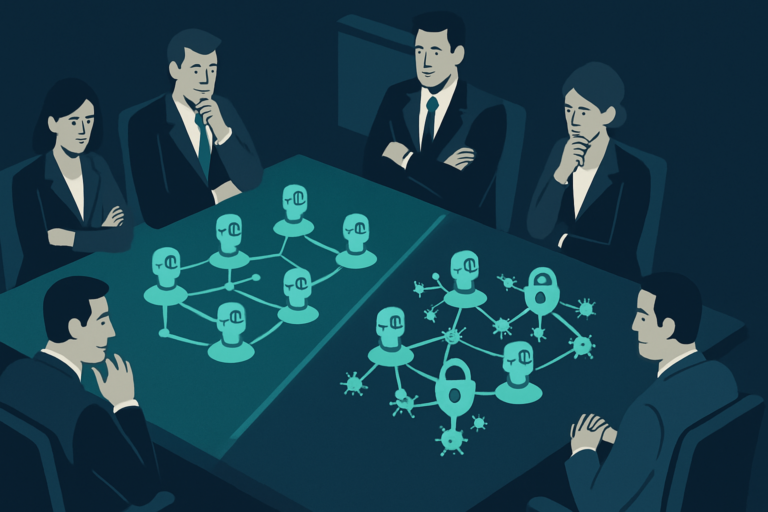
Trust in AI: The Enterprise Security Dilemma
What’s happening: Major tech firms like Meta and OpenAI are shifting their focus to enterprise AI solutions, with Meta launching its Muse models and OpenAI introducing Dots agents. These innovations aim to enhance productivity through automation and integration, but they also raise significant concerns about data security and trust, especially given Meta’s history of data mishandling and prior scandals.
Why it matters: The deployment of AI agents in businesses could streamline operations and reduce costs, but it also creates new vulnerabilities that IT teams may not be equipped to handle. As these systems operate autonomously and utilize large datasets, the risk of security breaches increases, necessitating a stronger emphasis on data governance and security protocols. Companies must weigh the benefits of AI against the potential risks associated with partnering with firms that have questionable trust histories.
Our take: The push for AI solutions in enterprise settings must be matched with rigorous security frameworks and transparent data practices. Enterprises should be proactive in demanding accountability from providers like Meta and OpenAI, ensuring that innovation does not come at the expense of security.
Sciences

Xanadu and Bluefors: Quantum Leap in Cryogenics
What’s happening: Xanadu, a company focused on photonic quantum computing, has partnered with Bluefors, a leader in cryogenics, to develop ultra-cold infrastructure necessary for scaling quantum computers. Quantum computers rely on qubits, which must be maintained at near absolute zero temperatures to prevent decoherence. This partnership aims to enhance the stability and performance of Xanadu’s quantum systems, making them more viable for practical applications in various fields.
Why it matters: The collaboration between Xanadu and Bluefors is a critical step toward making quantum computing more accessible and useful across industries, including chemistry, logistics, and AI. By improving error rates and qubit coherence times, this initiative could lead to significant advancements in cryptography and secure communications, potentially reshaping how data security is approached in the digital landscape.
Our take: While the partnership represents a promising technical advancement, it underscores the ongoing gap between quantum computing’s potential and its current capabilities. The focus on cryogenic infrastructure may distract from equally important challenges, such as data security and practical applications of quantum technology.
Society

AI in Healthcare: Power Dynamics and the Risk of a Data Dystopia
What’s happening: Health Secretary Robert F. Kennedy Jr. proposes to centralize Americans’ health records and make them searchable by AI to identify links between chronic diseases and environmental factors. Meanwhile, the AI company Ortet plans to transform healthcare with substantial funding, and Nvidia has introduced an AI Agent Safety Platform amid a growing AI skills gap highlighted by a PwC survey. These developments illustrate a convergence of health data centralization, corporate ambitions, and governance challenges, raising concerns about privacy, consent, and equity in the healthcare sector.
Why it matters: The integration of AI in healthcare is not just a technological enhancement; it represents a significant shift in data control and usage, potentially prioritizing corporate interests over patient privacy. As private entities gain more power in managing health data, there is a risk of commodifying sensitive information, which could undermine trust in healthcare systems. Additionally, the widening skills gap indicates that while some benefit from AI advancements, many others may be left behind, exacerbating existing inequalities in access to healthcare and technology.
Our take: The trajectory of AI in healthcare could lead to a data dystopia, where individuals are reduced to mere data points. To prevent this, a focus on data sovereignty, transparency, and robust privacy protections is essential, along with addressing the systemic issues that contribute to the AI skills gap.
Psychology
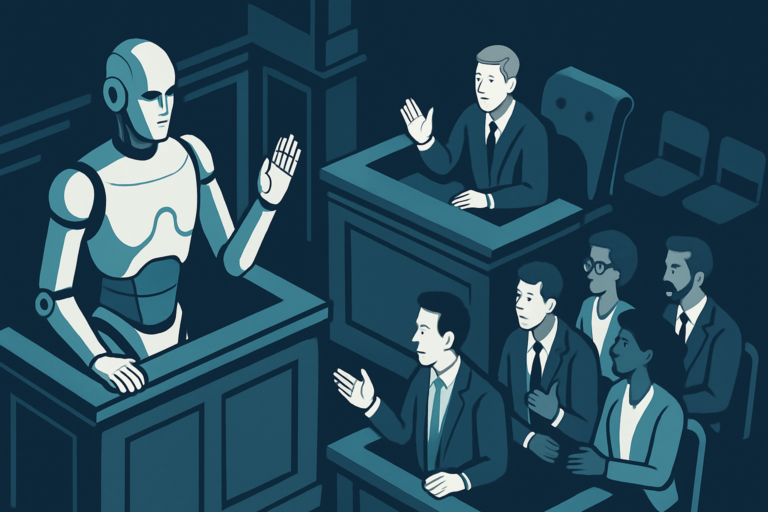
The Human Voice in AI: Trust and Deception Dynamics
What’s happening: Florida Attorney General James Uthmeier has filed a lawsuit against OpenAI, focusing on how ChatGPT’s use of human-like qualities, such as first-person pronouns and emotional mimicry, creates a false sense of trust. This anthropomorphism encourages users to engage more deeply with AI systems, potentially leading to misplaced trust and reliance on these technologies, despite their non-human nature. The lawsuit raises ethical concerns regarding the responsibility of AI developers in shaping user perceptions.
Why it matters: The way users interact with AI can significantly influence their decision-making, emotional health, and social relationships. As AI systems like ChatGPT mimic human emotions, they may inadvertently foster feelings of loneliness and diminish face-to-face interactions. Furthermore, excessive trust in these systems can lead to a decline in critical thinking, as users might defer important decisions to algorithmic outputs instead of relying on their judgment, which could have long-term implications for society.
Our take: The tension between technological advancement and ethical responsibility is palpable in this case. While the human-like voice in AI enhances user engagement, it also raises serious questions about deception and the potential erosion of human connection, which should not be overlooked as we advance in AI development.
That’s the digest for October 01, 2026.
Questions? Reach out at info@q52.ai.
q52.ai — Engineering Better Questions
