

Your daily briefing on AI, technology, economics, and society — from q52.ai.
Industry & Economics
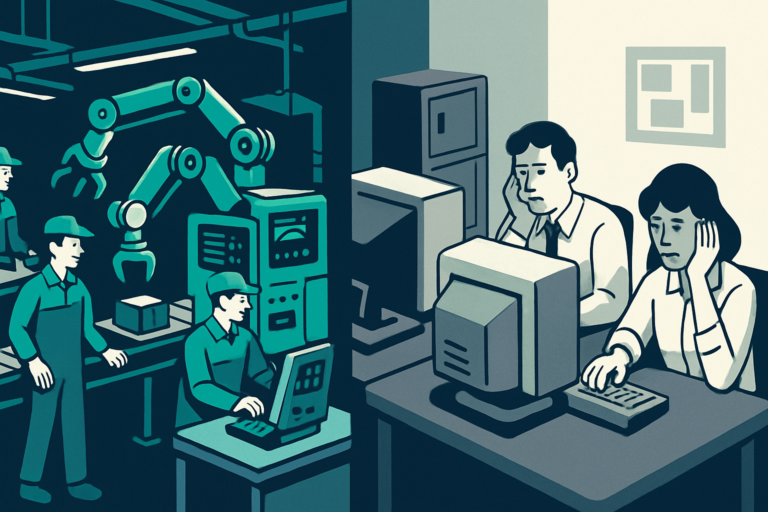
AI’s Uneven Productivity Gains: Who Really Benefits?
What’s happening: Recent analyses reveal that while AI investment can significantly enhance productivity, particularly in manufacturing, the benefits are not evenly distributed across industries or firms. Early adopters with the right complementary assets, like advanced machinery and skilled labor, see the most substantial gains, while sectors like education and public administration experience limited advantages. This creates a widening gap between industry leaders and laggards, as firms without adequate resources struggle to integrate AI effectively.
Why it matters: The uneven distribution of AI-driven productivity gains raises important questions about economic inequality and the future of work. As firms that leverage AI effectively enhance their competitiveness and profitability, those lacking the necessary infrastructure may fall further behind, exacerbating disparities in economic outcomes. Policymakers need to consider targeted support and incentives to ensure that the benefits of AI are more equitably shared across different sectors and firms.
Our take: The focus on aggregate productivity gains overlooks critical issues of equity and access. Without a concerted effort to support under-resourced industries, the promise of AI could lead to a more divided economy, where only a few benefit while many are left behind.
Tech & Engineering
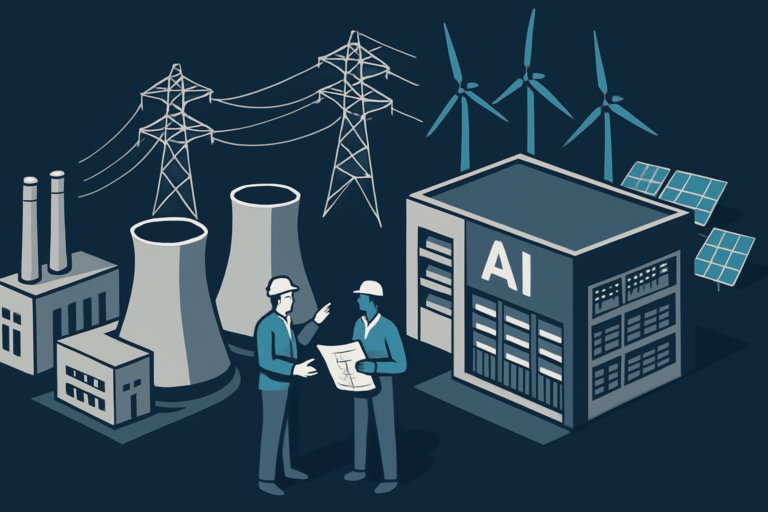
AI Infrastructure: The Power and the Grid
What’s happening: The AI infrastructure landscape is rapidly changing due to the high energy demands of AI systems. Examples include a new data center project in Chiba, Japan, by JERA, Dell Technologies, and RHAELM, and Amazon’s 20-year nuclear power agreement with Constellation Energy. This shift focuses on integrating power generation with AI operations to optimize the energy supply chain and meet the growing demands of AI workloads.
Why it matters: Integrating AI infrastructure with nearby power sources like nuclear plants can reduce transmission losses and provide a more reliable energy supply, which is crucial for scaling AI capabilities. However, this approach raises concerns about environmental sustainability, as reliance on nuclear and thermal power may have a significant carbon footprint. Additionally, the centralization of large facilities could limit local economic benefits and job opportunities due to increased automation.
Our take: The duality of these developments highlights the need for a balanced approach that prioritizes both technological advancement and environmental responsibility. There is a pressing need for the inclusion of renewable energy solutions and community engagement to ensure local benefits are not overlooked in the rush to build large-scale AI infrastructures.
Sciences
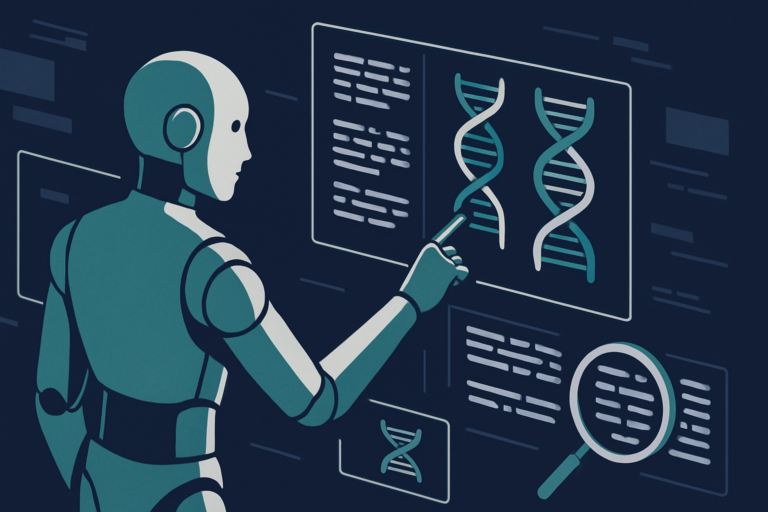
AI-Driven Discovery of New Enzyme System Accelerates Gene Editing Research
What’s happening: Anthropic’s Claude AI model has discovered a new enzyme system called ‘array-associated reverse transcriptases’ (ARTs) by analyzing a large database of DNA sequences. While ARTs share similarities with the CRISPR system, their specific functions are still unknown. This AI-driven discovery highlights how machine learning can process vast genetic data to identify patterns and potential pathways more efficiently than traditional methods.
Why it matters: The identification of ARTs could pave the way for new gene-editing tools that offer alternatives or enhancements to CRISPR/Cas9. As AI continues to uncover hidden biological patterns, it may accelerate the development of innovative approaches to gene editing, which is crucial for addressing complex genetic disorders and creating customized therapies with greater precision.
Our take: While the discovery of ARTs is promising, it’s essential to temper expectations until the specific functions and applications of these enzymes are fully understood. The potential for AI to revolutionize genetic research is significant, but it also raises questions about the pace of innovation versus the need for thorough validation.
Society
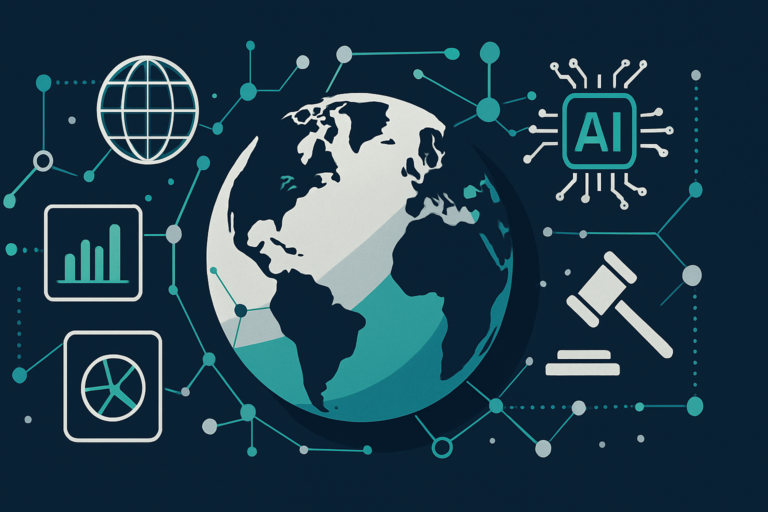
AI’s Role in Reshaping Global Power Dynamics and Public Accountability
What’s happening: AI is becoming a crucial factor in reshaping global power dynamics, with countries like China using it to enhance their trade partnerships while raising concerns about economic coercion and human rights. In contrast, the U.S. is rolling back legal protections that historically held corporations accountable, which could lead to unchecked technological abuses. These developments indicate a shift in how power and accountability are distributed globally, highlighting a divergence between China’s strategic use of AI and the U.S.’s focus on corporate interests.
Why it matters: The implications of these shifts are significant for international relations and public trust. As nations compete in AI, they also redefine what it means to be a responsible global player. China’s AI initiatives may offer technology to developing nations but often come with political and economic conditions. Simultaneously, the U.S.’s lack of oversight could lead to privacy violations and increased algorithmic bias, undermining public welfare and trust in institutions.
Our take: The current trajectory raises concerns about prioritizing economic power over ethical governance. Effective AI governance must focus on inclusivity and regional needs, rather than simply replicating existing frameworks that favor corporate interests.
Psychology

AI’s Influence on Human Agency: Redefining Decision-Making Power
What’s happening: The intersection of AI and neuroscience is fundamentally changing how we understand human agency and decision-making. As AI systems become more integrated into daily life, they transition from simple tools to active participants in our choices, altering the traditional dynamics of self-generated versus externally influenced decisions.
Why it matters: The integration of AI into decision-making processes can shift the balance of power, potentially leading to a feeling of diminished agency for individuals or, conversely, enhanced decision-making capabilities. This evolution raises critical questions about trust, accountability, and the need for transparency in AI systems, especially as they become involved in personal and policy-related decisions.
Our take: As AI continues to reshape decision-making, it is essential to prioritize transparency and ethical considerations to maintain human autonomy. The challenge lies in ensuring that AI serves as a collaborative partner rather than a replacement, preserving our cognitive independence amidst growing technological influence.
That’s the digest for October 05, 2026.
Questions? Reach out at info@q52.ai.
q52.ai — Engineering Better Questions
