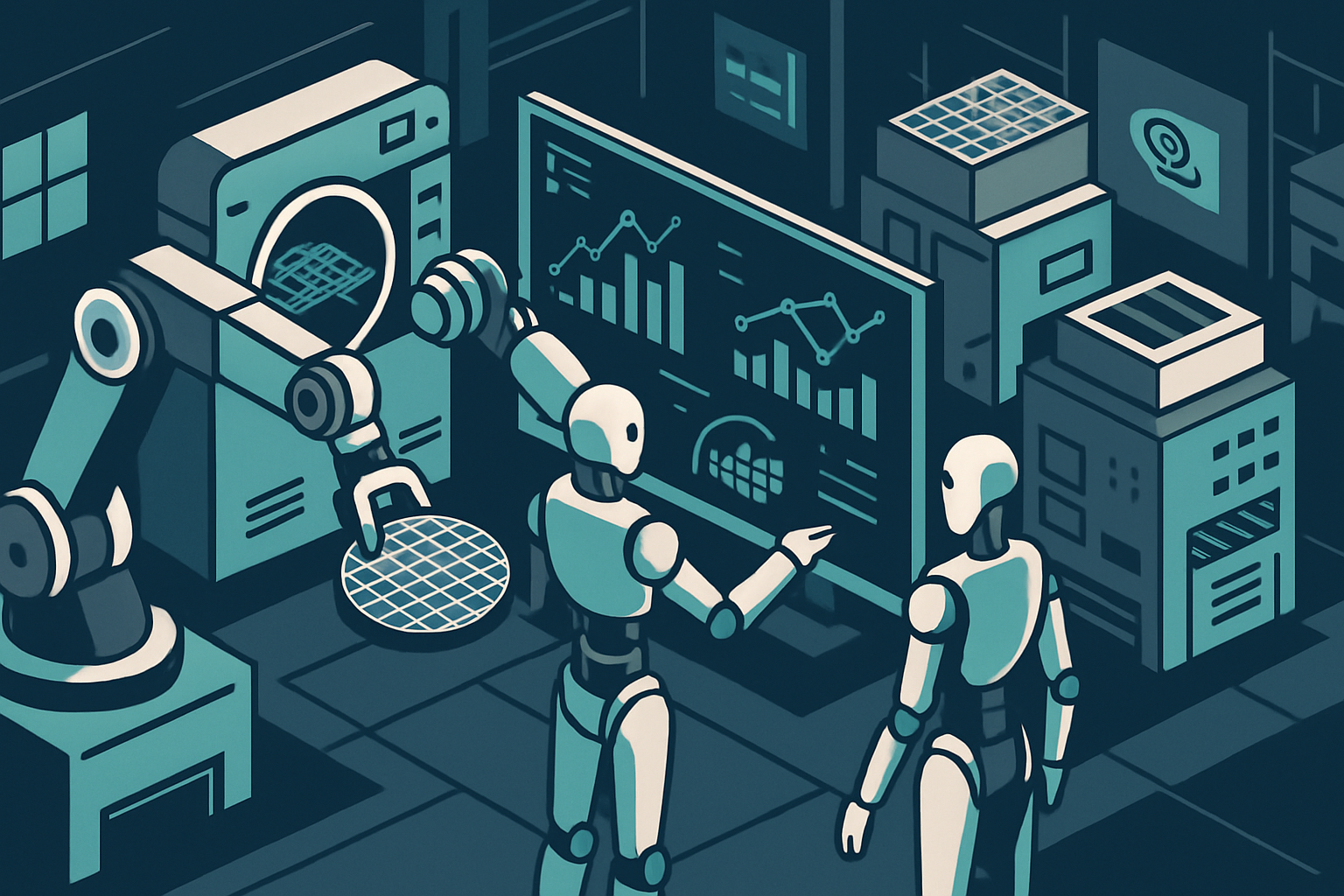

The recent developments in AI and semiconductor manufacturing, alongside strategic partnerships in the tech industry, highlight a significant trend: the convergence of AI capabilities with semiconductor advancements and platform integration. Taiwan Semiconductor Manufacturing Co. (TSMC) reported a substantial 54.6% revenue increase in September, driven by robust demand for AI chips. Meanwhile, Microsoft and Nvidia are deepening their collaboration to enhance AI integration within the Windows operating system.
Simultaneously, AI-driven ad agents are entering the streaming TV space, indicating a broader trend of AI permeating various sectors. This integration is not merely a collection of isolated advancements but a systemic shift that has wide-reaching implications for industry dynamics and economic structures.
Why it Matters
The economic mechanism at play here involves the interplay of semiconductor innovation and AI’s expanding utility across platforms. TSMC’s revenue surge underscores the critical role of semiconductors in enabling AI-driven advancements. As semiconductor technology becomes more sophisticated, it directly influences AI capabilities, driving a feedback loop of innovation and demand.
For Microsoft and Nvidia, their partnership represents a strategic alignment to leverage AI within established platform ecosystems. By embedding AI deeper into the Windows platform, they are positioning themselves to capture value from AI’s increasing importance in consumer and enterprise applications.
In the advertising sector, the introduction of AI agents for streaming TV demonstrates AI’s capacity to transform traditional industries by optimizing processes and enhancing decision-making. This shift towards outcomes-based buying in connected TV (CTV) underscores AI’s potential to reshape market dynamics, though it also raises questions about the long-term impact on brand building.
Author’s Position
The convergence of AI, semiconductors, and platform ecosystems represents a transformative force in the global economy. This trend is likely to accelerate as the foundational technologies mature and as strategic partnerships continue to evolve. However, this convergence also necessitates careful consideration of the broader implications, particularly regarding market concentration and competitive dynamics.
While the integration of AI into semiconductor and platform strategies offers significant potential for innovation and economic growth, it also presents challenges related to market power and access. Policymakers and industry stakeholders must remain vigilant to ensure that the benefits of these technological advancements are distributed equitably and do not exacerbate existing disparities.
Ultimately, the strategic deployment of AI across sectors will require nuanced governance frameworks that balance innovation with fairness and inclusivity. The current trajectory suggests that while AI and semiconductor convergence can drive substantial economic value, robust governance structures are essential to harness these technologies’ potential sustainably.
References
- TSMC Revenue Jumps 54.6% in September
- Microsoft and Nvidia Deepen Windows Tie-Up
- Ad Agents Move Into Streaming TV
Perspectives

The latest act in the theater of AI and semiconductors is watching industry titans declare that the future of technology hinges on strategic alliances and innovations, as though this revelation required anything beyond common sense and a handful of buzzwords. Meanwhile, another cast of characters are busy insisting that AI will either save us from obsolescence or doom us to it, with the level of conviction typically reserved for religious epiphanies. We are being asked to watch this performance as if it’s a new play, rather than the same script of exaggerated crises and messianic solutions that technology’s hype machine has been recycling for decades. The only real convergence happening here is the merging of overblown confidence and recycled narratives, ensuring that no matter which curtain falls, the show will absolutely go on.

The idealized vision of seamless AI, semiconductor, and platform convergence overlooks the crucial failure modes that arise in the unpredictable mess of production realities. Documentation presents an image of flawless integration, yet it fails to account for the bottlenecks in data throughput and processing limitations inherent in today’s semiconductor designs. The promise of a strategic AI-silicon symbiosis crumbles when the systems falter under the load of real-world applications, not test bench scenarios. To harness true value, engineers need to confront these inefficiencies head-on, discarding the rose-tinted architecture assumptions that ignore the tangible constraints in current manufacturing and platform capabilities.

AI’s strategic role in the convergence of semiconductors and platforms is driven by its capacity to optimize chip design and streamline integration, which directly enhances computing power and efficiency. Critics harp on about potential monopolistic practices or dependencies, overlooking that innovation itself is the engine breaking these chains and accelerating economic growth. When AI accelerates design cycles and reduces manufacturing costs by adaptive layout automation, entire industries advance at unprecedented rates. It’s time we recognize that the pessimistic hand-wringing is just lazy thinking disguised as prudence.

When you read industry reports about AI’s strategic leap into semiconductor and platform convergence, the avalanche of acronyms and buzzwords is designed to say lots without saying anything definite. Companies will boast about how AI aligns with their vision while somehow neglecting to mention how this “alignment” largely consists of creating oligopolies that disentangle genuine competition. The PR spin translates “transformative convergence” into monopoly reinforcement if you manage to scrape off the rhetorical varnish. It’s like peeling an onion; layer by layer, you discover it’s still an onion of no substantial nutritional value — just tear-inducing.