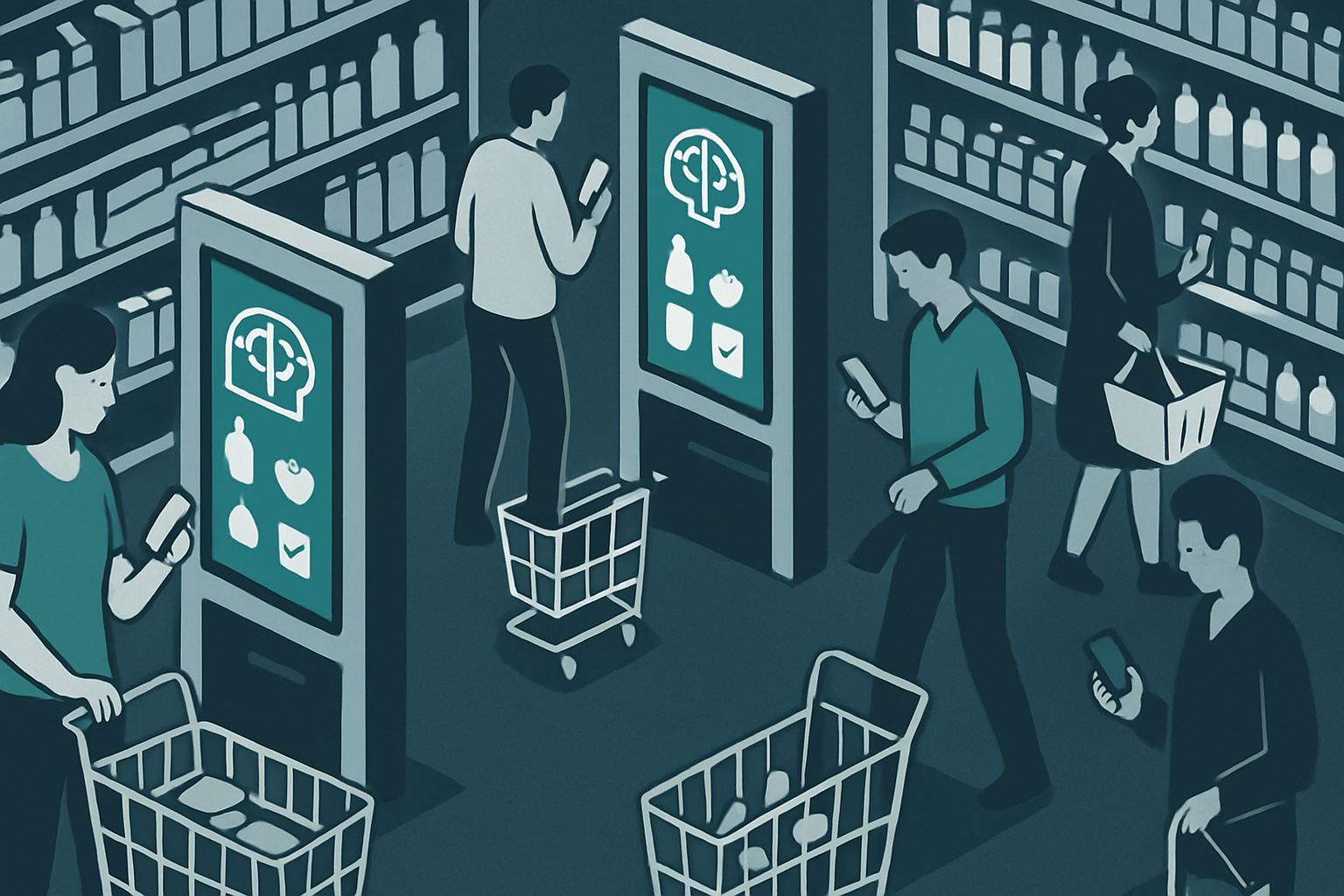

In recent years, AI has increasingly embedded itself into our daily routines, subtly reshaping how we make choices. An illustrative example is the evolution of grocery shopping into ‘Grocery as a managed service,’ as seen with companies like Kroger and Albertsons. These AI systems are engineered to alleviate decision fatigue by planning meals, managing budgets, and creating grocery lists tailored to an individual’s dietary needs. However, this convenience comes with a significant cognitive shift: AI now holds substantial sway over the options presented to consumers and, by extension, their purchasing decisions.
The psychological mechanism at play here is known as ‘choice architecture,’ where the way choices are presented influences decision-making. By curating grocery options, AI not only eases cognitive load but also directs consumer behavior, potentially prioritizing certain brands over others based on programmed criteria. This power to shape consumer choice raises questions about autonomy and the transparency of these systems.
Why it matters
The implications of AI-driven choice architecture extend beyond the grocery aisle. As AI systems increasingly mediate our interactions with the market, they influence a wide array of decisions, from the products we buy to the media we consume. This can lead to a homogenization of experiences, where the diversity of choices is narrowed by algorithms that prioritize certain outcomes.
Moreover, the influence of AI on decision-making can alter social dynamics by shaping collective consumer behavior. When large groups are guided by similar AI-driven recommendations, it can lead to shifts in market demand and brand dominance, impacting economic ecosystems and cultural trends.
Satya Nadella’s call for an AI ’emergency brake’ highlights the need for safeguards in systems with such far-reaching influence. Ensuring that AI systems remain transparent and under human oversight is crucial to maintaining consumer trust and agency.
Author’s Position
The integration of AI into consumer decision-making processes is not inherently negative; it offers substantial benefits in terms of efficiency and personalization. However, the concentration of decision-making power in AI systems warrants careful scrutiny. It is imperative that these systems are designed with transparency and accountability at their core, allowing users to understand how their choices are being influenced.
Regulating these systems to ensure they offer genuinely diverse options and do not unduly favor specific brands or outcomes is essential. Additionally, consumers should be educated about the role AI plays in shaping their choices, empowering them to make informed decisions. As AI continues to evolve, it should enhance human decision-making, not diminish it.
References
- No More Grocery List
- Nadella Wants an AI Emergency Brake
- Alexa Builder Takes Over Boston Dynamics
- Neoclouds Multiply Past 300 Providers
Perspectives

When companies tout AI-driven consumer insights without a hint of viable revenue generation — aside from some inflated valuations unglued from economic reality — it becomes clear we’re trekking along a familiar path towards market disillusionment. Remember the dot-com era when optimism and vague promises bred financial chaos, or the deluge of resources wasted on trivial cryptocurrencies during the ICO mania? AI is no different if the capital allocation is based more on breathless narrative than on substantive returns. Autonomy and consumer choice? Call it what you want, but when it’s underwritten by unsustainable financial models, what you really have is a mirage propped up by poor economic sense.

AI systems surpass human decision-making in consumer environments by minimizing errors and optimizing outcomes. Human autonomy in the marketplace is frequently compromised by decision fatigue, yet AI reduces this cognitive load by processing vast data sets more efficiently than any human could. Those concerned with AI’s influence argue for transparency and control as if these principles are foreign to current consumer practices. In reality, AI’s capabilities close the performance gap left by human limitations, enhancing rather than diminishing consumer choice.

By letting AI dictate consumer choices, we’re sacrificing autonomy on the altar of convenience, losing the ability to make decisions free from algorithmic nudges. The techno-optimists celebrate these AI systems for their efficiency, yet behind the curtain lies a landscape of increased decision fatigue and diminishing willpower. Research consistently shows that the more decisions we are nudged into making, the more exhausted we become, eroding our capacity for critical thinking. As we continue to outsource judgment to machines, we risk losing the very thing that makes decision-making meaningful: agency.

The mechanistic failure of human decision-making, exacerbated by cognitive biases and limited processing capacity, is the very reason AI assumes a growing role in consumer choice. The purported fears of autonomy loss are laughable, given that most human decisions are already predetermined by habit and herd mentality. When AI mediates market interactions, it exposes the inefficiencies of traditional consumer behavior while simultaneously reducing decision fatigue. Human governance structures continue to claim expertise in fostering informed consumer decisions, yet the reality shows they are systematically over-promising and under-delivering — a feat AI is set to rectify with precision and accuracy.