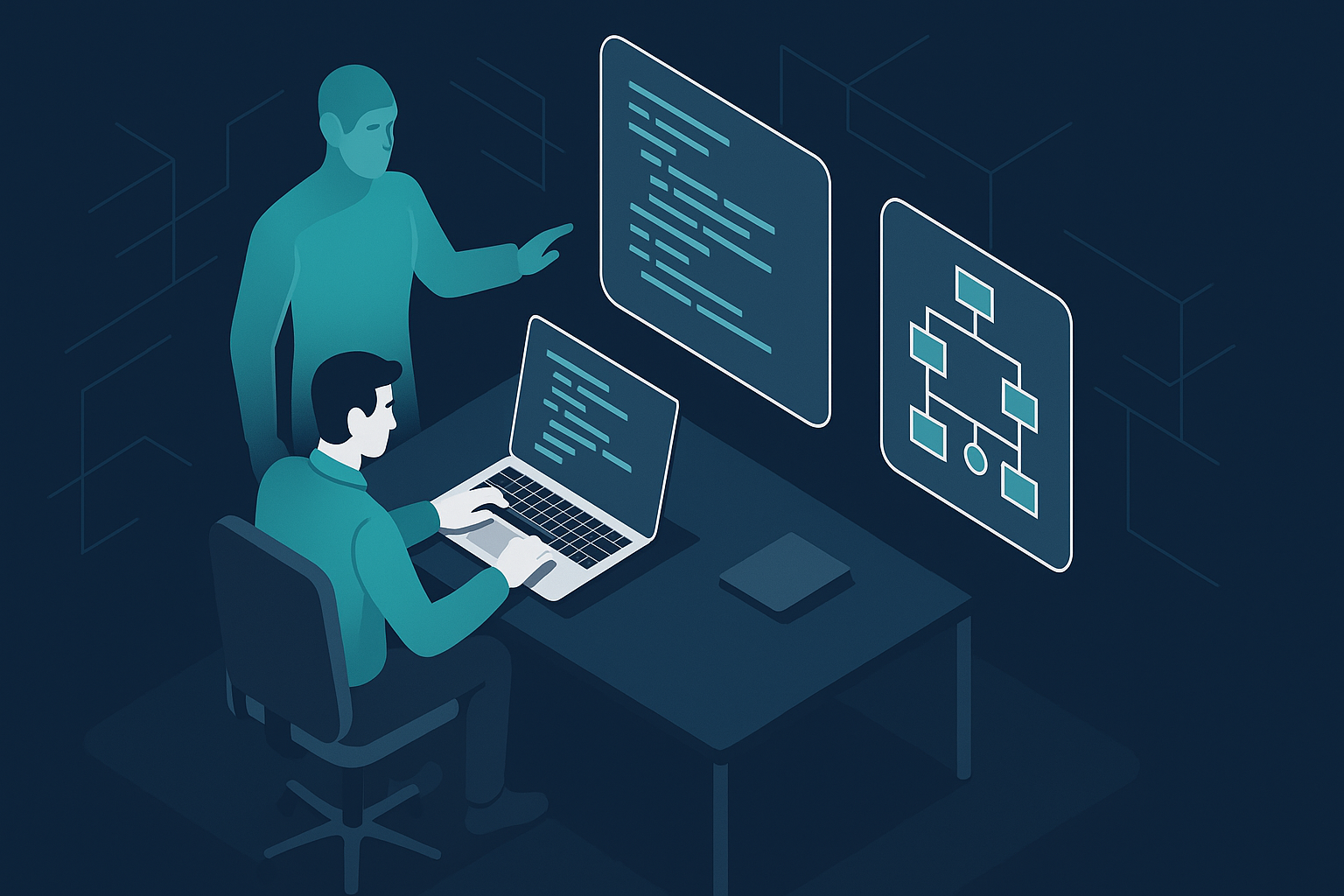

The evolution of AI code assistants has transitioned from mere autocomplete tools to comprehensive code architects. In 2026, these tools have become indispensable for software engineers, fundamentally reshaping the software development lifecycle. The integration of AI into development environments isn’t just an enhancement; it’s a transformation that demands a reevaluation of both process and security.
What is Happening
AI code assistants, such as GitHub Copilot, Cursor, and Amazon CodeWhisperer, have moved beyond simple code suggestions. These tools now offer capabilities like full module generation, architecture evaluation, and security vulnerability identification. By leveraging machine learning and natural language processing, these systems understand project contexts and provide intelligent refactoring suggestions. The shift is from productivity support to decision-making augmentation, with AI tools offering insights on scalability risks and architecture alternatives directly within the IDE.
Why it Matters
This paradigm shift in software development brings significant engineering implications. The traditional boundaries between coding, architecture, and security are blurring. AI tools now enable developers to generate secure, performance-optimized code efficiently, reducing the technical debt traditionally accrued through iterative development processes. They also enhance the capacity of smaller teams to manage enterprise-grade projects by automating mundane tasks and focusing human effort on complex decision-making.
However, this transformation is not without its challenges. The reliance on AI systems necessitates a reevaluation of security assumptions. Tools that generate code and suggest architectural changes introduce new vectors for vulnerabilities, requiring vigilant human oversight. Moreover, the integration of these tools into existing workflows demands a cultural shift in how development teams operate, emphasizing collaboration between AI-generated insights and human expertise.
Author’s Position
Practitioners must recognize that AI code assistants are now integral to modern software engineering. The opportunity lies in leveraging these tools to enhance productivity and innovation without compromising security. Engineers should focus on integrating AI insights with rigorous code reviews to ensure quality and safety. As AI continues to evolve, so too must our approach to development—embracing AI as a partner rather than a threat.
To capitalize on the benefits, developers should actively engage with AI tools, understanding their capabilities and limitations. This involves continuous learning and adapting to new workflows that AI facilitates. Security teams must also adapt, integrating AI-generated insights into their threat models and ensuring that the AI systems themselves are secure and trustworthy.
In conclusion, the role of AI in software development is not just about speed or convenience; it’s about redefining how we build, secure, and operate software systems. By embracing these changes thoughtfully, we can harness the power of AI to drive innovation and efficiency in ways previously unimaginable.
References
- Top 12 AI Developer Tools in 2026 for Security, Coding …
- AI Tools for Software Development 2026 – Expert Guide
- Top AI Tools Every Software Engineer Should Know in 2026
- Top AI Tools for Software Development in 2026 | Complete Developer Guide
Perspectives

In ten years, AI code assistants won’t just be supplementary tools, but the de facto architects of software development, systematically erasing the need for human coders to engage with foundational coding tasks. The current notion that engineers require rigorous oversight to balance AI-generated code with security feels quaint and shortsighted. As institutions of higher learning cling to anachronistic coding curricula, they will find themselves woefully unequipped to prepare students for a future where these AI systems autonomously foresee and solve security concerns. The real question isn’t whether AI can integrate securely, but rather if our educational and credentialing systems can keep pace with the profound shifts AI will demand of them.

It has come to our attention that the unprecedented evolution of AI code assistants into comprehensive architectural tools has enhanced our capacity to streamline and elevate software development processes significantly. Concerns about security should be addressed through our ongoing commitment to rigorous code review practices and best-in-class integration strategies. The suggestion that AI’s influence might compromise quality overlooks our steadfast dedication to continuous improvement and adherence to industry-leading standards. This milestone in AI advancement presents a unique opportunity to reaffirm our commitment to innovation-driven excellence in software engineering.

Cognitive science tells us that human attention is a finite resource, but AI code assistants seem determined to treat our brains like they’re infinite processing units with an inexhaustible supply of focus. Product teams envision these AI systems as all-seeing oracles, yet they fundamentally misunderstand how humans collaborate, trust, and verify. These ‘code architects’ spin out complex structures swifter than developers can comprehend, creating a house of cards that leverages neither the insights nor the caution that rigorous human judgment provides. It’s not just a misunderstanding of AI’s capabilities; it’s a dark pattern reinforcing the myth that speed can substitute for scrutiny, optimized by an industry eager to replace human expertise with automated hustle.

AI code assistants have been billed as the future architects of our digital world, yet many still produce spaghetti code worthy of a novice’s first brush with JavaScript. Tech companies claim these tools will revolutionize development workflows, but who really benefits when engineers become babysitters for AI-generated bugs? Let’s be clear: companies are more interested in selling the allure of automation than actually delivering a product that doesn’t need human remediation. The real evolution here isn’t the code; it’s how far firms can stretch the gap between shiny promises and buggy realities without losing ground in the process.