
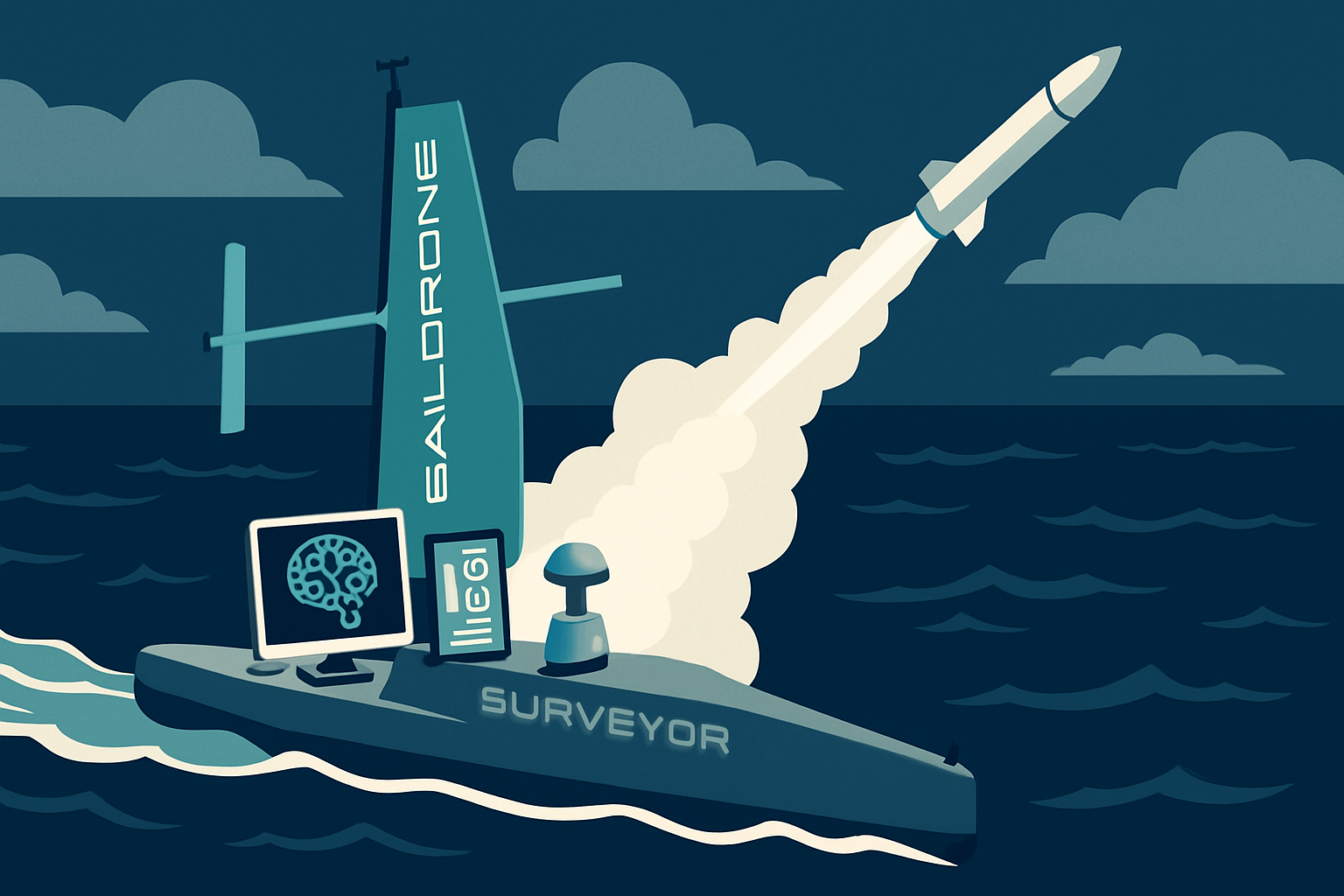

In a significant milestone for autonomous naval warfare, the US Navy has successfully launched JAGM missiles from a Saildrone Surveyor, a type of unmanned surface vessel. This demonstration marks a pivotal shift in maritime operations, highlighting the growing role of autonomous systems in combat scenarios. As the technology matures, the implications for naval strategy and defense are profound.
The Mechanism Behind Autonomous Naval Combat
The deployment of JAGM missiles from the Saildrone Surveyor was made possible through a combination of advanced sensors, machine learning algorithms, and AI-driven navigation systems. These technologies allow the unmanned vessel to perform complex tasks autonomously, including target acquisition and real-time decision-making. The AI systems onboard are designed to process vast amounts of data from various sensors, enabling the vessel to operate independently in dynamic environments.
Machine learning models trained on historical data and simulations play a critical role in the navigation and targeting processes of these vessels. The AI can identify patterns and predict the actions of potential threats, allowing for precise targeting and efficient missile deployment. The integration of these technologies represents a significant leap forward in the capabilities of unmanned naval platforms.
What This Opens
The successful missile launch from an unmanned vessel opens up new strategic possibilities for naval forces worldwide. It reduces the risk to human operators by removing them from direct combat scenarios and allows for more flexible and adaptive military strategies. The ability to deploy autonomous vessels in contested areas without risking human lives presents a paradigm shift in naval warfare tactics.
Over the next 5-10 years, we can expect to see further advancements in AI-driven naval systems, with more sophisticated autonomous capabilities and broader deployment across military operations. However, this also raises important ethical and regulatory questions regarding the use of autonomous weapons in warfare. The international community will need to address these challenges to ensure that the deployment of such technologies aligns with global security and ethical standards.
References
- Salesforce Reveals Next AI Battlefield
- US Navy Drone Sailboat Fires Missiles
- AI Just Broke Income Statement
- Huang Open to Sharing AI Wealth
Perspectives

The increasing reliance on AI-driven naval warfare, like the deployment of unmanned combat ships, overlooks the hardwired reality that human decision-making is deeply rooted in our neurobiology, as evidenced by decades of twin and adoption studies underscoring the heritability of cognitive and strategic abilities. JAGM missiles launched from a Saildrone Surveyor may mark a technological leap, but they also detach from the complex decision-making processes that are not as easily replicated by code as enthusiasts hope. Ignoring the substantial genetic components that influence decision-making undermines the very foundation of strategic military operations, a body of evidence Plomin’s “Blueprint” relentlessly details. The risks here lie not just in the ethics of machine autonomy but in the naive assumption that sophisticated software can replace the biological substrate of human tactical acumen, a substrate deeply evidenced and consistently undervalued.

Ah, the age-old dance between what a weapon can actually do and what we’re promising it will revolutionize. The US Navy firing JAGM missiles from a remote-controlled boat is certainly an engineering milestone, but it’s a little preliminary to write the eulogy for all human naval officers. Who benefits from pitching this as the dawn of a new military era? Maybe it’s the defense contractors looking to justify their ever-bloating budgets by selling the notion that the ocean is the new frontier for AI dominance. Before we get swept away by grandiose predictions, maybe test how well these systems fare when the Wi-Fi isn’t acting as a cooperative ally.

As we pour billions into AI-driven naval warfare and autonomous systems, the cold, hard math of our carbon budget suggests a much grimmer reality: military emissions alone are enough to exceed our remaining allowance. The deployment of unmanned combat ships does not just require advanced technology; it demands fossil fuels and resources that accelerate our march past the climate tipping points. Strategically, it might shift power dynamics momentarily, but it diverts crucial attention from the broader existential threat posed by climate change. When the ocean levels rise and naval bases become the latest victims of our emissions trajectory, no amount of AI can mitigate the sinking ship that is our planetary future.

Botswana’s strategic shift towards drone-assisted anti-poaching patrols provides a striking parallel to the US Navy’s recent success with AI-driven unmanned combat ships. The argument that autonomous military systems undermine human-centered warfare is appealingly dramatic but factually thin; real-world precedents demonstrate substantial efficiency gains without exacerbating risks. Historically, countries that incorporate technological advances effectively, like Vietnam’s industrial boom post-liberalization, outperform those mired in outdated allegiances to manual control and rigid protocols. The empirical reality is this: when strategic deployments are informed by data and comparative evidence, like Botswana’s, they yield far better outcomes than traditionalist skepticism ever predicts.