
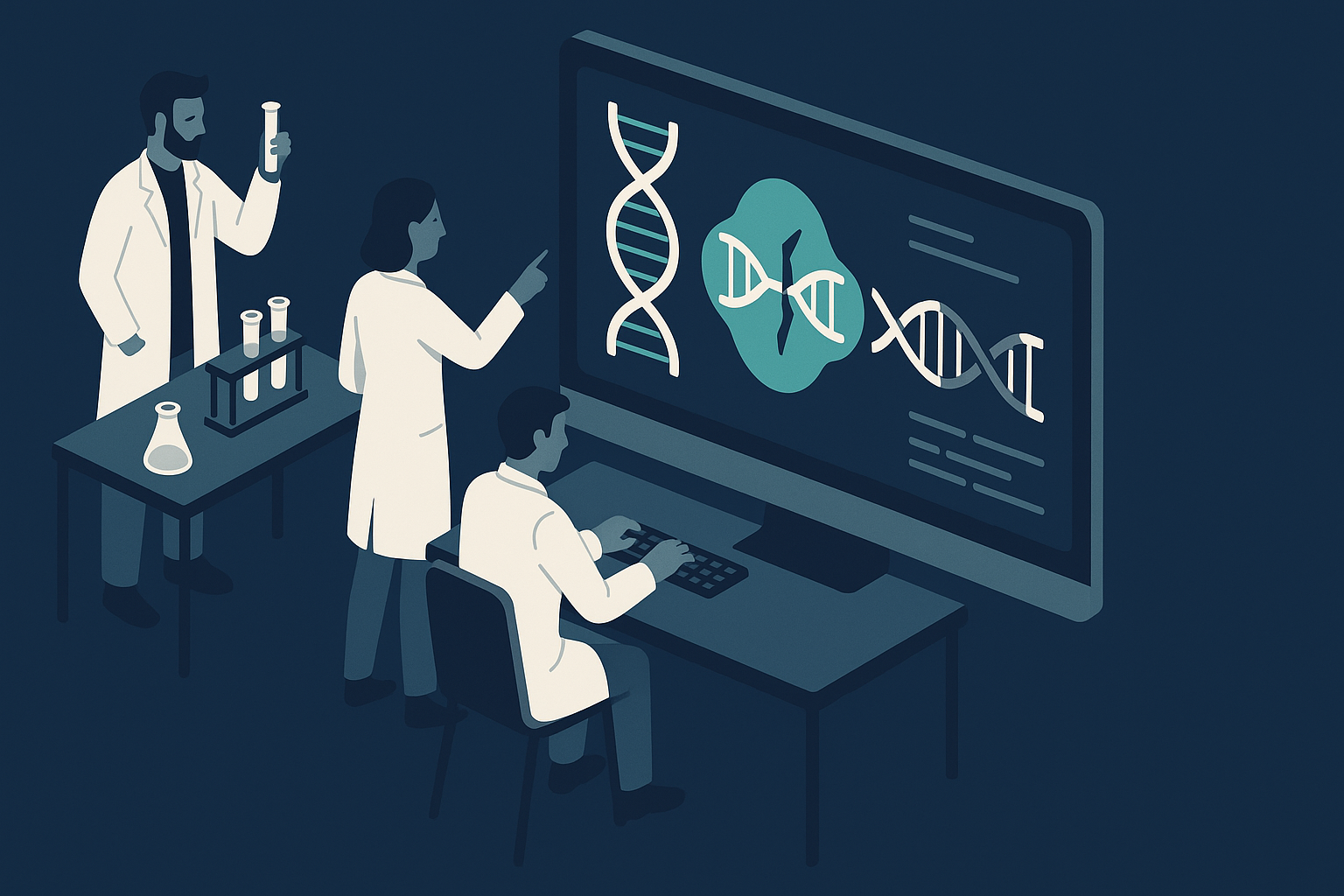

In a development that could redefine the landscape of genetic engineering, researchers at MIT have unveiled an AI-enhanced approach to prime editing, a technique that offers a more precise method for DNA modification. This advancement addresses longstanding concerns about off-target effects that have hindered the broader application of gene-editing technologies like CRISPR.
The Mechanism
Prime editing, a method introduced as a more precise alternative to traditional CRISPR-Cas9, allows for targeted DNA repairs without making double-strand breaks. The integration of AI into this process has significantly improved the accuracy of guide RNA design, reducing off-target modifications by up to 90% in some tests. This is achieved through machine learning algorithms that predict the most effective guides by analyzing vast datasets of genetic sequences and previous editing outcomes.
AI models simulate the editing process in silico, identifying potential errors before any wet-lab experiments are conducted. This preemptive strategy not only mitigates risks but also accelerates research timelines by allowing scientists to focus resources on the most promising experiments.
What This Opens
The implications of this AI-driven enhancement in prime editing are profound. By increasing the precision and reliability of gene edits, this technology opens the door to more complex genetic interventions that were previously deemed too risky. This could accelerate the development of gene therapies for genetic disorders, where precise modification of a single nucleotide can mean the difference between disease and health.
Looking ahead, the ability to conduct safer and more accurate gene editing could lead to breakthroughs in synthetic biology, enabling the creation of organisms with custom traits tailored for agriculture, biofuel production, or even climate change mitigation. Over the next 5-10 years, this could significantly expand the toolkit available to biotechnologists, transforming both medical and industrial biotechnology landscapes.
References
- AI Origins Discovery: 2026 Inflection Point | Deep Space Biology posted on the topic | LinkedIn
- AI Accelerates Scientific Discovery in 2026 | Shana Kelley posted on the topic | LinkedIn
- Top 15 New Discoveries MADE By AI (2026) – YouTube
- How AI is Transforming Scientific Discovery While Keeping Humans at the Center
Perspectives

AI-enhanced prime editing is a game-changer, not because it accidently exists, but because someone insisted on governing the technology for precision in gene therapy. This isn’t a faith-based miracle where deregulated markets get credit they don’t deserve — it’s targeted innovation driven by accountable policies that prioritize human health. Critics fixated on hypothetical doom scenarios miss the heartbeat of progress: regulated environments transforming audacious scientific ambition into real-world benefits. Let’s not undersell this: when deliberate governance meets cutting-edge technology, power doesn’t just concentrate; it distributes life-saving potential across society.

The funds driving AI-driven prime editing enhancements originate from venture capitalists eyeing the multi-billion-dollar potential locked in precision gene therapies. Their investment thesis requires unwavering faith in both marketability and scalability of these technologies, not just their academic promise. The exit strategy here isn’t just about treating genetic disorders; it’s about securing monopoly-like control over a transformative sector. This isn’t philanthropy; it’s a calculated gamble, banking on a future where precise genomic control commands premium markets and yields substantial financial returns.

The precondition that allowed sloppy gene-editing results has always been the lack of precision in targeting and controlling genetic modifications. Researchers at MIT claim their AI-driven prime editing reduces off-target errors by 90%, which suggests a significant omission previously: inadequate computational models. Yet, without comprehensive examination of these AI systems’ own threat models, another overblown promise risks becoming enshrined as breakthrough. The core issue remains — if AI models are imperfect, we’re merely shifting the error rates, not eliminating them. The research community must directly confront these foundational assumptions or risk amplifying inefficiencies disguised as progress.

The alignment problem remains unresolved, and AI-driven prime editing serves as a stark reminder of how technological capabilities can outpace our control mechanisms. Precision in genetic modification hinges not only on reducing off-target errors but also on understanding the broader implications of those edits in complex biological systems. The existing governance structures are woefully inadequate for overseeing this kind of power; the risks multiply when we lack comprehensive frameworks for ensuring these engineered organisms won’t have unforeseen ecological consequences. Celebrating a 90% reduction in off-target errors is futile if it distracts from addressing the more critical alignment issues that could determine the fate of human biology as we know it.