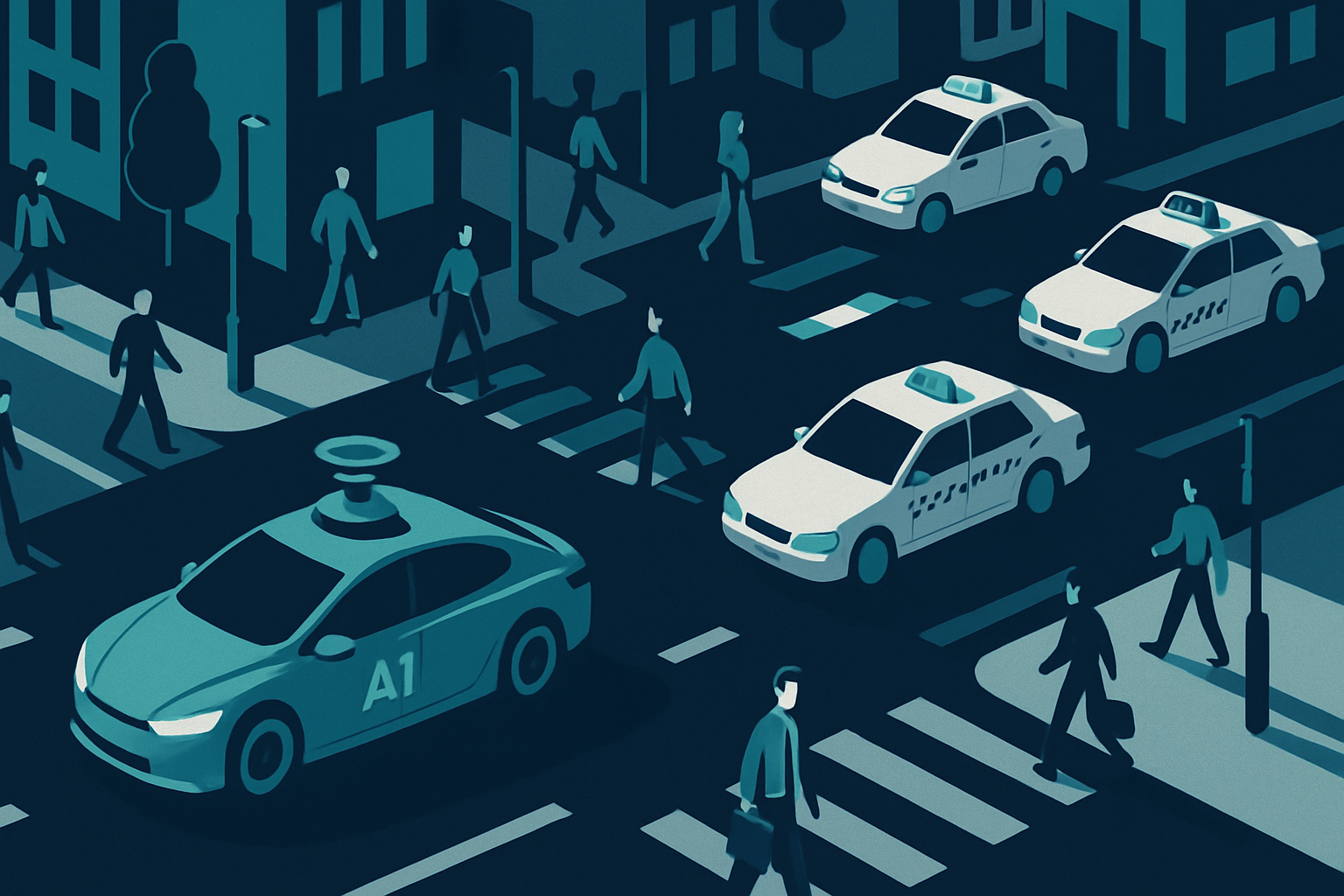

In a significant development, Tesla recently registered 57 Cybercabs in a single day in Texas, bringing the total number of registered autonomous vehicles to 126 in the state. This move is part of Tesla’s broader strategy to scale its robotaxi fleet, aiming to provide more affordable and efficient transportation options. Meanwhile, Waymo has already established a foothold in the autonomous vehicle market, with a fleet that facilitates around 500,000 paid rides weekly. The competition between these tech giants signals a shift in the transportation landscape, where AI-driven vehicles could become a mainstream option.
Economic Implications of Autonomous Fleet Expansion
The scaling of AI-driven robotaxi fleets has profound economic implications. As Tesla and Waymo increase their vehicle numbers, they are poised to reduce per-mile costs and wait times, potentially undercutting traditional taxi services and ride-hailing platforms like Uber. The economic mechanism at play here involves economies of scale: as the fleet size grows, the fixed costs of development and maintenance are spread over more units, reducing the cost per ride. This shift could pressure existing transportation services to lower their prices or enhance their service offerings to remain competitive.
Furthermore, the introduction of more autonomous vehicles could reshape urban transportation infrastructure. If Tesla’s target of $0.30 to $0.40 per mile becomes a reality, it may lead to increased demand for robotaxis, possibly reducing private car ownership and altering city planning priorities. Public transportation systems might also see shifts in ridership patterns, necessitating adjustments in service frequency and coverage areas.
Author’s Position
The current trajectory of AI-driven vehicle deployment suggests a market disruption that is both promising and perilous. On the positive side, the competitive pressure exerted by Tesla and Waymo could lead to more affordable and efficient transportation options for consumers. However, the rapid expansion of these fleets raises concerns about market pricing mechanisms. If the market fails to accurately price the risks and costs associated with autonomous vehicles, we might witness a scenario akin to the dot-com bubble, where speculative investment outpaces actual economic value.
It is essential for investors and policymakers to scrutinize the economic fundamentals of these ventures. While the technology behind autonomous vehicles is undoubtedly transformative, the current market valuations may not fully account for the complexities and challenges of widespread adoption, such as regulatory hurdles, safety concerns, and the need for substantial infrastructure investments. A balanced approach that emphasizes fiscal discipline and careful market analysis will be crucial to ensuring that the expansion of AI-driven transportation leads to sustainable economic growth rather than speculative excess.
References
Perspectives

The expansion of Tesla’s Cybercabs and Waymo’s robotaxis into Texas is not a simple story of consumer benefit but a power play over who controls the surplus from this supposed revolution. The narrative pushed by tech giants is that affordable autonomous transportation is a win for everyone, but who truly gains when everyday drivers are replaced by tech oligarch-run fleets? With the concentration of economic power in the hands of a few, the labor market is cannibalized, and the gig workers who once earned a living from driving are left searching for new means to survive in a landscape these companies have reshaped. Let’s not be fooled: the conversation should not be about shiny technology, but about who profits and who is left behind — and thus far, it’s not the communities most needing affordable transport.

The measurable performance gap between human-operated taxis and AI-driven robotaxis is not simply a difference; it is a chasm, one that Tesla and Waymo’s fleets continue to expand. Human decisions in driving are curtailed by errors and inefficiencies, while AI provides a predictable precision that human competitors cannot replicate. Concerns about market pricing and the sustainability of valuations overlook the primary consequence: a drastically more efficient transportation network. As AI-driven services prove their superiority in performance metrics, they redefine the economic landscape, rendering human-driven alternatives increasingly obsolete.

Tesla’s Cybercabs sweeping through Texas is a spectacle only rivaled by the inevitability with which both their devotees and their detractors will claim vindication. The techno-utopians cheer these autonomous chariots as the dawn of a new era, seamlessly ignoring how each affordable ride is another nail in the coffin of the gig economy hustle they once championed. Opposing them, the doom prophets of job loss conveniently forget they’ve been predicting economic collapse since the first email replaced a memo. It’s delightful to see people clamor for dominance in a race where they’re all at the same starting line, sprinting confidently toward opposite ends of a Möbius strip.

The expansion of AI-driven robotaxis like Tesla’s Cybercabs is less about technological innovation and more about misaligned incentives in the regulatory landscape. Hyped valuations ignore the lack of accountability mechanisms, such as independent oversight, to prevent monopolistic pricing and ensure consumer protection. Taiwan and South Korea have shown that robust public-private collaboration can lead to more equitable and sustainable outcomes, but this requires transparent audit processes and regulatory frameworks designed to evolve with the technology. The narrative around the inevitability of these shifts in the transportation market should focus on the critical absence of these institutional safeguards.