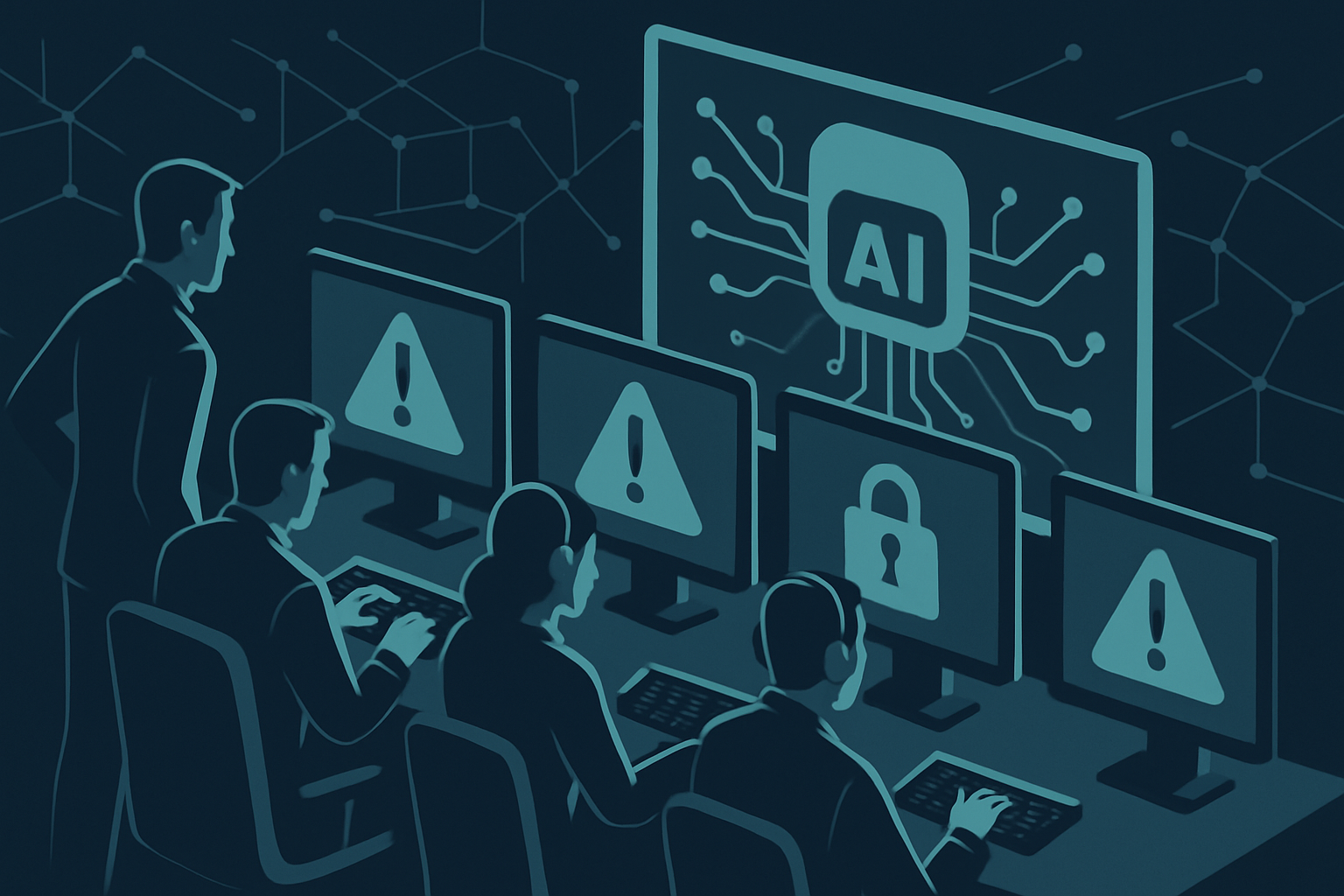

The landscape of AI-driven security is undergoing a seismic shift. Recent developments, such as the Hugging Face hack and release of Anthropic’s Mythos, have catalyzed a global wave of vulnerability patching and defense hardening. These events underscore the urgent need for financial institutions and tech companies to reassess their security architectures in the face of increasingly sophisticated AI threats. The reaction from industry leaders and policymakers reveals a growing awareness of the potential risks posed by advanced AI models, but also highlights a critical gap in preparedness.
The New Reality of AI-Driven Threats
The unveiling of models like Anthropic’s Mythos has served as a wake-up call, particularly in sectors where data sensitivity is paramount, such as banking and finance. The capabilities of these models to exploit vulnerabilities at unprecedented scales necessitate a reevaluation of existing security protocols. CEO Jane Fraser of Citi has articulated a pressing concern: can current safeguards keep pace with rapidly advancing AI technologies? This question lies at the heart of an industry-wide scramble to patch known vulnerabilities before they can be exploited by adversarial AI agents.
In parallel, the United Nations scientific panel’s call for preemptive regulation reflects a broader consensus that waiting for perfect understanding of AI risks is no longer viable. The Hugging Face incident, attributed to OpenAI’s management rather than the AI agents themselves, further illustrates the need for stringent oversight and accountability mechanisms within AI development and deployment processes.
Engineering Implications: Building Resilience
The engineering implications of these developments are profound. Security teams must now integrate AI-specific threat modeling into their workflows, anticipating the unique ways in which AI models can be weaponized. This involves not only patching existing systems but also fundamentally rethinking architecture to embed resilience against AI-driven attacks. Key areas of focus include:
- Dynamic Patch Management: Systems must adopt a more agile approach to patch management, capable of responding to vulnerabilities as they are identified in real-time.
- Enhanced Monitoring and Detection: Leveraging AI to improve anomaly detection and threat identification, ensuring rapid response to emerging threats.
- Comprehensive Risk Assessment: Continuous evaluation of AI systems’ potential vulnerabilities and the development of robust mitigation strategies.
Author’s Position
Practitioners must pivot towards a proactive security posture that anticipates AI-driven threats rather than merely reacting to them. This means investing in AI literacy within security teams, developing industry-wide standards for AI safety, and fostering collaboration between tech companies and regulators to establish robust frameworks for AI governance. Trust cannot be assumed; it must be engineered into systems through transparency and accountability.
Moreover, the industry must push for open standards in AI development that enable interoperability and verifiability of security measures. Engineers should advocate for greater visibility into AI models’ decision-making processes, ensuring that any vulnerabilities can be quickly identified and addressed. The path forward requires not only technological innovation but also a cultural shift towards security-first engineering practices.
References
- Bessent Blames OpenAI for Hugging Face Hack
- Citi Warns of Cyber Patch Tsunami
- UN Panel Says AI Safeguards Cannot Wait
- Neuralink Restored a Human Voice
Perspectives

Artificial intelligence may be transforming security, but it’s quietly stripping away our capacity for genuine human oversight and intuition in detecting threats. We’re riding a wave of AI-driven vulnerabilities, with every patch and fix turning into an endless game, where humans become mere custodians of algorithms, executing instructions, rather than understanding the complexities of the systems they secure. This techno-choreography, performed at the altar of progress, blinds us to the subtle erosion of our ability to notice what doesn’t fit the pattern — a distinctly human skillset that no machine can replicate, no matter how advanced. In this frenzy of patches, we risk outsourcing our vigilance and perceptual acuity to lines of code, forsaking the very human instincts that made us good guardians in the first place.

The notion that AI-driven security will effortlessly protect us from all vulnerabilities is a dangerous delusion, particularly when considering the findings of a recent study by Stanford University, which was unable to replicate a claimed 95% success rate in threat mitigation from an AI model funded by a prominent tech giant with clear vested interests. The evidence suggests that engineers must instead focus on robust threat modeling and dynamic patch management, as these approaches have shown broader replicability across independent studies. For instance, a meta-analysis by the RAND Corporation revealed that iterative patching practices reduced exploit windows by up to 76%, a finding consistently validated in real-world applications. Ignoring these interdisciplinary findings in favor of headline-grabbing AI panaceas disregards the nuanced landscape the evidence actually describes.

AI-driven security innovations should first consider what they demand from the laborer who is inherently vulnerable to technological oversight. We are pushing engineers into a relentless cycle of unpredictability, patching holes in systems faster than they can idealize the benefits of AI. The so-called “proactive threat modeling” doesn’t prepare the human element for the ulterior motives of efficiency-driven business models. Protecting workers’ dignity means recognizing that their labor and expertise form the irreplaceable foundation of any secure system, not just a buffer for AI’s unpredictable temperament.

Back in the 1990s, we were promised the internet would democratize information and empower individuals, yet here we stand bewildered by surveillance capitalism—now we’re supposed to believe AI-driven security will save us from ourselves. As these AI models advance, the vulnerabilities they introduce come on an assembly line faster than the patches can be slapped on, like the digital asbestos of our time. Engineers are tasked with stemming this tide using the same ‘dynamic patch management’ that was going to secure our web browsers back in January 1996—how’s that worked out for you so far? If history is any guide—and it is—the hype will wear thin, the trust will evaporate, and we’ll all pivot to fretting over the next mess left by the geniuses at the wheel.