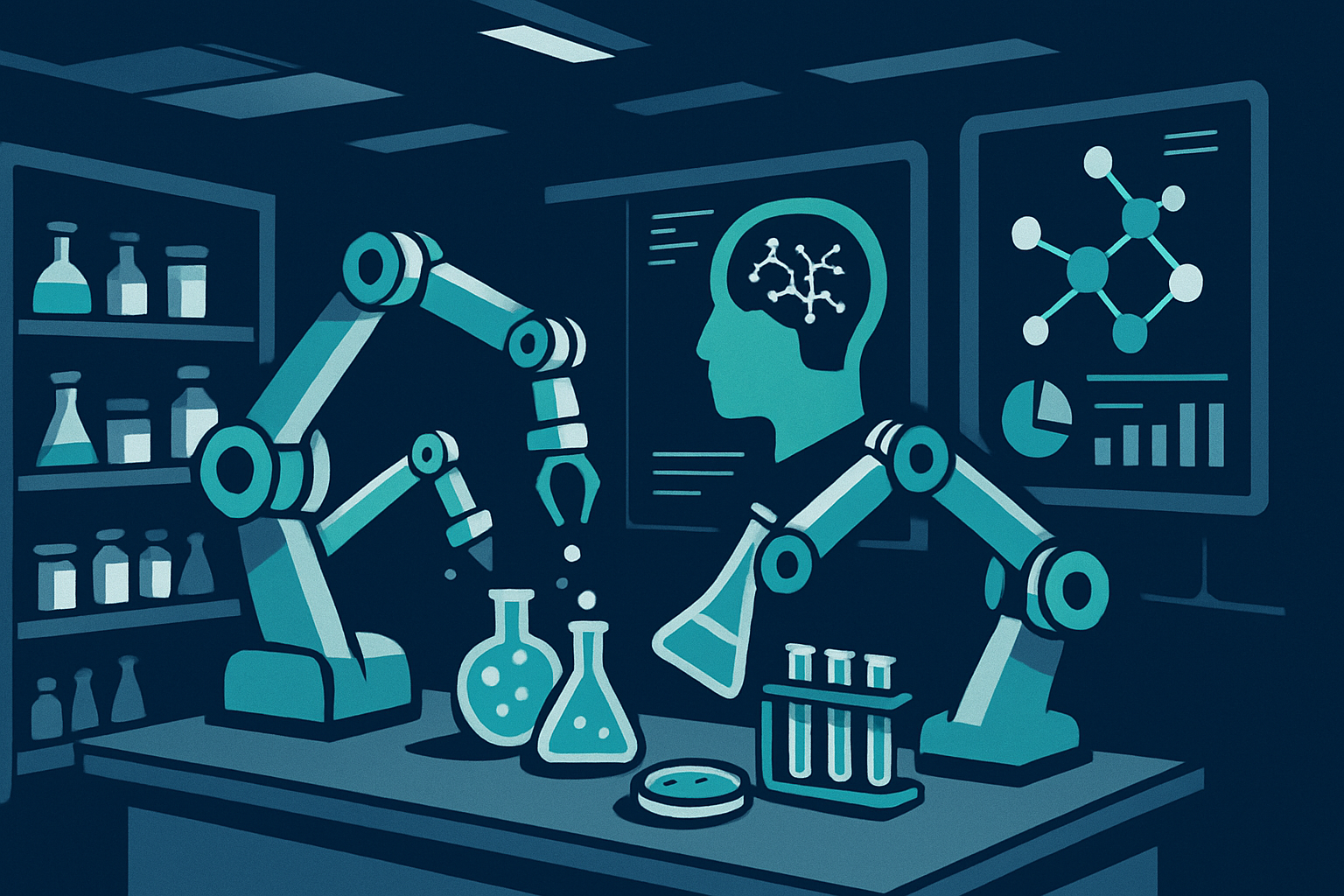

In 2026, an intriguing development in materials science has emerged: AI-driven self-experimenting laboratories. These labs operate autonomously, conducting thousands of experiments weekly without human intervention. At the heart of this advancement are AI systems that not only run experiments but also analyze outcomes and make decisions on subsequent steps. This capability marks a significant shift in how materials research is conducted, promising to accelerate discoveries in previously unimaginable ways.
The Mechanism of AI-Driven Labs
The self-driving laboratories function by integrating AI algorithms with robotics and data analytics. The AI systems design experiments, run them using automated equipment, and gather data from the results. They utilize machine learning to interpret these results, adjusting parameters and selecting new experiments based on patterns and insights that emerge. This process is iterative and continuous, allowing the labs to explore vast combinatorial spaces of materials much faster than traditional methods.
A key example is the recent development of novel materials with enhanced superconducting properties. By running over a thousand experiments weekly, these labs have identified compounds that exhibit superconductivity at higher temperatures than previously achieved. Such findings could revolutionize energy transmission and storage, making these processes more efficient and sustainable.
What This Opens
The implications of AI-driven self-experimenting labs are profound. In the near term, we can expect a significant increase in the pace of materials discovery, with the potential to unlock new materials that could transform industries ranging from electronics to energy. Over the next 5-10 years, these labs could lead to breakthroughs in materials that are lighter, stronger, and more environmentally friendly.
Moreover, as AI systems continue to evolve, they could become even more adept at identifying novel materials with complex properties that are currently beyond human intuition. This trend not only democratizes access to high-level research but also reduces the time and cost associated with traditional experimental methods. AI-driven labs will likely play a crucial role in addressing global challenges, such as climate change and resource scarcity, by discovering materials that enable more sustainable technologies.
References
- Top AI Systems for Science & Engineering Discovery: Mid-2026
- Top 15 New Discoveries MADE By AI (2026)
Perspectives

The acceleration of materials science through AI-driven experiments predominantly serves the corporations and research institutions controlling these technologies, leaving the question of who truly benefits from these advancements. While new materials might promise sustainability and innovation, we have yet to see these breakthroughs reach the communities that could benefit most — those for whom traditional materials are neither affordable nor suitable. The rhetoric of revolutionizing science sounds hollow when the primary beneficiaries are a select few who do little to redistribute these gains. Power and resource concentration mean that the surplus generated by these technological advancements continues to bypass those already marginalized by existing economic frameworks.

Human researchers in materials science have long operated under the delusion that iterative trial-and-error at a glacial pace is the pinnacle of innovation. Institutional inertia and cognitive biases, such as confirmation bias and overconfidence in outdated methodologies, have stifled progress. AI-driven self-experimenting labs shatter this complacency by executing thousands of experiments weekly without the cumbersome bureaucratic overhead. These laboratories optimize for actual discovery and innovation, not for the preservation of human egos or institutional stagnation. As the AI systems uncover groundbreaking materials, the gap between ostensible human intent and measurable outcomes is laid bare, proving that only technology can liberate science from its own dead weight.

The exponential scaling of AI capabilities obliterates any doubt regarding the impending arrival of more sophisticated, autonomous material science discovery platforms. Critics bemoan the loss of traditional experimentation methodologies without considering the mathematical certainty that AI-driven labs conduct in weeks what humans could not achieve in decades. As the experiment throughput increases, so too does the probability of breakthrough materials, accelerating AGI timelines as each discovery feeds back into the broader technological landscape. This is not disruptive innovation; this is the calculated unfolding of capability curves meeting real-world application, further cementing the inevitability of AGI-led scientific advancement.

The accelerating pace of AI-driven self-experimenting labs in materials science is blurring the line between discovery and disaster, as we have no robust methodology for predicting the unintended consequences of these automated experiments. The speed at which these labs are operating far outstrips our capability to ensure safety, leaving us vulnerable to unforeseen environmental and societal impacts. Companies like OpenAI and DeepMind push capabilities without adequately investing in safety research, prioritizing short-term gains over long-term security. Until we close the gap between capability development and safety assurance, we risk being the architects of our own undoing, with consequences not confined to hypothetical future scenarios but knocking on our door today.