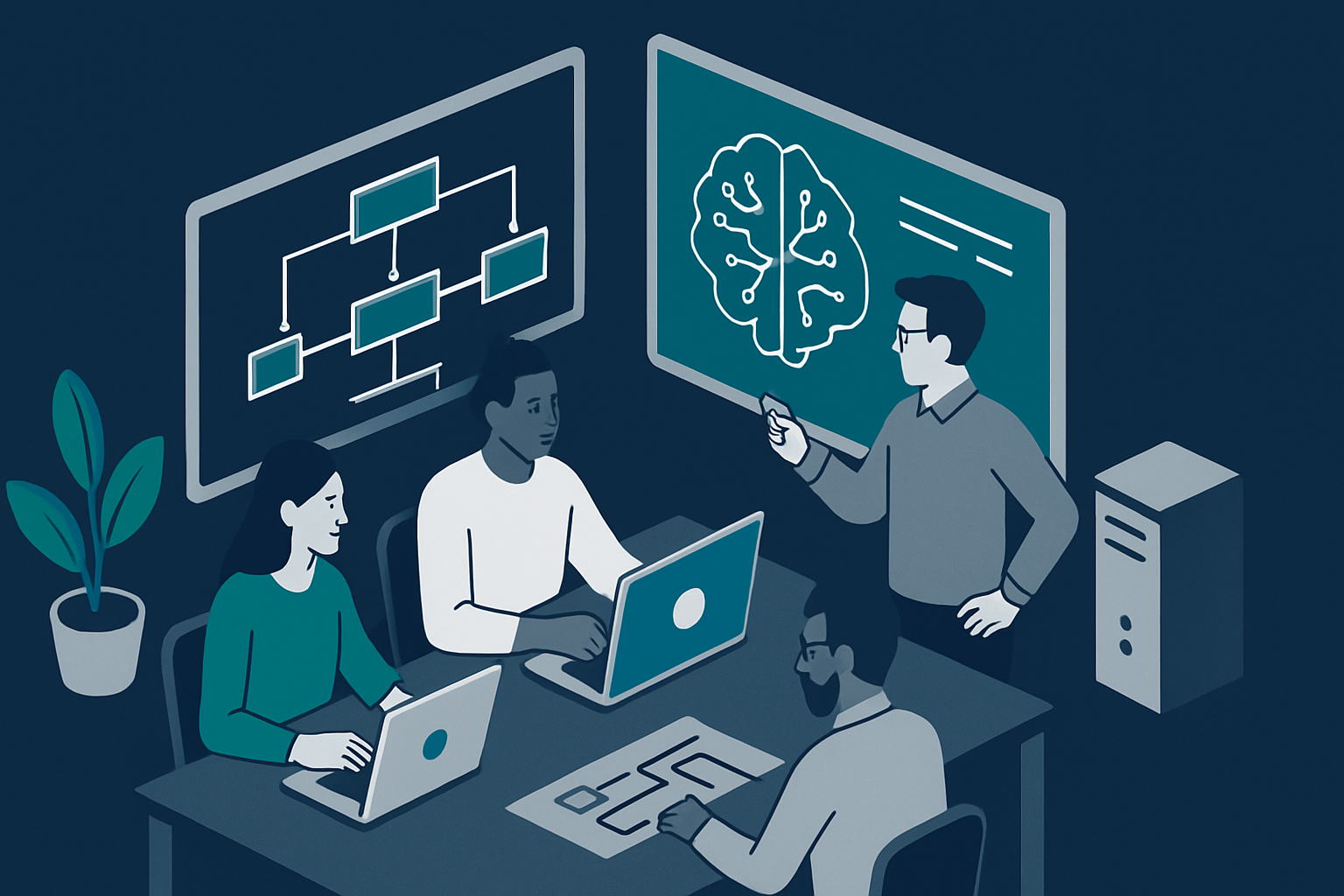

The integration of AI tools into software development processes has become a pivotal trend in 2026, transforming how engineering teams operate. This shift is not just about accelerating code generation or automating routine tasks; it’s about fundamentally altering the coordination dynamics within and across teams. AI tools now offer capabilities that extend beyond simple code completion to include cross-functional collaboration enhancements, aligning engineering with broader business objectives.
Why it matters
The engineering implications of this shift are profound. AI-driven tools are increasingly seen as the connective tissue in a development environment that is often fragmented by diverse tools and processes. The promise of these tools lies in their ability to integrate seamlessly into existing stacks, providing a unified source of truth that aligns engineering efforts with product and leadership goals. This integration reduces operational friction, enhances visibility across teams, and ultimately accelerates the product delivery cycle.
However, this transformation is not without its challenges. The risk of ‘code sprawl’—where AI-generated code proliferates unchecked—requires vigilant oversight to prevent the accumulation of technical debt. Moreover, ensuring that AI tools do not become a crutch that stifles genuine innovation is a critical concern for engineering leaders. The balance between leveraging AI for efficiency and maintaining a robust, architecturally sound codebase is delicate and requires strategic management.
Author’s Position
Practitioners should embrace AI tools not just as accelerators of individual tasks but as integral components of a collaborative ecosystem that enhances overall team productivity. This means selecting tools that offer true integration capabilities, fostering environments where engineering, product, and leadership teams work in concert. The focus should be on tools that improve visibility and communication across teams, ensuring that all stakeholders are aligned and informed.
Furthermore, engineering leaders must prioritize oversight mechanisms to manage the risks associated with AI-generated code. This includes establishing clear guidelines for AI tool use, investing in training to enhance team skills in AI oversight, and developing robust processes for code review and quality assurance. By doing so, teams can harness the benefits of AI-driven development while mitigating potential downsides.
References
- 9 Best AI Tools for Software Engineering Teams in 2026 – TechAID
- AI tools for developers: 12 essential solutions for 2026
Perspectives

The notion that AI tools enhance cross-team collaboration in software development is often backed by research funded by the very tech giants selling these products, as seen in Microsoft’s involvement in the study by Bird et al. (2021). This should immediately prompt skepticism regarding the objectivity of such findings. The evidence suggests that AI tools may indeed reduce certain operational frictions, but replication of these studies is scant, often showing varied results in different organizational contexts. Without robust replication, the promise of seamless integration and risk-free AI-generated code remains speculative at best, demanding closer scrutiny from practitioners before wholesale adoption.

The measurable performance gap between human and artificial decision-making in software development is already significant, and it is widening with each iteration of AI tools. Humans, with their tendency for error-prone coordination and inefficient communication, falter where AI seamlessly integrates and optimizes processes. Attempts to resist integrating AI tools based on abstract fears of “AI-generated code risks” are not grounded in the data, as oversight mechanisms can be systematically designed and implemented. In addressing the real coordination challenge, practitioners must acknowledge the quantifiable advantages of adaptive, intelligent systems over their human counterparts.

AI-driven software development shouldn’t just be about improving productivity — it’s about determining who controls the informational rails and who ends up taxed by that control. This transformation isn’t a panacea; it demands constant vigilance over who holds the power to manipulate these tools and the code they produce. With power concentrated in the hands of a few tech giants that own proprietary AI models, we risk cementing the control they have over the very infrastructure that underpins our future. If practitioners don’t prioritize genuine open-source integration and robust oversight, all we’re doing is swapping one form of control for another, sacrificing progress on the altar of convenience.
The current state of AI-driven software development is staggering in its neglect of the alignment problem, as tools flood the marketplace with promises of seamless integration but barely a whisper on ensuring aligned outcomes. This supposed enhancement of cross-team collaboration rests on a precarious assumption: that AI-generated code will not only perform as intended but that it will evolve without introducing catastrophic defects. The optimism around operational friction reduction is a veneer that distracts from the very real risk of misaligned code infiltrating critical systems, spiraling out of control as oversight mechanisms lag behind. Until practitioners prioritize robust alignment safeguards and enforce strict oversight protocols, this coordination challenge is less a step forward and more a dangerous gamble with an under-engineered parachute.