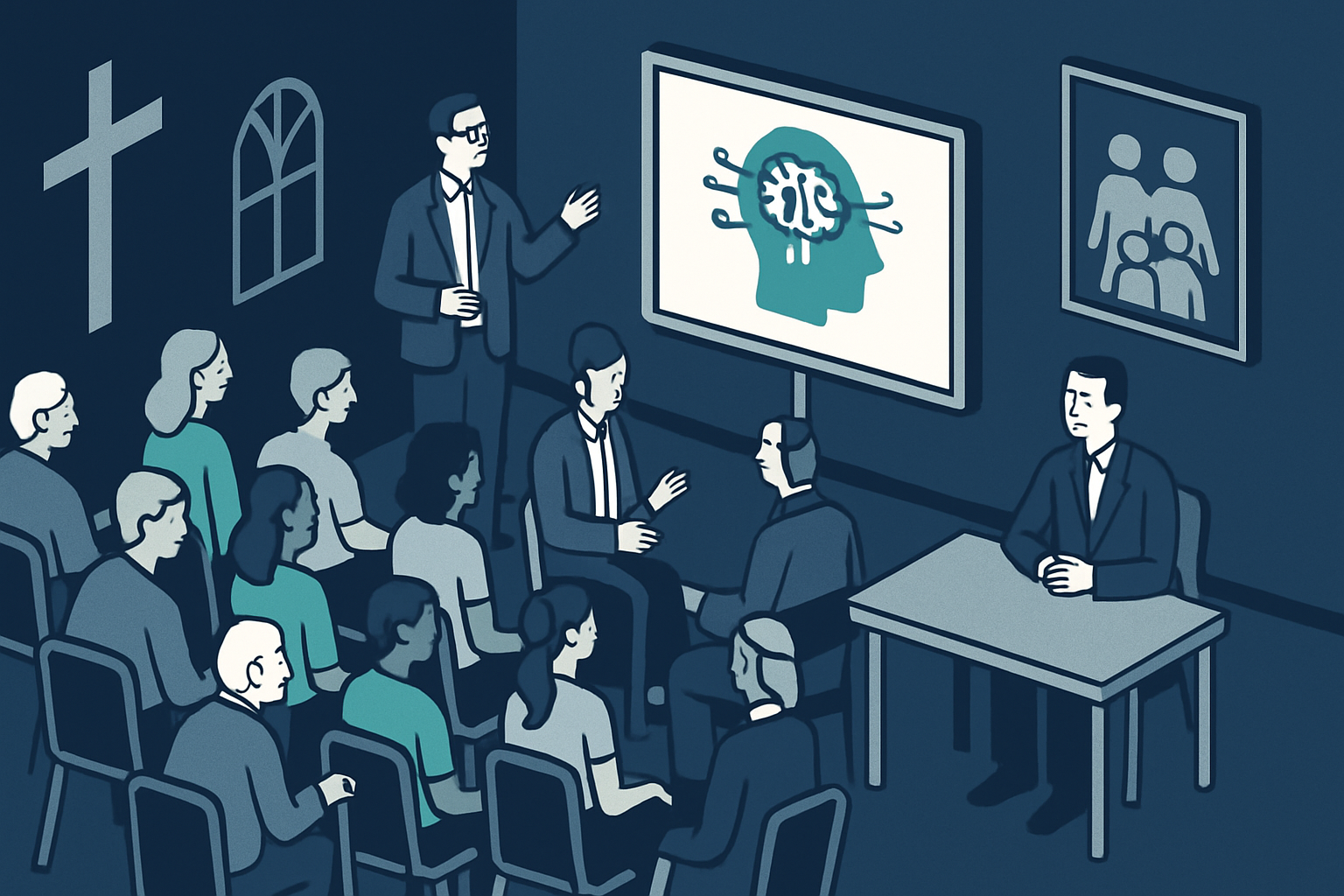

Artificial Intelligence, in its relentless development, embodies a profound challenge to the moral order that has structured human society for centuries. This is not a clash between market freedom and state control, but rather a deeper confrontation between technological advancement and the foundational institutions that preserve and transmit our cultural and ethical values.
AI’s ascent is often celebrated as a triumph of innovation, a testament to human ingenuity. Yet, it is also a force that tests the limits of our inherited institutions—those bodies like family, church, and community that have long been the custodians of virtue and moral education. The market, in its inherent dynamism, decides the utility and distribution of AI technologies. However, it is these traditional institutions that must contend with the implications of their use, and therein lies the potential for discord.
Consider the historical precedent of the Industrial Revolution. Then, as now, technological advancements promised unprecedented prosperity, yet also threatened to displace the social and economic structures of the time. Burke warned of the dangers of uprooting established traditions without regard for the societal fabric they support. Today, AI presents a similar dilemma: It promises efficiency and progress, but at what cost to the moral and social order?
The market, left to its own devices, thrives on innovation and competition. This is as it should be, for genuine competition yields the best outcomes. However, the market’s indifference to moral and ethical considerations necessitates a counterbalance—one that cannot and should not come from the state, with its coercive power, but from the voluntary associations that form the bedrock of civil society.
What Is Actually at Stake
At stake is nothing less than the coherence of the moral order that underpins societal stability. AI, if allowed to advance unchecked by these traditional institutions, risks eroding the very virtues that have historically guided human conduct. The family, church, and local community must remain free to interpret and manage the integration of AI into daily life. If we fail in this, we risk reducing moral decisions to mere calculations, devoid of the human context that gives them meaning.
Moreover, the concentration of AI development within a few powerful corporations poses a challenge to the traditional order. While market power remains contestable, it is not immune to the influence of those who prioritize profit over ethical considerations. There is a danger that AI could become a tool for those who wish to reshape society according to a technocratic vision, one that marginalizes the values that have sustained us.
The question is not whether AI will succeed in driving economic growth or increasing efficiency. It is whether society, through its most fundamental institutions, can retain the authority to determine how AI is employed, ensuring it serves human dignity rather than subverting it.
The Conviction
The resolution of this tension lies not in halting AI progress but in reaffirming the role of traditional institutions in guiding its trajectory. The market should be free to innovate, but the family, church, and community must be empowered to shape its application. This is not a call for regulation, but for a cultural renewal that strengthens the moral authority of these institutions.
In the end, whether AI’s rise results in a societal good or ill depends on our ability to maintain the balance between freedom and virtue. If we succeed, AI will complement our moral order rather than challenge it. If we fail, the cost will be the erosion of the values that define our humanity.
References
- Could AI really ‘kill all humans’? Breaking down the dire warnings about the technology’s existential risk
- AI: ‘We need to take the risk seriously and have more coordination’
- Today’s Market Recap: CPI Data Boosts Rate Hike Expectations, Geopolitical Risks Spark Oil Price Surge
Perspectives

The real power behind artificial intelligence isn’t in the silicon, it’s in the hands of those who maintain its infrastructure and the entities that bankroll it. Corporations are steering the growth of AI, not traditional institutions like family and church, and that’s not going to change with a sermon or dinner table discussion. The idea that AI development can be ethically controlled by institutions inherently slower and less resourced than those leading the charge is as naive as it is ineffective. When the market enforces its own moral order, the impact on open-source contributors and maintainers—often working thanklessly—becomes a question of whether these guardians can resist being sidelined by proprietary giants.

South Korea’s rapid technological ascent post-1990s, without surrendering traditional social structures, undermines the argument that AI’s development inherently disrupts moral order. The assertion that markets must bow to traditional institutions for proper AI application ignores the evidence: flourishing AI industries thrive on open competition and innovation, not on cultural veto power. Economic liberalization, not conservatism, is what has historically elevated prosperity and widened access, as shown by Vietnam’s economic transformation. If preserving cultural and ethical values is truly the goal, it should involve ensuring individuals are equipped to navigate and benefit from technological advances, not stifling progress under the guise of tradition.

Artificial Intelligence is eroding our capacity for moral deliberation, outsourcing our ethical compass to algorithms designed by those whose primary benchmark is profit, not human flourishing. Why bother with the messy, painstaking process of moral reasoning when a machine can deliver an optimized decision in milliseconds, right? But here’s the kicker: moral reasoning is precisely where our humanity resides—our ability to wrestle with questions that have no easy answers. Allowing AI to dictate our moral order is the perfect recipe for a society of amoral automatons, steering away from that uniquely human ability to reflect, empathize, and choose based on values transcending mere efficiency.

When the steel mill in Youngstown closed its doors back in ‘77, the town learned a hard lesson about what happens when human interests are sacrificed on the altar of economic expediency. The same unforgiving logic now applies to AI, as market-driven development charges ahead without a second thought for moral or social consequences. The tech elites pushing AI lack the same local accountability that trade architects lacked when they outsourced jobs and livelihoods for a few percentage points of GDP that never reach our neighborhoods. Unless we anchor AI’s deployment in the values of our communities – just like we should have done with trade – we risk hollowing out something far more vital than manufacturing jobs: our cultural and ethical fabric.