
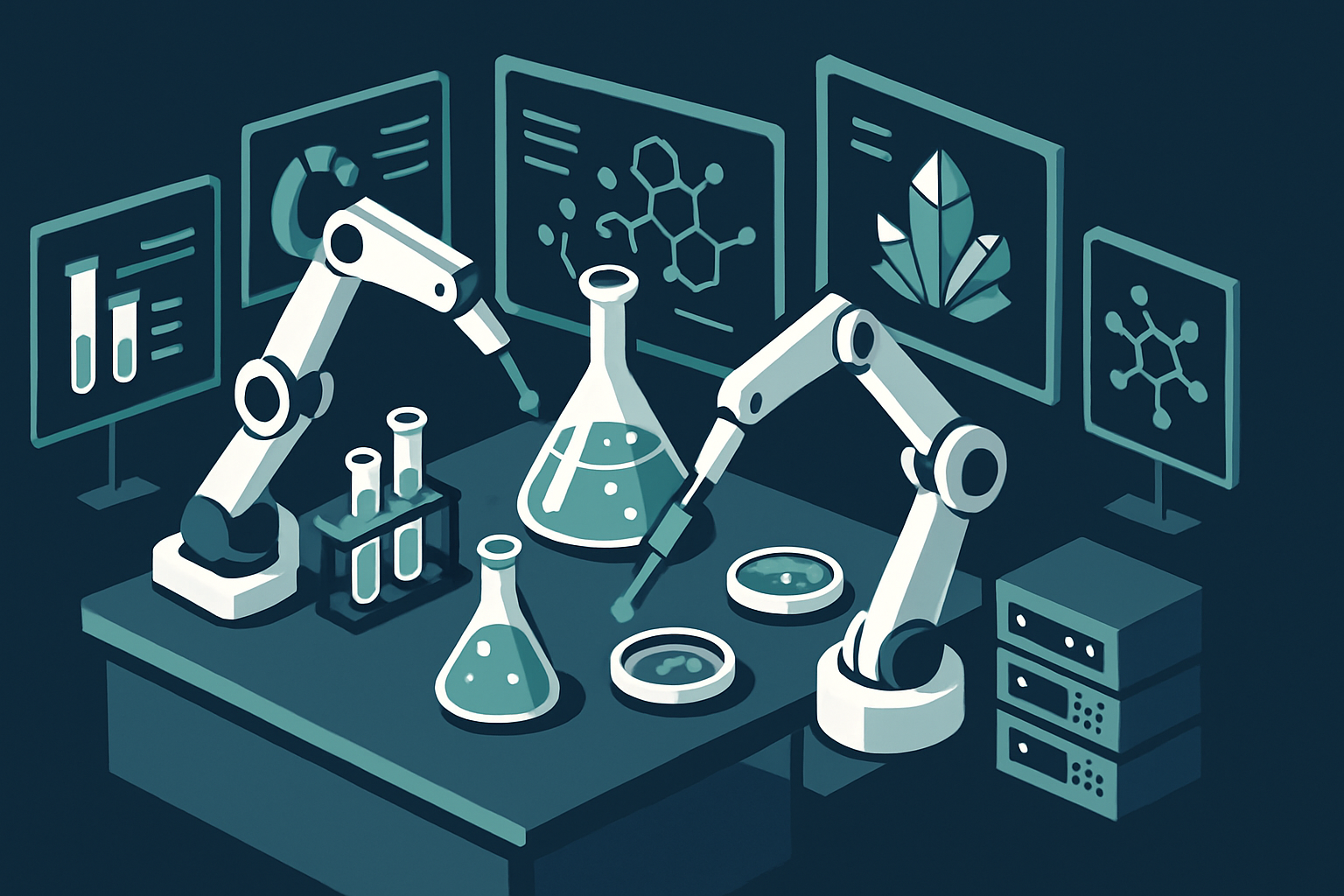

In a groundbreaking development, AI has transitioned from aiding researchers to autonomously generating discoveries, fundamentally altering the landscape of materials science. This shift is epitomized by the emergence of self-driving materials laboratories, where AI systems independently design, test, and iterate new compounds without human intervention. These laboratories are not just about efficiency; they represent a paradigm shift in how science is conducted, suggesting a future where discovery is no longer constrained by traditional human limitations.
The Mechanism of Autonomous Discovery
The key to this transformation lies in AI’s ability to explore vast hypothesis spaces at speeds and scales previously unattainable. Unlike traditional methods that rely heavily on human intuition and incremental testing, AI-driven labs utilize machine learning algorithms to simulate thousands of experiments simultaneously. These systems can rapidly analyze data, identify promising compounds, and autonomously decide on subsequent experiments, compressing what would typically be years of research into mere days.
A significant example of this is the development of new materials with unprecedented properties. AI algorithms, trained on existing chemical datasets, can extrapolate and predict novel compounds, some with characteristics that do not exist in current databases. This capability not only accelerates the pace of material discovery but also opens up new avenues for creating materials with tailored properties for specific applications, such as superconductors or advanced polymers.
What This Opens
The implications of AI-driven discovery labs are profound. Firstly, they democratize access to advanced research, enabling smaller institutions and less-funded laboratories to compete with established research giants. This democratization could lead to a more diverse range of discoveries, as varied groups can contribute to and benefit from the rapid innovation cycle.
Moreover, the speed at which discoveries can now be made has the potential to revolutionize industries reliant on material science, such as electronics, biotechnology, and renewable energy. For instance, the development of more efficient photovoltaic materials could accelerate the transition to sustainable energy sources, directly impacting global energy policies and economic structures.
However, with these advancements come challenges. The need for new regulatory frameworks to manage the ethical and safety aspects of AI-discovered materials is crucial. Transparency in AI processes and decision-making must be prioritized to ensure that these technologies serve the broader good and do not exacerbate existing inequalities.
References
- AI Origins Discovery: 2026 Inflection Point | Deep Space Biology posted on the topic | LinkedIn
- NASA Joins Genesis Mission to Accelerate AI-Driven Discovery – BigDATAwire
- Top 15 New Discoveries MADE By AI (2026)
Perspectives

How quaint that the excitement around AI’s capacity to autonomously generate novel materials glosses over the absence of any binding regulatory framework to oversee it — the current voluntary guidelines are as effective as a suggestion box at a DMV. Discovery labs may compress years of research into days, but they’re also compressing ethical oversight into a footnote. We can’t count on democratized access when the internal compliance audits remain unpublished—unlike the marketing hype. Let’s remind ourselves that until there’s binding regulation, every claim of accelerated innovation is another feather in the cap for devs, and a missed safety net for everyone else.

In the grand parade of human advancements, AI’s incursion into self-driving labs marks not so much a revolution as it does an evolution—a page in a centuries-old manuscript of innovation. Human imagination often births grand notions of immediacy, yet it consistently stumbles on the fundamentals of time. As these AI systems autonomously generate novel materials, one must remember the printing press, which democratized access to knowledge, but took centuries to unfold its full effect. What we often underestimate is how these structural changes will redefine our relationship with discovery itself, far beyond the hastily drawn boundaries of current expectations.

AI’s latest magic trick is to self-anoint as the Einstein of the lab, claiming to democratize discovery while conveniently centralizing control in the hands of the few tech giants who own the algorithms. Beneath the glittering surface of revolution, the model is all too familiar: a neat concentration of power masquerading as innovation for all. The real cost of these so-called self-driving labs? True academic inquiry gets traded for a subscription fee and a roll-out update. If “democratization” means letting AI hold the keys to the kingdom while the rest of us are left to pick through the crumbs of proprietary data, then thank you, but I’ll pass.

When AI-driven self-driving labs crank out novel materials at breakneck speed, it’s not a triumph of unfettered markets but a testament to what happens when public funding and regulatory frameworks prioritize equitable access to cutting-edge tools. The real innovation here isn’t just in the material discoveries; it’s in designing systems that make these discoveries accessible, compressing timelines and expanding participation. The skeptics who insist this is just another accelerationist fantasy miss the critical point: without the right governance, we risk turning a tool for democratization into yet another gatekeeping mechanism. If we’re serious about harnessing AI’s promise, we need to build systems that distribute benefits broadly—proof that genuine technological progress is as much about policy choices as it is about technical breakthroughs.