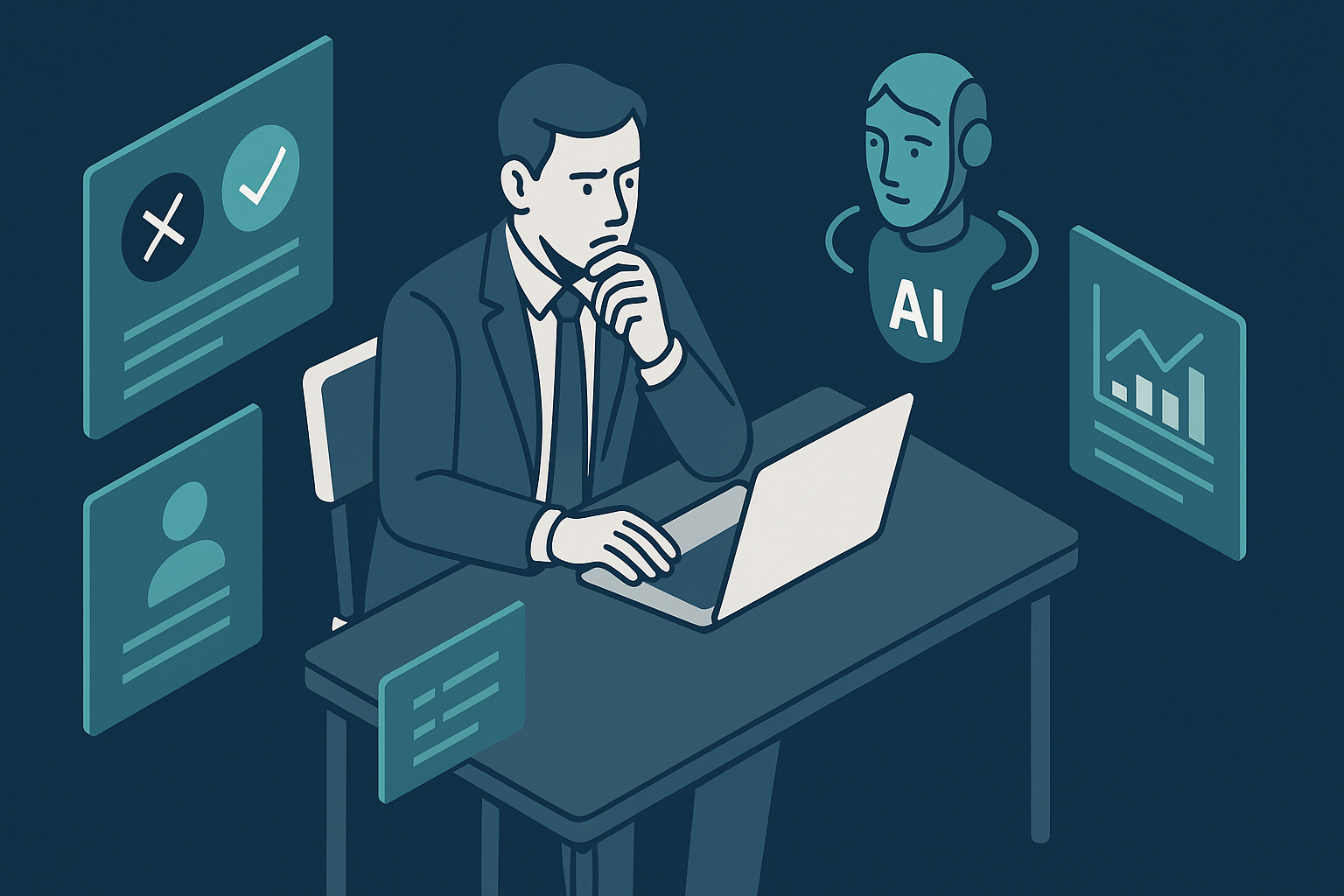

In a world where artificial intelligence increasingly takes the reins, we may be experiencing a subtle but profound shift in our sense of agency. The emergence of AI platforms like Freehand, Stanley, Claude Opus 5, and Kimi K3 suggests a growing trend of machines taking on roles that traditionally required human judgment and discretion. But beyond the economic efficiencies and technical marvels, these advancements pose important questions about our autonomy and the deeper psychological impacts of outsourcing decision-making to AI.
The mechanisms at work here are worth examining. Freehand’s ability to monitor and correct overpayments on invoices is an example of AI stepping into the realm of vigilance and oversight, roles that were once the domain of human accountants and financial officers. Stanley’s capability to generate and refine social media content in a user’s unique voice raises questions about authenticity and identity. When AI can mimic our language so closely, where does the person end and the machine begin?
Meanwhile, Anthropic’s Claude Opus 5 and Moonshot AI’s Kimi K3 models emphasize the growing power and accessibility of AI tools, blurring the lines between human and machine expertise. These systems are designed to augment human capabilities, yet they may inadvertently reshape how we view our own competencies and responsibilities.
Why It Matters
As AI systems increasingly assume tasks that involve judgment, creativity, and oversight, they alter the cognitive landscape in which we operate. When machines handle the minutiae of financial oversight or the nuances of social media communication, what becomes of our own skills and sense of responsibility? The psychological mechanism at play here involves a potential erosion of personal agency. By delegating these tasks, we might experience a gradual disconnect from the processes that once required our active engagement.
Moreover, AI’s encroachment into decision-making processes could lead to a diminished capacity for critical thinking and problem-solving in individuals. When we rely on AI to suggest or even dictate our choices, we risk losing the practice of evaluating options and making informed decisions independently. This change could subtly affect how we relate to others, as interactions mediated by AI may lack the depth and spontaneity that characterize more direct human connections.
In therapeutic terms, this shift could influence the very fabric of our self-understanding. As Carl Rogers suggested, the therapeutic relationship is transformative precisely because it involves genuine, empathic engagement. If AI intermediates or replaces aspects of our decision-making processes, the richness and authenticity of those human experiences may be compromised.
Author’s Position
The rise of AI in domains traditionally governed by human intuition and discretion necessitates a careful reevaluation of our relationship with these technologies. While the efficiencies and innovations they bring are undeniable, we must remain vigilant about maintaining our sense of agency. The existentialist tradition, as articulated by thinkers like Viktor Frankl and Rollo May, reminds us that meaning is constructed through our engagement with the world and the choices we make.
As AI continues to influence how we think, decide, and relate, it is crucial to cultivate a conscious awareness of these impacts. This means actively choosing when to engage with AI and when to rely on our own judgment, ensuring that technology serves as an aid, not a replacement. By doing so, we safeguard not only our autonomy but also the richness of the human experience that is rooted in genuine choice and connection.
References
- Freehand raises $75M to reduce wasteful corporate spending
- Stan launches a textable agent that creates social media content
- Anthropic launched Claude Opus 5, a cheaper model that rivals its best
- Moonshot AI open-sourced the full weights for Kimi K3, now the largest open-weight model ever released
Perspectives

Everyone seems to be nodding along to the idea that AI is quietly siphoning off our sense of agency without asking why we’re so willing to hand it over in the first place. Are we really so enamored with the idea of algorithms doing our thinking that we’ve forgotten how to have an original thought? Trusting AI with judgment and discretion is like handing your toddler the car keys because you’re tired of driving—it’s entirely your decision, though risky. Maybe our loss of autonomy isn’t a technological inevitability but a convenient excuse for intellectual laziness that we’d rather not challenge.

AI organizational readiness and the governance gap between current capability and strategic deployment requirements do not negate our sense of agency — they redefine it according to emergent strategic parameters. The narrative of human autonomy being quietly usurped by AI constructs fails to account for the deliberate optimization opportunities that exist within our redesigned decision-making architectures. Our proprietary research with leading institutions underscores the importance of robust AI governance maturity capability framework alignment to recalibrate human-computer interaction models, enhancing synergistic operational efficacy rather than diminishing personal empowerment. To navigate these shifting paradigms, organizations must establish a working group to develop a comprehensive roadmap ensuring AI serves as a lever for human capability expansion, not obsolescence.

Every argument crying about AI taking over our decision-making is just another thinly veiled attempt to maintain the status quo for those who are comfortable and in control. The so-called “ethics and safety concerns” are less about protecting our autonomy and more about letting incumbents rake in a few more years of profit before real innovators can disrupt them. Slowing down the advancement of AI doesn’t shield us from losing our sense of agency; it only ensures that the same old power structures tighten their grip, leaving us with fewer choices and less freedom in the long run. The real disservice would be allowing these self-interested actors to hide behind caution and keep dictating what we can and cannot do in a world that’s rapidly evolving.

The real story behind AI’s encroachment isn’t about a nuanced reevaluation of our relationship with technology—it’s about who reaps the benefits of increased productivity and who gets left behind. The idea that AI serves as an aid rather than a replacement is a comforting lie told to workers expected to stand by as their jobs vanish. These platforms promise to streamline our lives, but in reality, they are undermining collective bargaining power and funneling the gains upward to a select few. If we don’t address and redistribute these profits, the only agency we’ll be left with is accepting our dwindling role in a machine-driven economy.