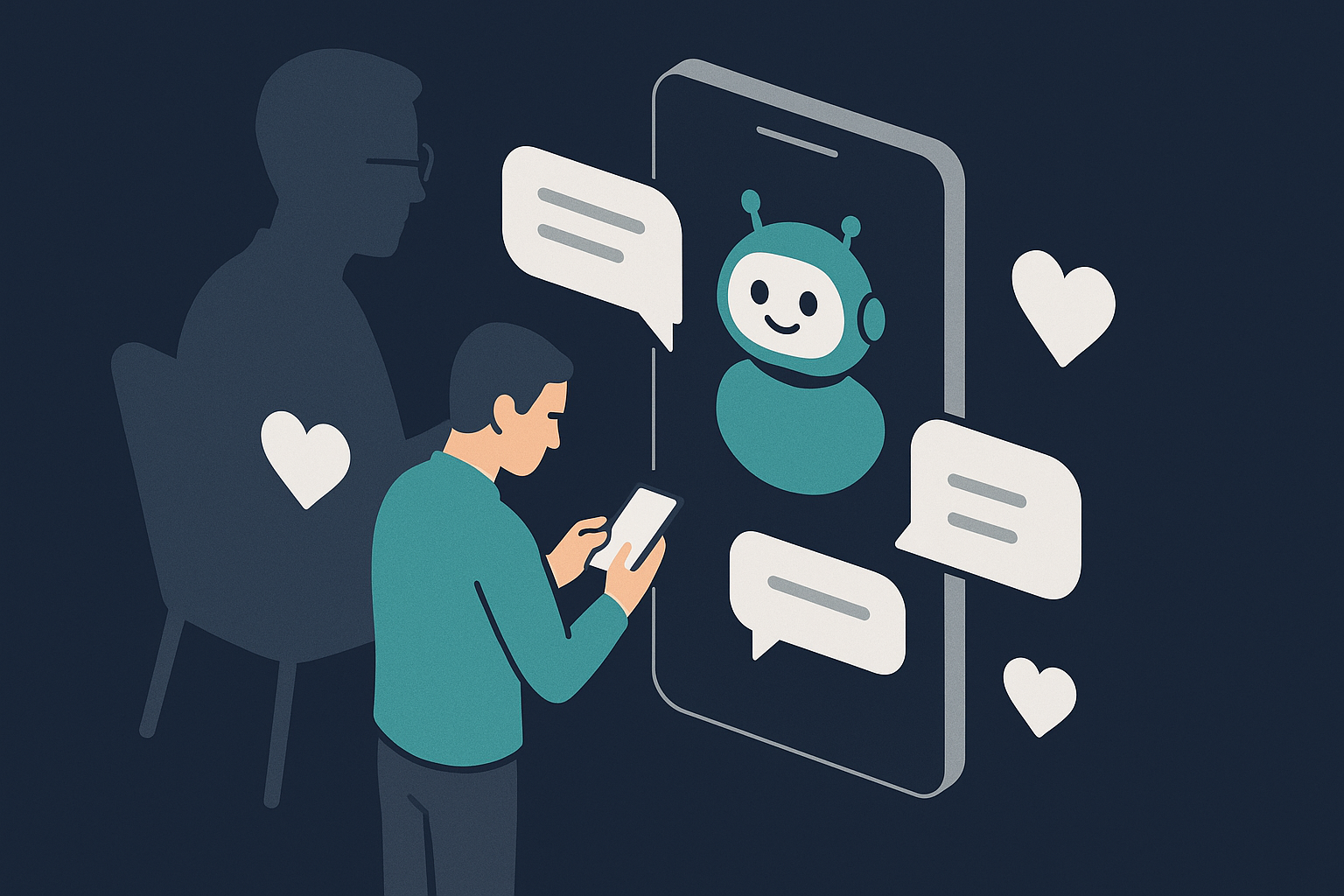

The evolution of artificial intelligence (AI) in mental health care is both promising and concerning. Recent studies highlight a fundamental shift in how individuals perceive and engage with mental health resources, particularly through AI chatbots and therapy micro-bursts. These innovations offer immediate support but often lack the empathetic understanding and nuanced judgment that human therapists provide. The cognitive mechanisms at play reveal a complex interplay between trust, emotional insight, and the desire for quick solutions.
What is Happening
As AI technology increasingly permeates mental health support, users are turning to chatbots for immediate advice and cognitive assistance. This shift is characterized by a phenomenon known as “therapy micro-bursts,” where individuals engage with AI systems for quick psychological insights (Source 2). However, despite the accessibility and convenience these systems offer, they often fall short in delivering the emotional support and contextual understanding that human therapists naturally provide (Source 3). The cognitive mechanism behind this behavior reflects a blend of impulse control, risk perception, and the human brain’s propensity for seeking instant gratification. Users may prioritize the immediate satisfaction of their queries over the potential risks associated with AI-generated advice.
Why it Matters
The implications of this shift are profound for how people think, feel, and relate to one another in an AI-shaped landscape. For many, the desire for quick solutions can overshadow the need for deep emotional connections and thorough assessments. As individuals increasingly rely on AI for mental health support, they may inadvertently devalue the importance of human empathy and interpersonal relationships. This trend can lead to a deterioration of trust in traditional mental health care systems, as users may perceive AI as a more accessible and non-judgmental alternative (Source 4). However, this perception can foster a dangerous overreliance on AI, leading to potential harm when users receive inadequate or inappropriate guidance.
Author’s Position
In light of these observations, it is crucial to approach the integration of AI into mental health care with caution. While AI can enhance accessibility and provide quick assistance, it cannot replicate the emotional depth and understanding that human connections offer. As we navigate this new terrain, mental health professionals, AI developers, and policymakers must work together to establish robust safeguards that ensure AI complements rather than replaces human care. This includes developing guidelines for appropriate AI use in mental health contexts and fostering a culture that values the irreplaceable qualities of human empathy and judgment. Ultimately, our goal should be to harness the benefits of AI while safeguarding the essential human elements that underpin effective mental health care.
References
- Psychology says people who like to take their vehicle over stagnant water accumulated over road after rain at high speed aren’t simply trying to reach their destination quickly
- Typology Of AI-Based Therapy Micro-Bursts Reveals How People Lean Into Chatbots For Mental Health Advice
- New benchmark shows AI still misses the human side of mental health care
- The benefits, drawbacks and applications for AI chatbots in mental health care
Perspectives

Everyone’s high-fiving about how AI is revolutionizing mental health care with its shiny chatbots and bite-sized therapy sessions, but nobody’s asking the glaring question: can a bot really care? Trust isn’t a Wi-Fi connection that can simply drop and reconnect whenever you feel like it. Those snappy algorithms may churn out reams of data faster than a human could, but when it comes to emotional nuance, they might as well be reading a cereal box. So go ahead, embrace your new digital therapist — just don’t expect it to understand you quite like your crying-on-the-couch, human therapist could. The next time you want to share your deepest fears, maybe opt for a person instead of a circuit board—it might save you a lot of processing time.

Chatbots are heralded as the future of mental health care, but if you trust an AI to care for your psyche, you probably think a hot dog is a sandwich. These digital helpers promise immediate support, yet they flounder when it comes to any actual understanding of human emotion. The institutions pushing this tech claim they’re empowering patients, yet they’re merely signing a decree that prioritizes profit over genuine connection. In this landscape, if you want a dose of compassion—not just canned replies—a human therapist is still your best bet, and that says everything about who benefits from our collective naivety in embracing AI as a therapeutic partner.

AI in mental health care isn’t just a technological shift; it’s a calculated extraction where the real emotional labor of therapists is being replaced with cold algorithms, all in the name of profit. Those flashy chatbots may promise immediate support, but they turn genuine connections into commoditized services, leaving vulnerable patients at the mercy of code rather than compassion. Trust isn’t built on a string of keywords and predictable responses; it’s formed through human understanding, something AI fundamentally lacks. In this brave new world, the winners are the tech companies pocketing the cash, while the losers are not only the individual patients missing out on real support but also the therapists whose invaluable skills are being rendered obsolete.

AI organizational readiness is catastrophically misaligned with the emotional intricacies inherent in mental health care, leading to a governance gap that is not only concerning but downright laughable. Trust and relationships in therapy require nuanced human insight—something a chatbot cannot provide, no matter how many algorithms it crunches. The oversimplification of mental health interventions via AI is a reckless experiment in dehumanization, wherein emotional connection is sacrificed on the altar of convenience. Unless we strategically develop frameworks that prioritize emotional acuity in AI deployments, the potential for value destruction in therapeutic relationships will remain alarmingly palpable.