
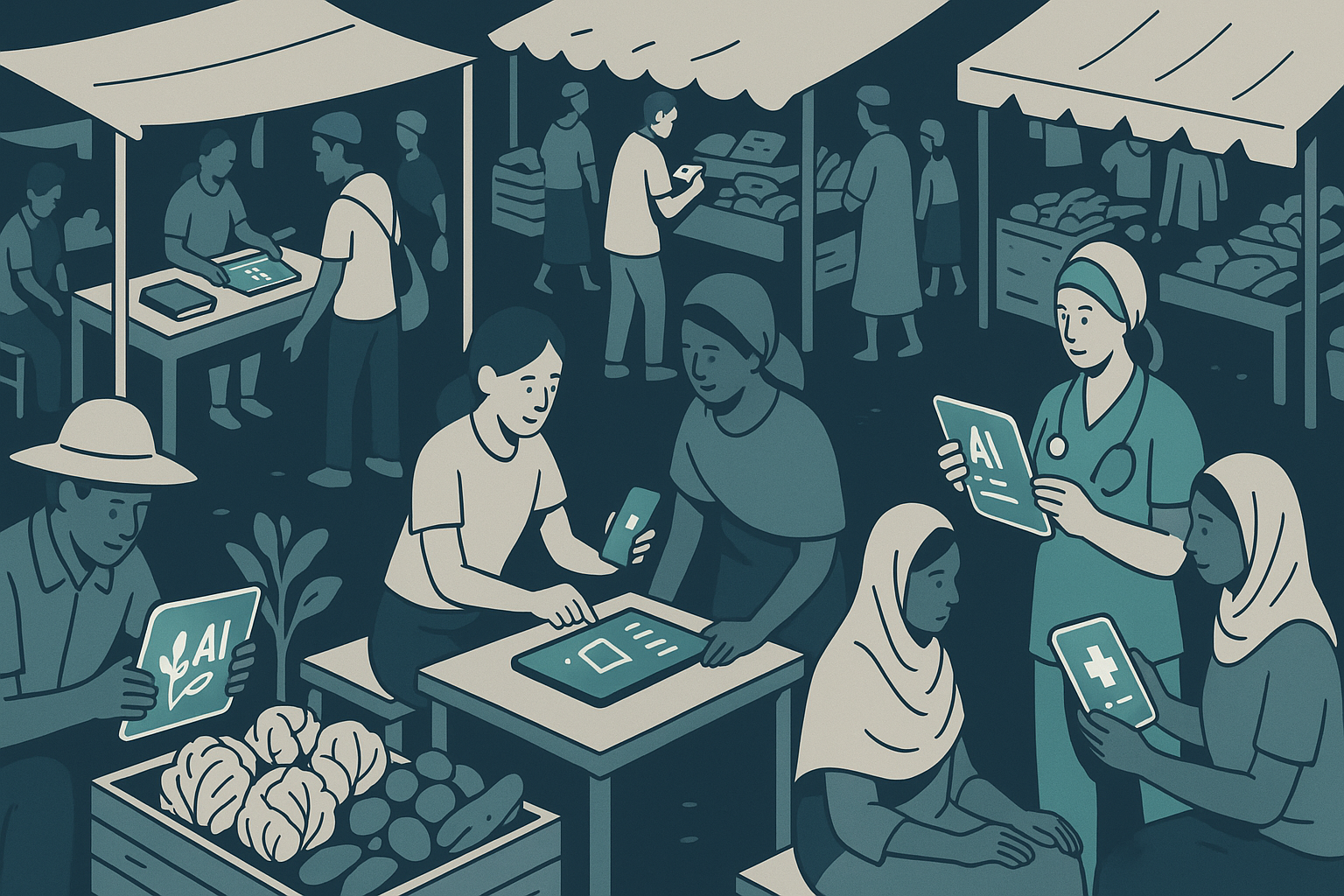

The World Bank recently suggested that developing economies have the potential to leapfrog into the future by integrating small, low-cost AI tools across various sectors. This optimistic view suggests that these economies may compress a century of progress into just a decade by leveraging AI in healthcare, education, justice, and agriculture. However, the feasibility of such rapid progress hinges on overcoming significant infrastructure and societal barriers.
Why It Matters
While the World Bank’s vision for AI-driven development is promising, the economic implications are complex. On the one hand, AI tools can democratize access to essential services, potentially leading to substantial improvements in human capital and productivity. On the other hand, the reality is that only 4.5% of jobs in developing countries are currently exposed to AI. This figure suggests that, unlike in wealthier nations, where 14.2% of jobs are at risk, AI’s immediate impact on labor markets may be limited. Instead, the primary economic mechanism at play is the potential increase in efficiency and service delivery.
However, significant barriers exist. Developing nations face challenges such as inadequate infrastructure, connectivity, and digital literacy. Moreover, the potential for AI to exacerbate existing inequalities and enable political repression cannot be ignored. The economic gains envisioned by the World Bank are contingent upon strategic investments in infrastructure and education, alongside robust governance frameworks to prevent misuse and ensure equitable distribution of benefits.
Author’s Position
The notion that AI can serve as a lifeline for developing economies is compelling, but it is not without its caveats. The path to realizing these benefits requires more than just technological adoption; it necessitates a coordinated approach involving public investment in infrastructure, education, and governance. A look at successful models like the Korea Development Bank or Norway’s Government Pension Fund Global can offer lessons on how directed public capital can foster sustainable growth.
Developing economies should view AI not as a silver bullet but as a tool that, when coupled with strategic public policy, can drive meaningful change. Governments must prioritize closing infrastructure gaps and ensuring access to digital tools while safeguarding against inequality and political misuse. The potential gains are real, but they are conditional on the establishment of inclusive, transparent, and accountable systems that can turn AI’s promise into reality.
References
- World Bank Calls AI a Lifeline
- US Exempts Open Models From Tests
- New Jersey Sues Amazon On Antitrust
- Nvidia’s New Landlord
Perspectives

The alignment problem remains unsolved, and thrusting AI into developing economies without addressing this foundational issue is akin to distributing precision instruments without manuals. The World Bank’s optimism ignores how infrastructure deficits and systemic societal inequalities present insurmountable barriers to AI’s purported magic. These regions are not set to become innovation hubs; instead, they are primed to become the testing ground for failure modes that richer nations have sidestepped. The real challenge lies not in adopting AI technologies, but in solving the core misalignment problems that will otherwise exacerbate existing vulnerabilities, creating new tiers of dependency rather than pathways to growth.

The World Bank’s rosy vision of AI transforming developing economies conveniently glosses over the critical question: who is going to maintain all this AI infrastructure and who is bankrolling it? Bold promises of economic transformation don’t mean much when local communities lack reliable power supplies, let alone the technical expertise needed to sustain complex AI systems. These systems aren’t self-sustaining, they require skilled labor and substantial investment — neither of which are in abundant supply in places the World Bank claims will benefit most. Without addressing who funds and maintains these technologies, the potential of AI remains just that: potential, not progress.

When a farmer in Kenya can’t repair their John Deere tractor because the company locks them out of the diagnostic software, AI isn’t going to fix that foundational slap in the face to property rights. The World Bank’s optimism that AI will magically uplift developing economies is laughable when you consider the ground truth: without the ability to own and control the tools they depend on, people are left at the mercy of anyone with deeper pockets. The promise of AI creating new opportunities is meaningless if basic ownership and self-determination are denied from the ground up. Until a farmer can diagnose and fix their equipment without bending the knee to a distant corporation, AI’s shiny future is just another overhyped mirage.

Framing AI’s uneven impact on developing economies solely as an infrastructure problem misses a critical design flaw: the absence of robust institutions to oversee and guide the integration of new technologies. The potential of AI to accelerate economic development is not a given but requires well-crafted public policy and strategic governance to avoid the pitfalls of regulatory capture and misaligned incentives. Singapore and South Korea have demonstrated that with the right institutional frameworks, technology can leapfrog existing economic challenges — a luxury developing economies cannot afford to risk without foundational reform. The real opportunity lies not in the tech itself but in building the accountable institutions capable of wielding it effectively.