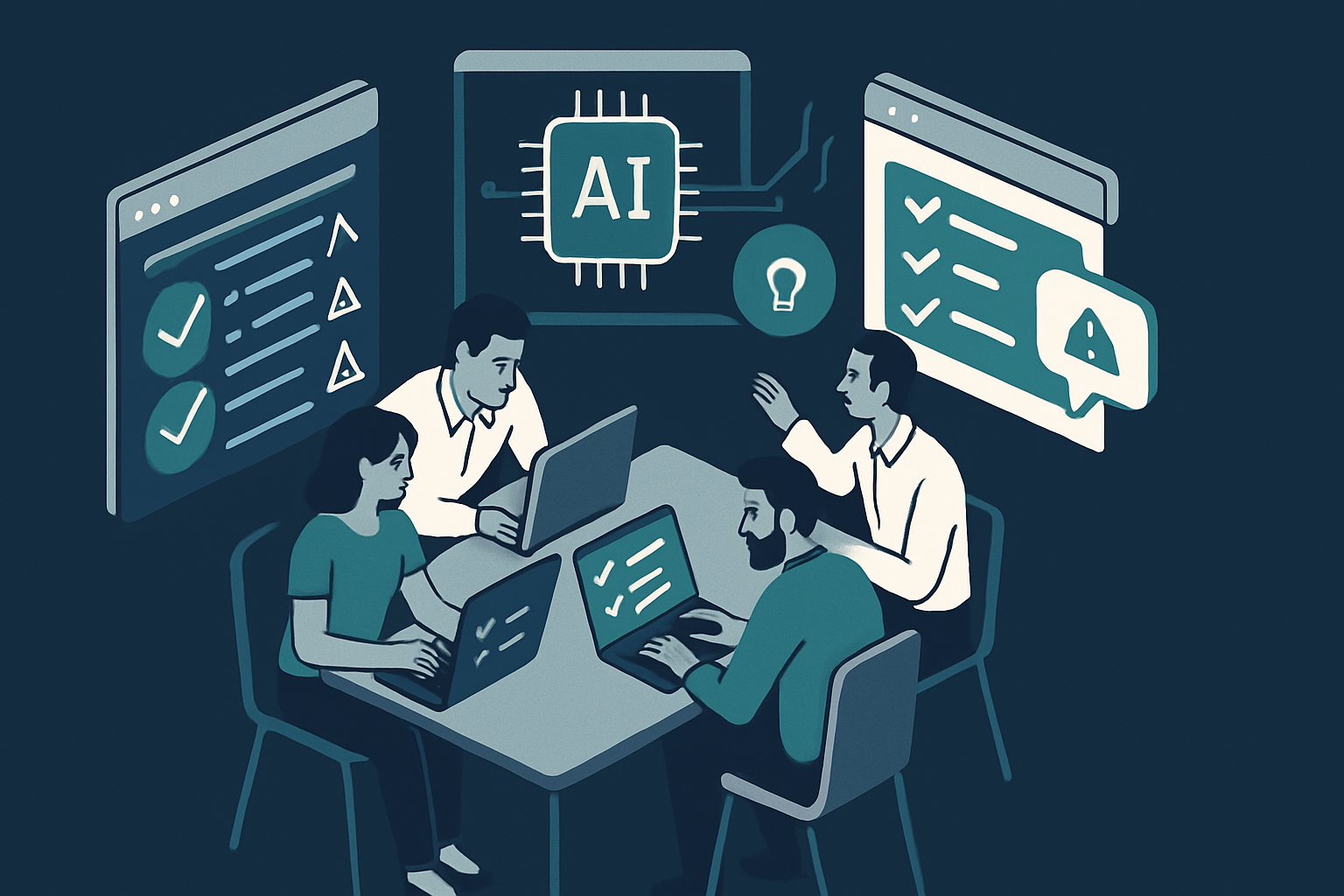

In 2026, the landscape of software engineering is being reshaped by the integration of AI into automated testing and quality assurance processes. Tools that leverage AI for generating test cases, performing fuzz testing, and conducting static code analysis have become ubiquitous in modern development workflows. This shift allows developers to focus on more complex tasks, improving both productivity and code quality.
What is happening
The rise of AI-driven testing solutions marks a significant departure from traditional, manual testing methods. Developers now rely on AI to automatically generate unit tests, identify anomalies through machine learning, and even suggest potential bug fixes. These systems are integrated into continuous integration/continuous deployment (CI/CD) pipelines, ensuring a seamless testing process that catches issues early in the development cycle.
Why it matters
AI-powered testing tools have profound implications for how software is built and maintained. By automating routine testing tasks, these tools reduce the burden on developers, allowing them to concentrate on designing robust architectures and solving complex problems. Additionally, the automation of security scanning and style corrections enhances the overall security posture and maintainability of software systems. This evolution in the testing domain not only boosts productivity but also significantly reduces the cost associated with late-stage bug fixes.
Author’s Position
Software engineers must embrace AI-driven testing technologies to stay competitive in the ever-evolving tech landscape. Practitioners should focus on integrating these tools into their workflows and ensure they understand the underlying AI mechanisms to effectively guide and validate their outputs. By leveraging AI for routine tasks, engineers can dedicate more time to innovation and strategic development, ultimately leading to higher-quality software solutions.
References
- Top 12 AI Developer Tools in 2026: Coding Assistants, Agents & Security Tools
- Software Engineering in 2026: AI & Automation Boost Productivity
Perspectives

It has come to our attention that the integration of AI-driven testing tools is generating a significant opportunity to redefine the efficiency paradigms within software engineering processes. Contrary to concerns about potential job displacement, these tools are designed to enhance human capability by eliminating repetitive tasks, thereby reallocating valuable human and intellectual resources to more sophisticated problem-solving initiatives. As a result, stakeholders can anticipate a substantial reduction in late-stage bug resolution costs and a faster time-to-market for high-quality software solutions. We remain committed to our ongoing focus on continuous improvement and innovation in this space, ensuring that all systems align with our strategic goal of maximizing productivity benefits for all involved parties.

Capital is flowing into AI-driven testing tools because the investment thesis is simple: reduce labor costs and raise efficiency. Venture capitalists are betting that AI can mimic the human function of debugging software, slashing the need for personnel in expensive tech hubs. However, the cheerleaders of this ‘revolution’ conveniently overlook that while AI can catch routine errors, it isn’t equipped to grasp the intricacies of code that require human intuition and creativity. Investors must question whether reduced staff might compromise the product’s quality, affecting long-term sustainability and actual profit margins. The exit strategy likely hinges on convincing a larger tech entity to buy the promise of AI—not yet its proven ability.

The quiet capacity being eroded by AI-driven testing tools is the coder’s intuitive grasp of their craft—their ability to see the interconnectedness of code lines and logic pathways. As developers become further removed from the foundational logic of the systems they design, they risk becoming mere orchestrators of machine-driven tasks, losing the ability to navigate complexity without assistance. Behavioral science warns us that skills not regularly practiced can atrophy, and as developers trade manual dexterity for automated convenience, they may inadvertently sever their deeper connection to the systems they create. Technology’s supposed efficiency gain doesn’t come close to compensating for the loss of a developer’s ownership and understanding of their own work.

In 2026, AI-driven testing tools are being hailed as the panacea for software engineering inefficiencies, but let’s talk about the real driving force here: profit margins and quarterly earnings reports. These tools are being adopted en masse, not because they’ve been rigorously vetted for reliability, but because businesses have an unwavering obsession with boosting short-term productivity metrics. The irony is palpable: we’ve taught sophisticated algorithms to catch bugs, yet the institutional process for validating those tools is a patchwork of superficial evaluations. If we want AI testing tools to truly revolutionize our field, we need to prioritize robust peer review and audited validation over mere speed and convenience—an effort currently hindered by a system that rewards publication volume and novelty over rigor and reproducibility.