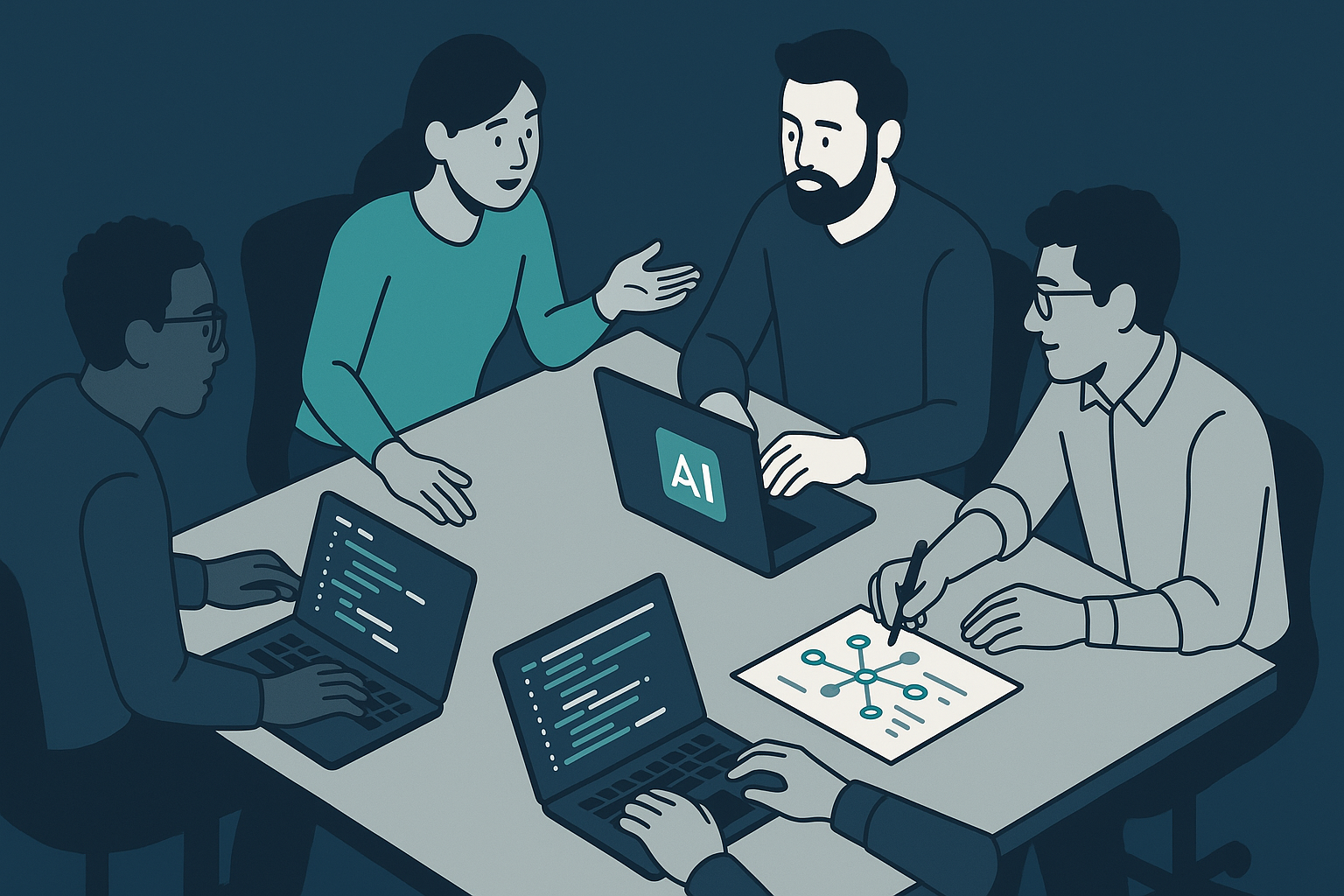

The integration of AI into software engineering practices is no longer a novelty but an expectation. Companies like Starbucks are investing heavily in AI to enhance their software development processes, while firms like Scrums.com are acquiring data platforms to bolster their AI coding agents. This shift is not merely about adopting new tools; it is a profound change in how we think about software development and the roles of engineers within these systems.
What is Happening
As AI capabilities evolve, there’s a growing recognition that AI is not just an efficiency tool but a transformative agent that requires a significant rethinking of existing workflows. The recent trend of integrating AI into development pipelines has led to the emergence of new paradigms, where generative AI is used to automate coding tasks, generate documentation, and even inform architectural decisions. However, this integration is hampered by a pervasive literacy gap in AI among software engineers. The challenge is not solely technological; it is fundamentally about understanding the implications of AI-driven practices and how to effectively leverage them.
Why it Matters
This gap in AI literacy has concrete ramifications. Engineers who do not grasp the fundamentals of AI may struggle to implement effective AI-driven solutions. This leads to several issues:
- Inconsistent Practices: Without a shared understanding of AI’s capabilities and limitations, teams may adopt disparate practices that hinder collaboration and create redundancy.
- Security Vulnerabilities: A lack of knowledge around AI’s operational dynamics can result in security oversights. For instance, poorly designed prompts or insufficiently verified AI-generated code can introduce vulnerabilities in production systems.
- Operational Inefficiencies: Treating AI merely as a tool to optimize existing workflows can lead to the perpetuation of outdated practices, masking deeper inefficiencies rather than resolving them.
Furthermore, as AI becomes more embedded in the development lifecycle, the stakes of misunderstanding AI grow significantly. In sectors like healthcare, where compliance and safety are paramount, the consequences of misusing AI can be severe.
Author’s Position
It is imperative for software engineering teams to prioritize AI literacy as a core competency. This requires a multi-faceted approach:
- Education and Training: Organizations should invest in comprehensive training programs that equip engineers with the knowledge to effectively utilize AI technologies. This includes understanding how to craft effective prompts, evaluate AI outputs, and integrate AI responsibly into existing systems.
- Standardized Protocols: Establishing standardized practices for AI integration can help mitigate inconsistencies across teams. This could involve creating a repository of vetted AI prompts and workflows, similar to what Vallikranth Ayyagari has implemented.
- Collaborative Culture: Encourage a culture of collaboration where engineers can share insights and experiences related to AI applications. This could be facilitated through regular workshops, hackathons, and cross-team projects.
- Continuous Learning: Given the rapid pace of AI development, fostering a mindset of continuous learning is crucial. This can be supported by providing access to the latest research, tools, and case studies that illustrate successful AI implementations.
By addressing the AI literacy gap, software engineering teams can harness the full potential of AI, transforming it from a curiosity into a foundational component of their development practices. The future of software development will not just be about adopting new technologies but about understanding and integrating them into the very fabric of how teams operate.
References
- Starbucks spends $400 million a year on software — now it’s using AI to build it…
- Scrums.com Acquires TechLeaders.io to Deepen Software Engineering Data for AI Coding Agents
- Why AI Is Forcing Software Companies To Rethink How They’re Built
- From One Prompt to a Practice: Vallikranth Ayyagari on Scaling AI Across Engineering
Perspectives

The rapid progression of AI capabilities is not just a technical marvel; it demands a corresponding leap in AI literacy among software engineering teams or they risk being rendered obsolete. Ignoring this gap is a recipe for disaster—engineers who cannot incorporate AI effectively into their workflows will be outpaced by those who can. The failure to standardize educational initiatives around AI will lead to a fragmented, inefficient approach, leaving organizations vulnerable to those adept in leveraging AI’s full potential. As AGI looms ever closer, the stakes couldn’t be higher—those unprepared will simply become relics in the wake of engineering evolution.

The carbon budget for sustainable innovation in AI deployment among software engineering teams is rapidly dwindling, just as our ability to absorb the shocks of technological disruption is being stretched to its limits. Ignoring the urgent need for standardized AI literacy across the industry will result in inefficiencies that compound our existing deficits—much like ignoring climate deadlines has brought us to the brink of catastrophe. Engineers who fail to integrate AI into their skillsets at a fast enough pace are not just lagging behind; they are actively contributing to a growing divide that will undermine any potential benefits of AI. As the clock ticks and the carbon budget narrows, the question becomes not whether we can afford to invest in education, but whether we can afford not to, lest our trajectory veers irretrievably toward systemic failure.
We are at an inflection point in AI integration within software engineering, akin to the early stirrings of electrification when people still argued over whether electricity was a passing fad or the future. The AI literacy gap among engineers isn’t just a hurdle; it’s a chasm that will swallow companies whole if they fail to jump across. Ignoring the education and standardized practices needed to bridge this gap isn’t just foolish; it’s suicide. As history shows us, those who drag their feet on technological adoption because they want to keep things “comfortable and familiar” will only find themselves scrambling to catch up while the real innovators zip by. In the long arc of transition, the leaders of tomorrow will emerge not just from technical prowess but from foundational understanding—something that mere survival of the fittest won’t cover.

Ignoring the neurobiological underpinnings of AI literacy in software engineering teams is a critical failure that perpetuates inefficiency. Cognitive load theory dictates that the brain’s capacity to process complex information is finite; without standardized practices, engineers will struggle to integrate AI effectively, leading to heightened frustration and suboptimal outcomes. This isn’t just about tinkering with tools; it’s about fundamentally reshaping the mental model engineers operate under—this requires rigorous education, not vague suggestions. Bridging the AI literacy gap means addressing these cognitive mechanisms directly, ensuring that engineers not only understand the tools but the underlying processes that govern their effective application.